
Velvet is a luxurious fabric with a beautiful soft sheen and an unmistakably rich texture. It feels wonderful to the touch and adds elegance to almost any garment. However, anyone who has tried sewing velvet knows that this beautiful fabric can have a mind of its own.
It can slip, shed fibres and be difficult to pin accurately. Fortunately, with the right preparation and a little patience, velvet is perfectly manageable.
Here are some tried-and-tested tips to help you achieve a beautiful result.
1. Pay Attention to the Nap
Velvet has a nap, which means that the tiny fibres on its surface lie in a particular direction. Run your hand gently over the fabric to feel which way the nap runs.
Before cutting, decide whether you want the nap to run upwards or downwards:
-
Nap running upwards: Creates a deeper, richer colour and a more pronounced sheen.
-
Nap running downwards: Gives a softer appearance with less reflection of light.
Tip: Make sure all your pattern pieces follow exactly the same nap direction. Mark arrows on your pattern pieces to avoid mistakes.
2. Use Pattern Weights Instead of Pins
Pins can leave marks or small holes in velvet and may flatten the delicate pile. The fabric can also shift easily while cutting.
Instead, use pattern weights to hold your pattern in place. You can even use small glass jars or teacups if you don't have professional pattern weights.
A rotary cutter is particularly useful for cutting velvet accurately.
3. Cut One Layer at a Time
Velvet is often too thick and slippery to cut accurately when folded double.
Place the fabric with the right side facing upwards on a cutting mat. Cut each pattern piece individually, turning or mirroring the pattern where necessary.
This takes a little longer, but it gives you much greater control and accuracy.
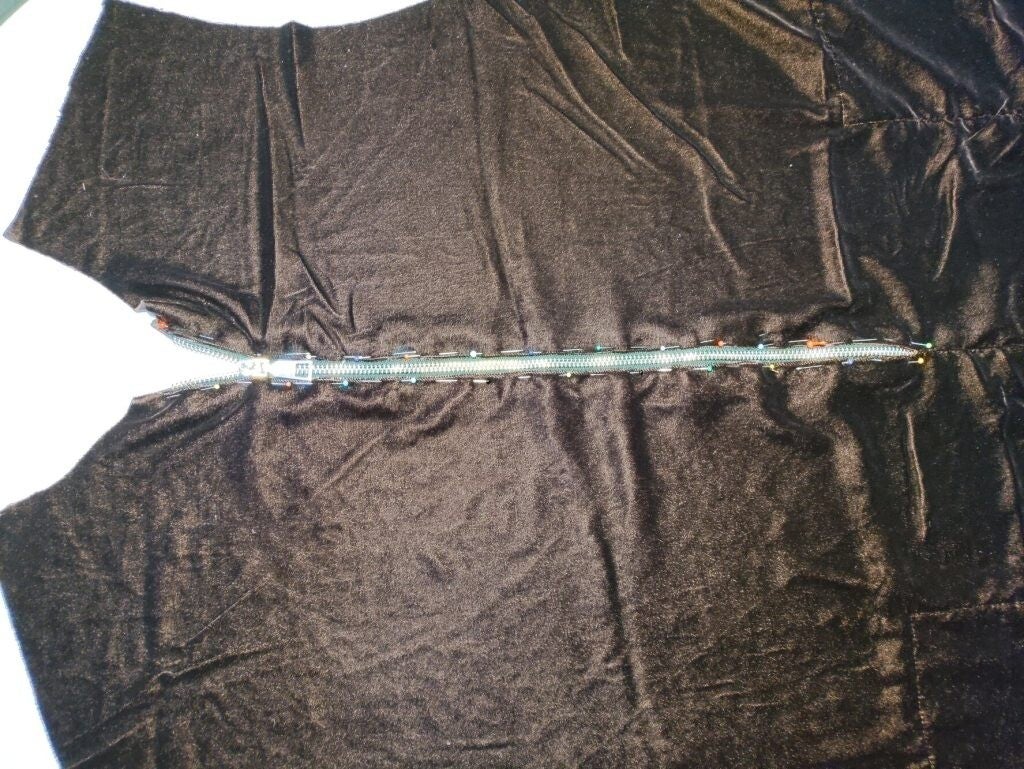
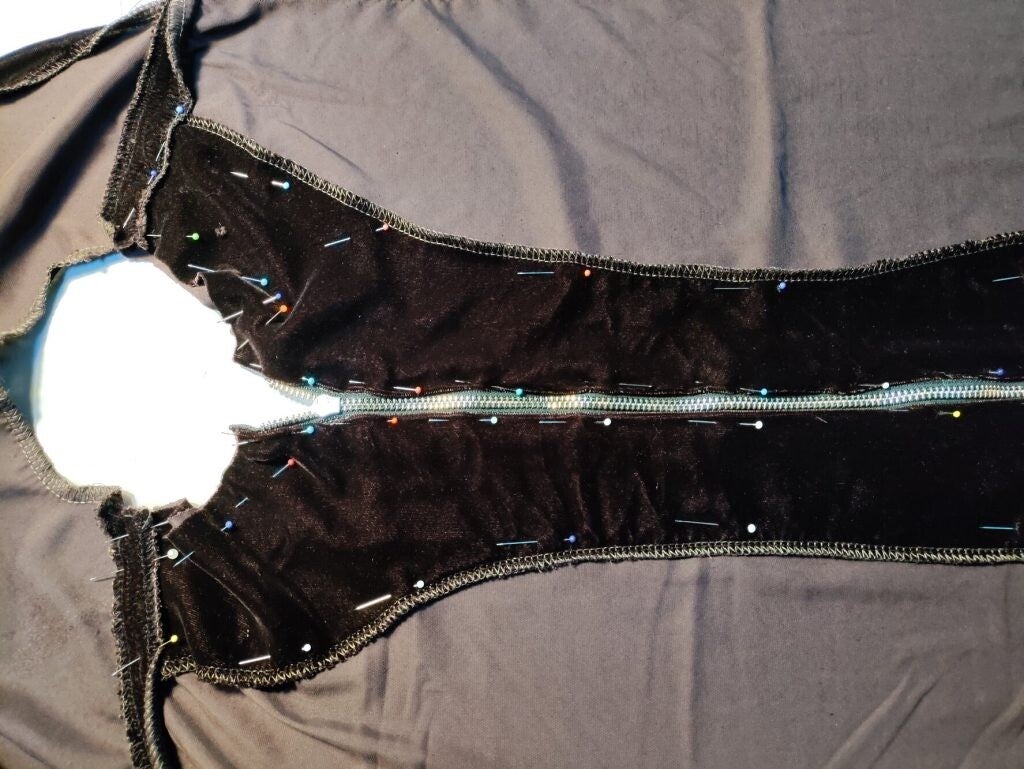
4. Baste Instead of Pinning
When joining velvet pieces, hand-basting is your best friend.
Use a fine hand-sewing needle and thread to temporarily secure the fabric before machine stitching. This helps prevent the layers from shifting.
Important: Do not pull the basting stitches too tightly. Velvet needs a little room to move without distorting its surface.
5. Choose the Right Presser Foot
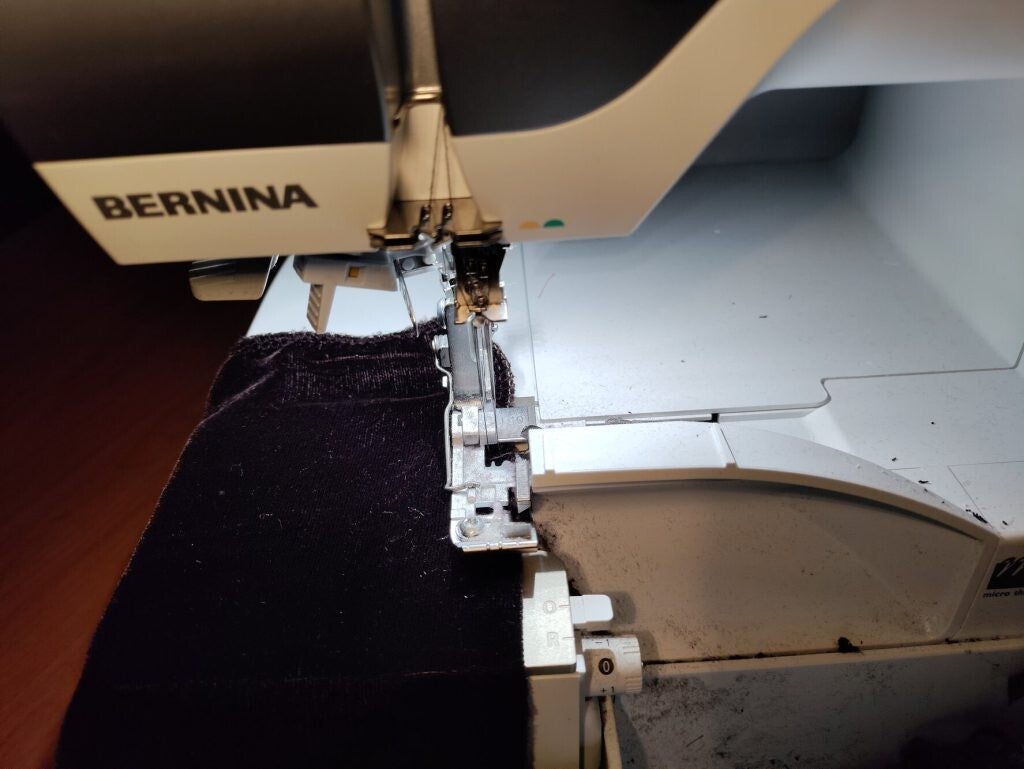
Velvet can slip under the sewing machine because the upper and lower layers are not always transported at the same speed.
A walking foot or dual-feed presser foot helps guide both layers more evenly and reduces unwanted movement.
If you don't have one, try placing narrow strips of tissue paper or lightweight pattern paper between the fabric and the presser foot. These can be carefully removed after stitching.
6. Use a Longer Stitch and the Right Needle
A slightly longer stitch length helps prevent velvet from puckering or becoming stretched during sewing.
A stitch length of approximately 3–4 mm is a good starting point.
Choose a Microtex or universal sewing machine needle, size 70 or 80, depending on the thickness of your fabric.
Always adjust your settings to suit the particular type of velvet you are working with.
7. Press with Great Care!
Velvet should never be pressed directly with a hot iron. The delicate pile can become flattened, leaving permanent marks.
Whenever possible, avoid direct pressing altogether.
If pressing is necessary, use gentle steam from a distance or a special velvet pressing mat. Another option is to place the velvet face down on a thick towel and carefully press the reverse side.
Always test on a scrap of fabric first.
8. Always Make a Test Sample
This is perhaps the most important advice of all.
Before starting your actual project, sew a small sample using the same fabric, thread, needle and machine settings.
This allows you to check how your particular velvet behaves and make any necessary adjustments before working on your garment.
A Little Patience Goes a Long Way
Sewing velvet doesn't have to be a nightmare. With careful preparation, the right tools and respect for the material, it can be a very rewarding experience.
Patience and attention to detail are essential, as they are with so many traditional sewing techniques.
Don't be afraid to experiment. Once you become familiar with velvet, you will discover just how much beauty and character this wonderful fabric can bring to your sewing projects.
Happy sewing!
Add comment
Comments