
Sewing with Broderie Fabric
My Best Tips Before You Cut
There is something magical about broderie fabric.
Over the last few years I have seen more and more beautiful embroidered fabrics appearing in fabric shops. Some fabrics have delicate embroidery all over the fabric, while others only have a richly embroidered border along one or both selvages.
Both are gorgeous... but they need a different approach.
After working with these fabrics myself, I have learned one very important lesson:
Never cut first. Plan first.
It may save you from an expensive mistake.
What Exactly Is Broderie Fabric?
Broderie fabric is a base fabric with decorative embroidery stitched on top.
The base fabric can be: Cotton, Linen, Silk, Polyester, Organza or Tulle.
Each behaves differently while sewing, so always look at the fabric itself—not only at the embroidery.
A lightweight cotton broderie is perfect for summer dresses, while embroidered silk creates an elegant evening look.
If Your Fabric Has an Embroidered Border
This is where planning becomes important.
Many people immediately place the pattern pieces on the fabric and start cutting.
I never do.
Instead, I first sew the entire garment in inexpensive muslin fabric.
Why? Because only then can I really see where I want the embroidered border.
Sometimes it looks beautiful at the hem.
Sometimes it works better on the sleeves.
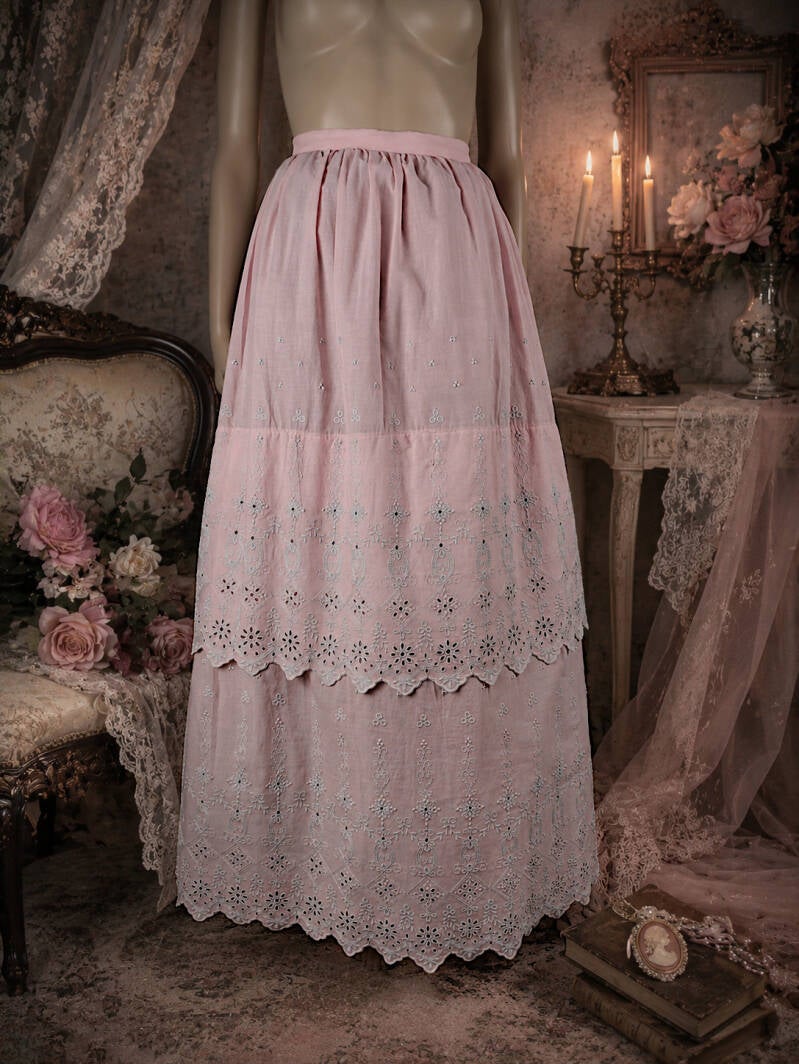
Sometimes both.
And occasionally I discover that the embroidery would look much prettier around the neckline than at the bottom.
The muslin version lets me make those decisions without risking my beautiful fabric.
Only after fitting the muslin do I place my pattern pieces on the real fabric.
This simple extra step can make the difference between an ordinary garment and one that looks professionally designed.
If the Entire Fabric Is Embroidered
When every part of the fabric is richly embroidered, my advice is simple:
Choose a simple sewing pattern.
The fabric already does all the talking.
Too many seams, gathers, pleats or complicated style lines can make the finished garment look busy.
Simple designs allow the embroidery to become the star of the project.
Some of my favourite choices are:
- A classic blouse
- A shirt dress
- An A-line skirt
- A simple summer dress
- A timeless tunic
Sometimes less really is more.
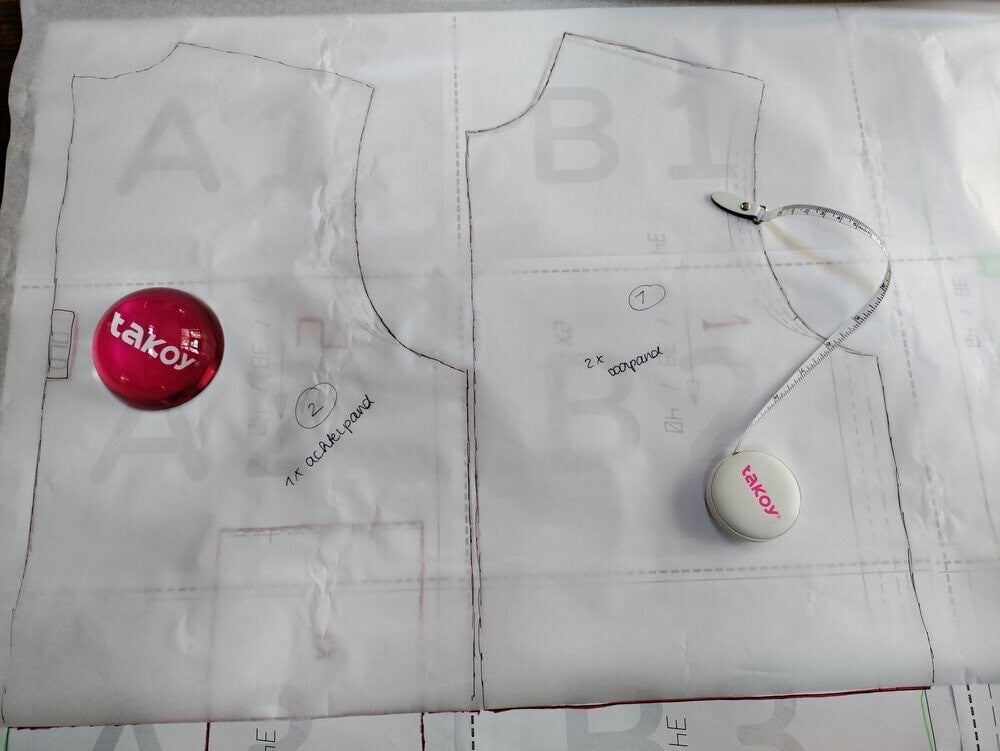
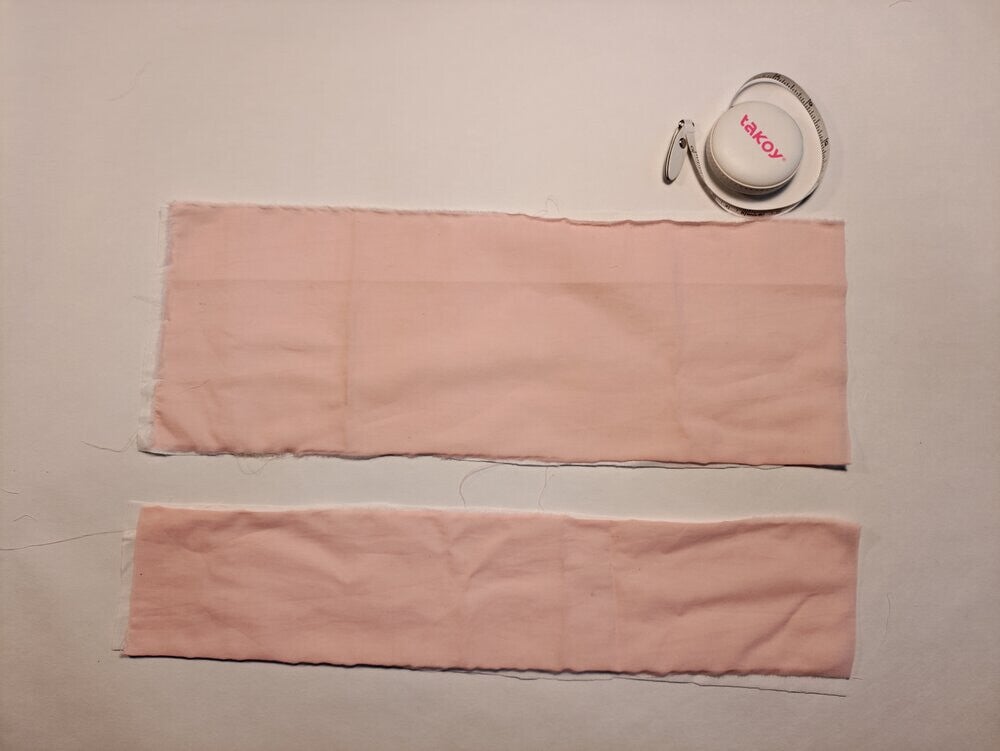
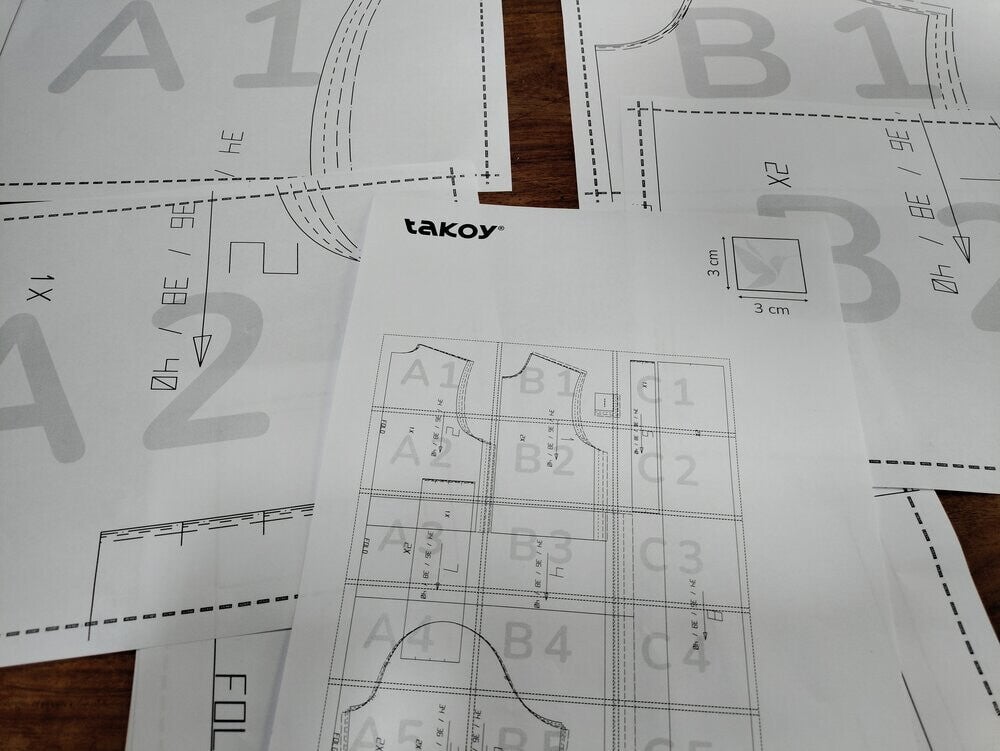
Think About Durability
Broderie fabric is beautiful, but it is usually not the strongest fabric.
The embroidery itself is often sturdy, but the base fabric may be delicate.
That is why I usually recommend making:
✓ Dresses
✓ Blouses
✓ Skirts
instead of trousers.
Trousers receive much more stress from sitting, walking and stretching, which may shorten the life of delicate embroidered fabrics.
Always Check the Base Fabric
Before buying your pattern, ask yourself one question:
What is underneath the embroidery?
This matters more than many people realise.
For example:
Cotton
- Breathable
- Comfortable
- Perfect for everyday clothing
Linen
- Natural look
- Slightly crisp
- Wonderful for summer garments
Silk
- Luxurious
- Elegant drape
- Better suited for special occasions
Polyester
- Often wrinkle resistant
- Usually easier to care for
- Sometimes less breathable
The embroidery may look identical, but the fabric underneath changes how the garment behaves.
Always let the base fabric help you choose your sewing pattern.
Cutting Tips
Take your time.
I know it is tempting to start cutting immediately.
Don't.
Instead:
- Press the fabric first.
- Study the embroidery carefully.
- Decide where you want the decorative border.
- Lay out every pattern piece before cutting.
- Step back and look at the overall design.
-
Sometimes moving one pattern piece only a few centimetres creates a much more balanced result.

Sewing Tips
Broderie fabric deserves a gentle approach.
I recommend:
- Use a new, sharp sewing needle.
- Test your stitch length on scraps first.
- Finish raw edges neatly.
- Press carefully from the wrong side whenever possible.
- Avoid pulling the fabric while sewing.
If your embroidery is thick, sew more slowly than usual.
Your sewing machine—and your nerves—will thank you.
One of My Favourite Projects
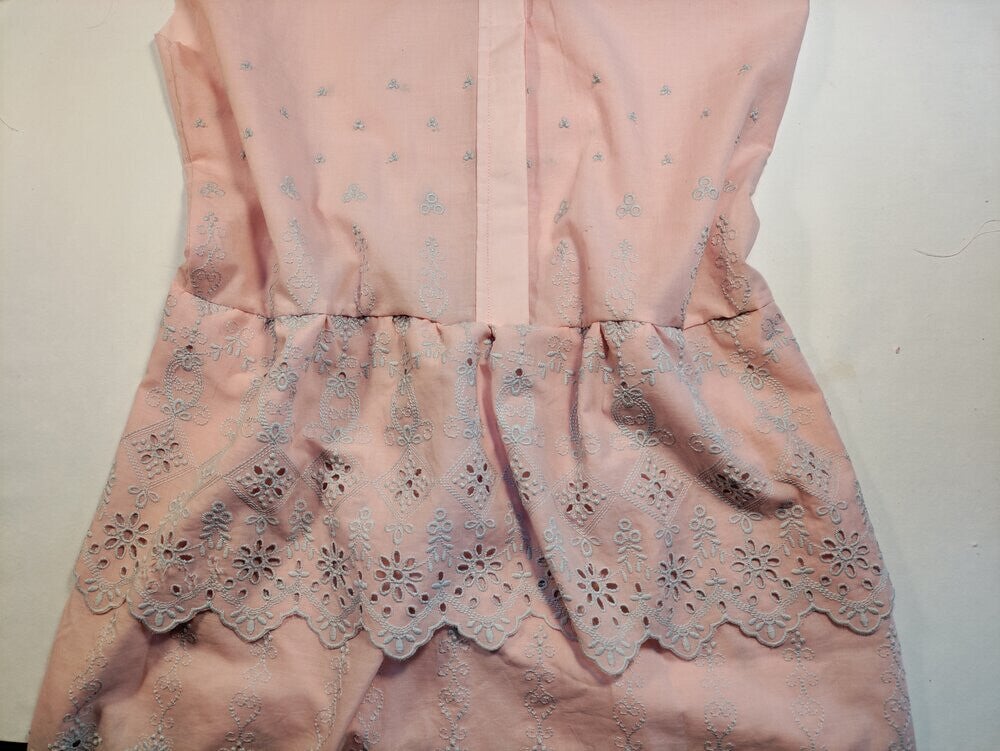
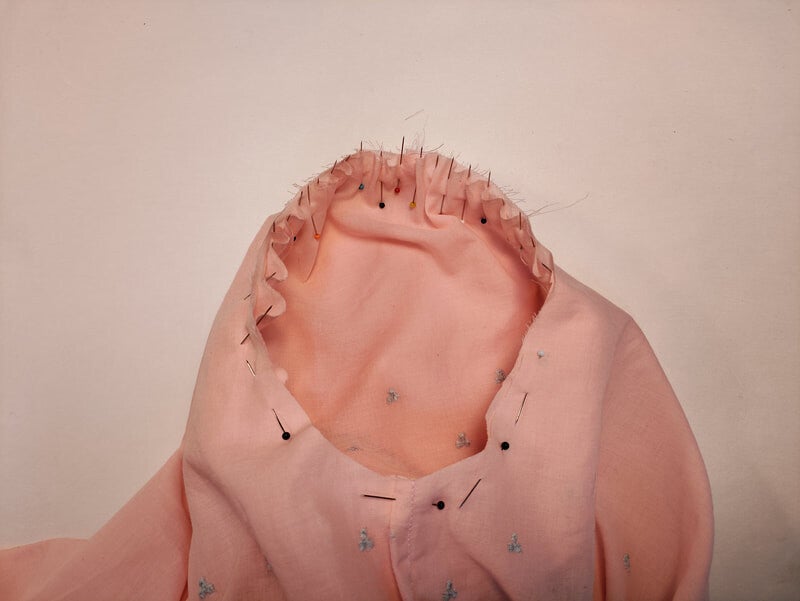
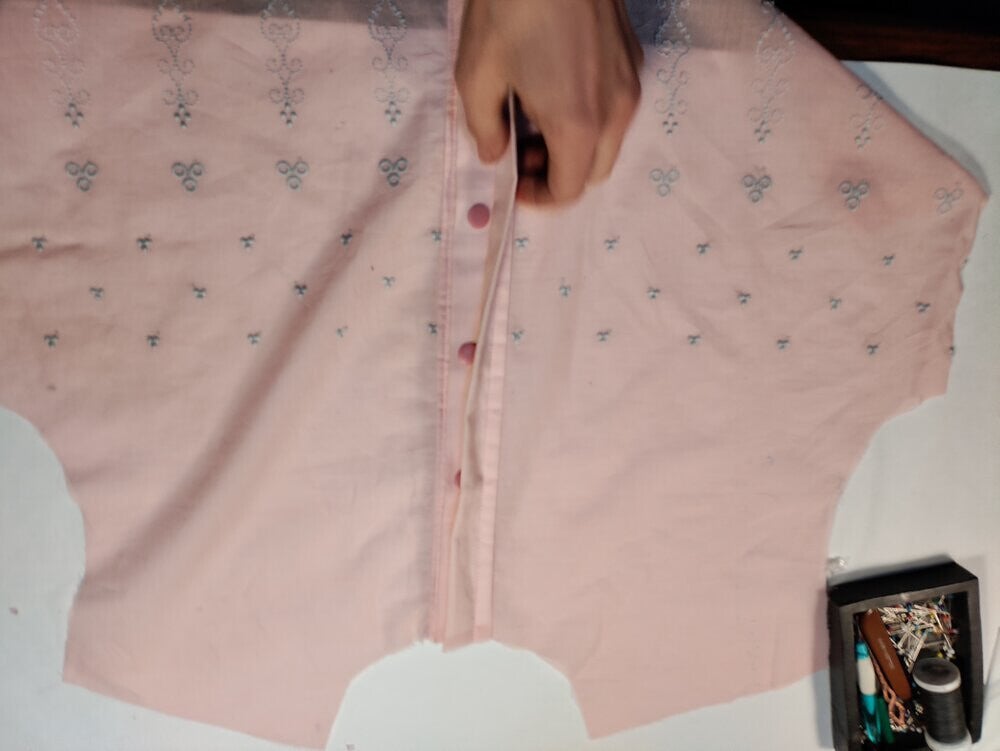
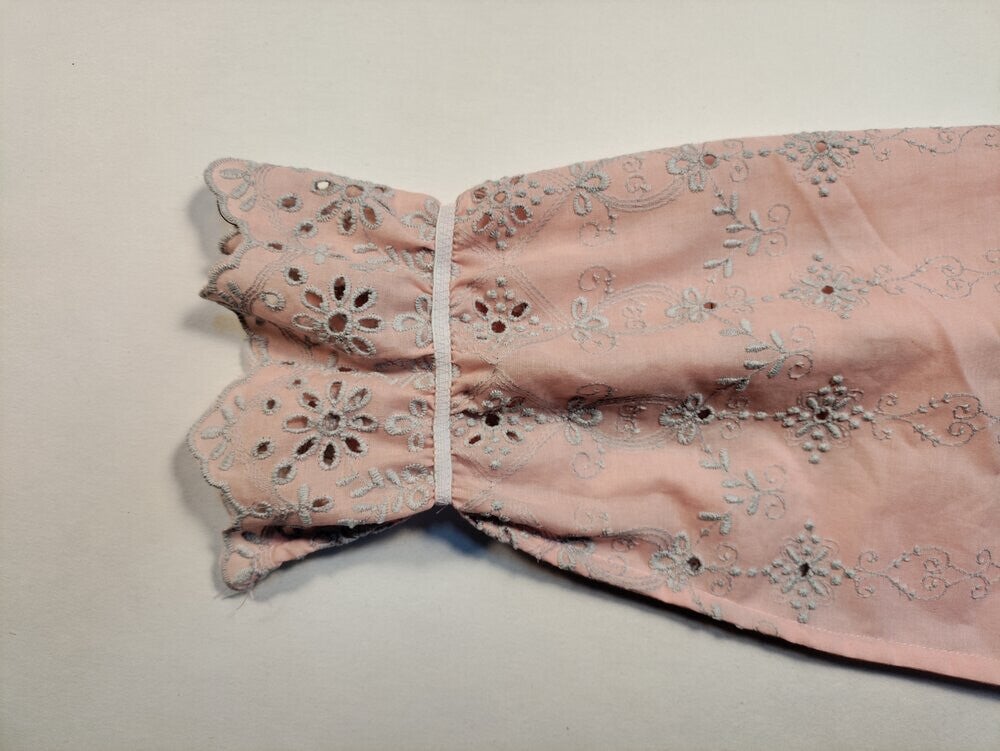
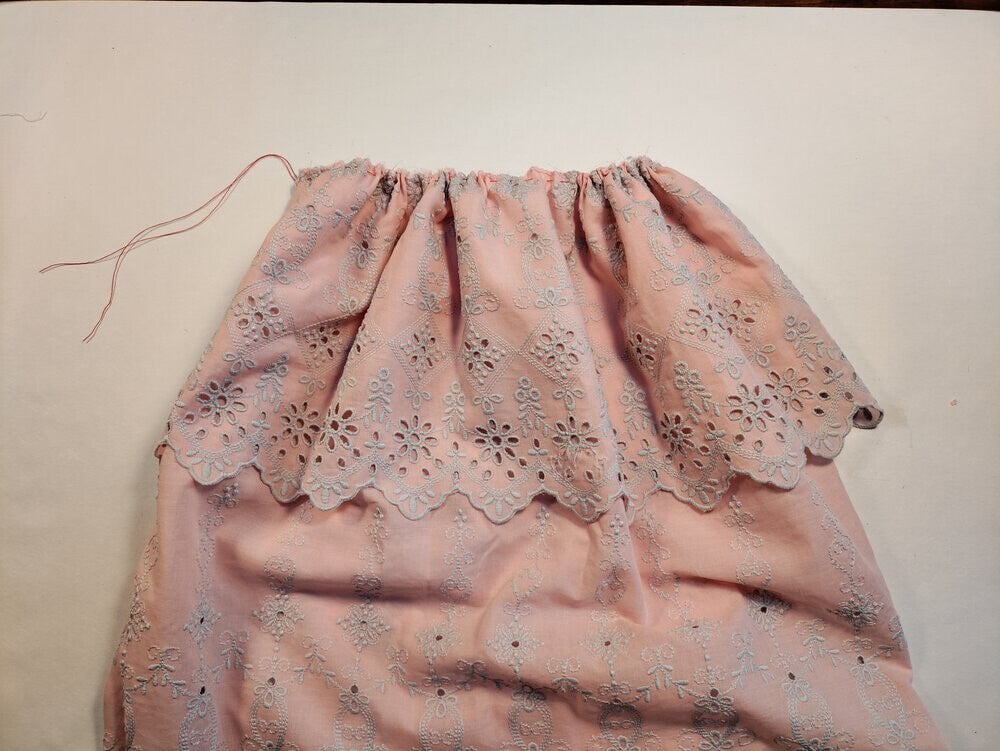
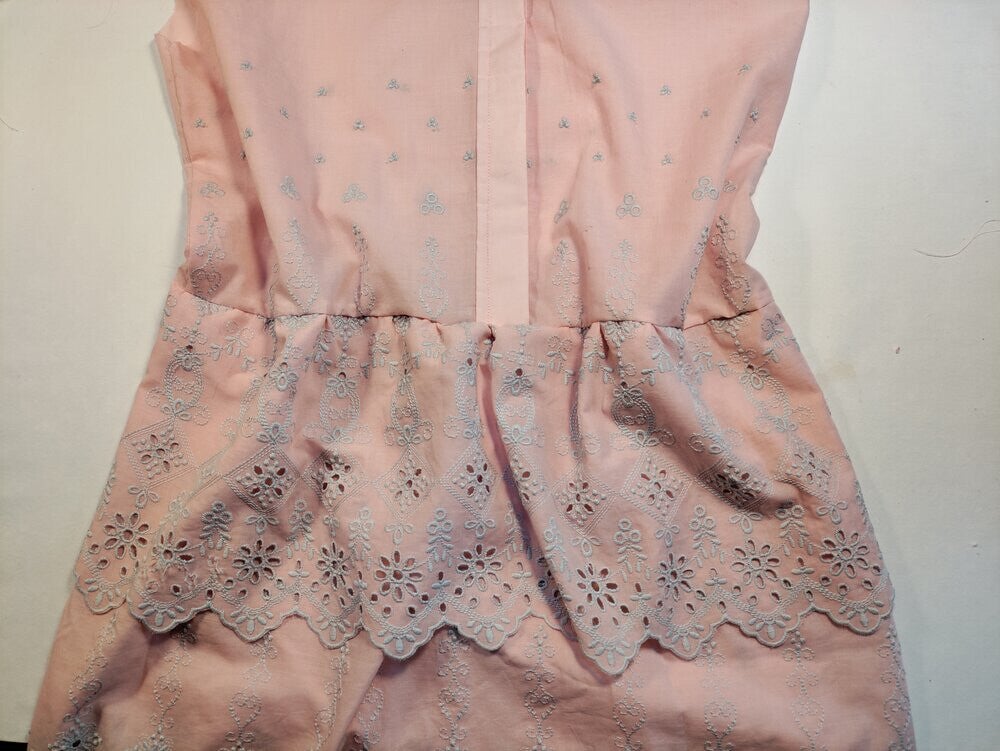
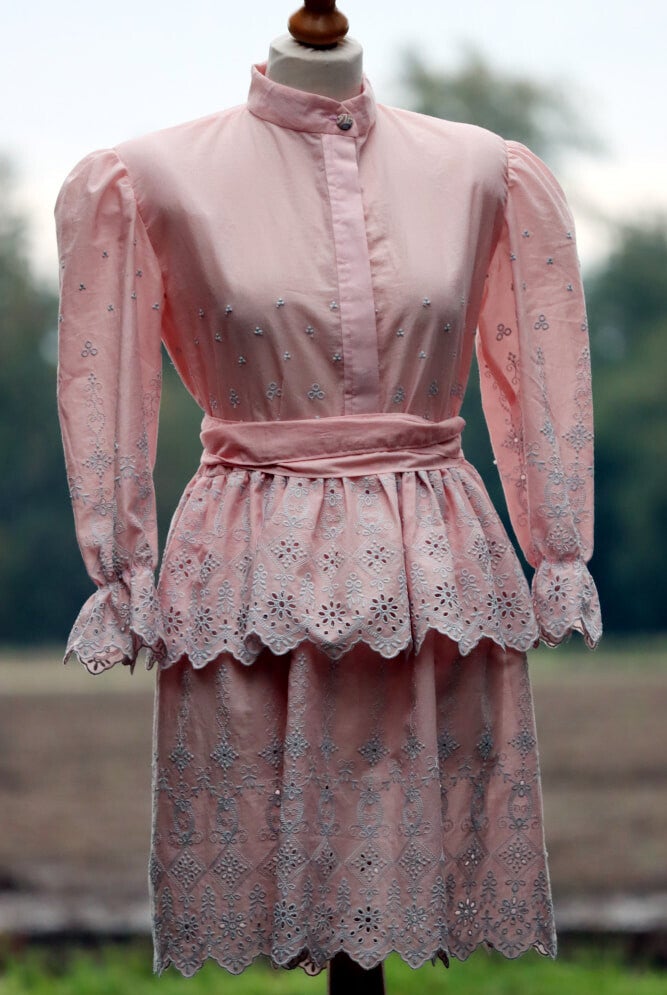
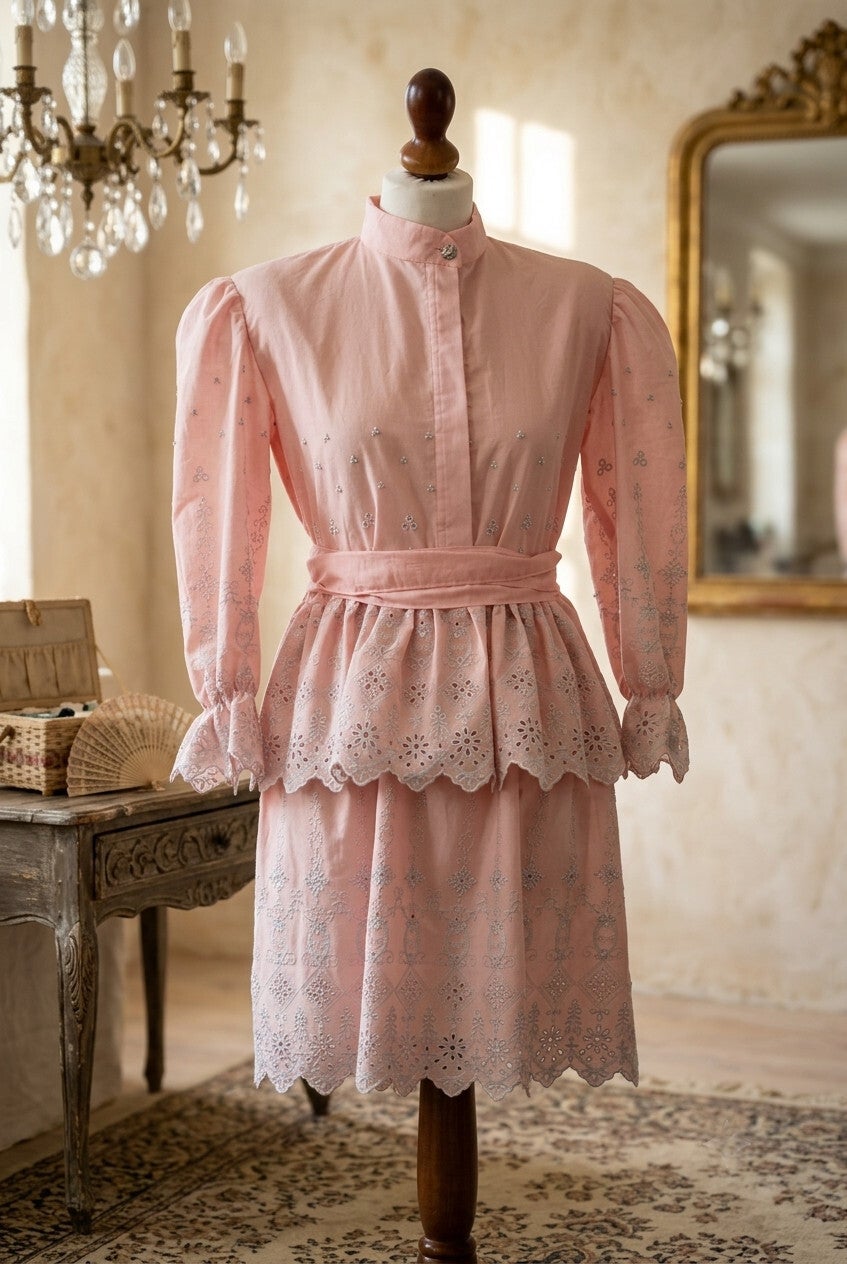
One of my favourite creations was a romantic blouse dress made from richly embroidered broderie fabric.
The dress has already found a happy new owner, but the matching skirt is still available in my shop.
I especially love this skirt because it is so versatile.
It can be worn as an elegant everyday skirt, but it also fits beautifully into fantasy wardrobes, fairy-inspired outfits and events such as Elfia.
Sometimes a single fabric can tell many different stories.
My Final Advice
Beautiful broderie fabric deserves patience.
Don't rush to cut.
Make a muslin first.
Study the embroidery.
Keep the pattern simple.
Let the fabric become the centre of attention.
That extra preparation may take one evening—but every time you wear your finished garment, you'll be glad you did.
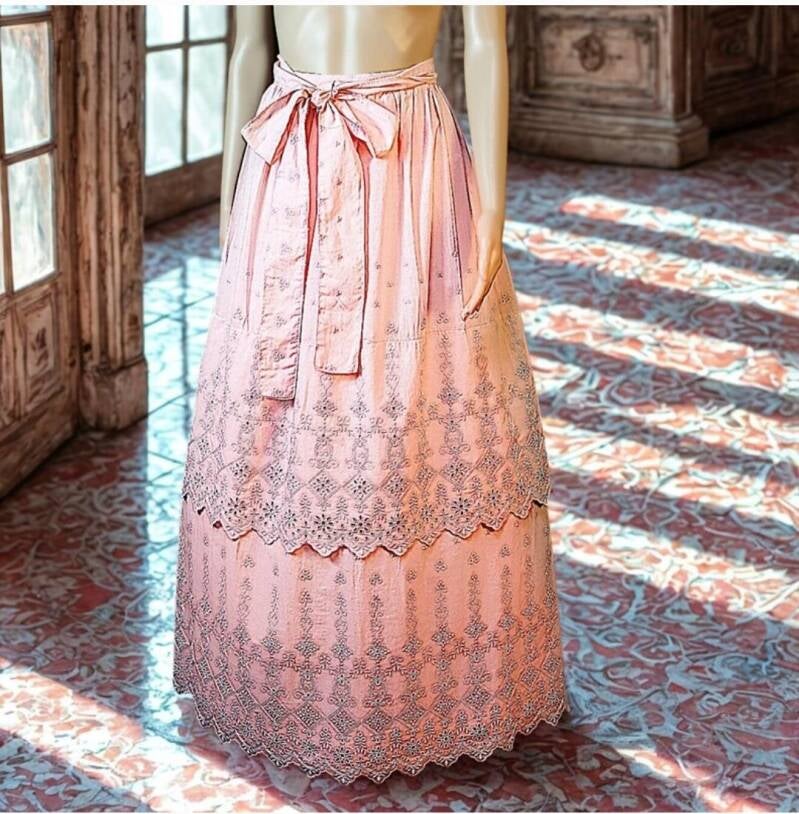
Victorian & Vintage Long Romantic Skirt

A graceful long skirt in soft pink embroidered cotton, designed with a romantic and timeless character. The delicate grey embroidery gives the fabric a refined, almost antique appearance, reminiscent of Victorian and vintage garments.
The skirt is made in two layers, allowing the richly embroidered edges to remain visible. This construction adds depth, movement, and a sense of traditional craftsmanship to the piece. The result is a flowing, elegant silhouette that reaches to the floor.
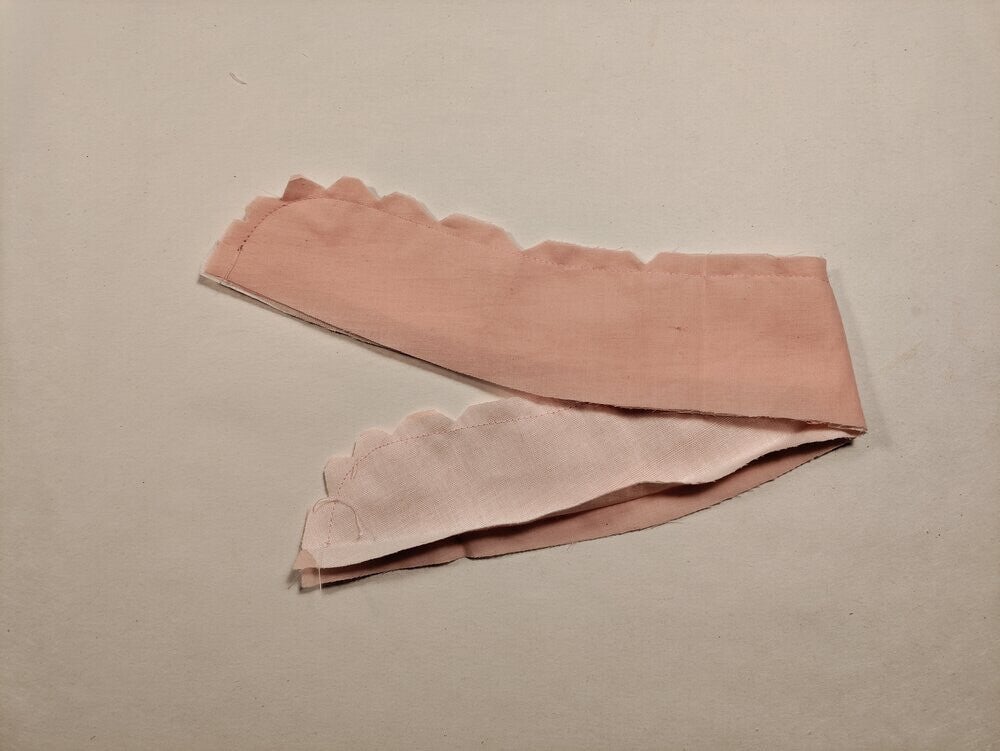
The waist measures approximately 81 cm, with a small allowance of 1–3 cm for a comfortable fit. The skirt is delivered with a long ribbon made from the same fabric, which can be used as a sash or decorative accent.
This is a unique, one-of-a-kind piece. No second example will be made.
Perfect for:
Romantic or vintage styling
Victorian costumes and nightwear
Baroque or historical outfits
Fantasy or fair events
Photoshoots and theatrical use
Details
Handmade and unique
Material: embroidered cotton
Color: soft pink with grey embroidery
Construction: double layer for visible embroidered edges
Length: floor length
Waist: approx. 81 cm (1–3 cm flexibility)
Includes matching long ribbon
A soft, romantic skirt that evokes the elegance of past centuries, made to be worn, cherished, and admired.
Add comment
Comments