Do you love waxed coats, or do you simply not understand the fuss about them?
I have to admit that I am firmly in the first group.
A good waxed coat has something wonderfully timeless about it. It is practical, sturdy and made for real life. Waxed coats have been worn for generations by farmers, hunters, horse riders, fishermen and people who simply enjoy spending time outdoors.
They are not delicate fashion pieces. They are working coats — and that is exactly what makes them so appealing.
So, can you sew a waxed coat yourself?
Yes, you can. And it can be a very satisfying sewing project.
In this article, I will show you what to look for in a waxed coat sewing pattern, which fabrics and linings work well, and which details can turn a simple jacket into a really useful outdoor coat.
Why are waxed coats so popular?
Waxed coats are traditionally made from cotton fabric treated with wax. The wax makes the fabric water-repellent and helps protect it from dirt and wear.
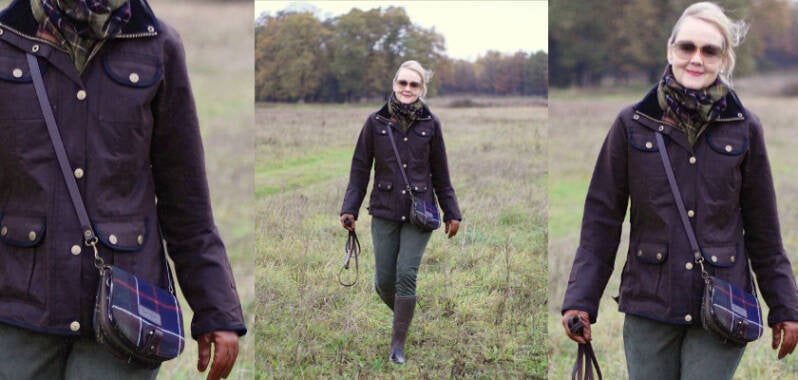
This makes a waxed coat particularly useful outdoors. If you are walking through woods, working around horses, gardening or simply walking the dog in bad weather, a sturdy waxed coat can take quite a lot of punishment.
A branch, thorny bush or rough fence is much less frightening when you are wearing a properly made outdoor coat.
And there is another advantage: a good waxed coat can last for years.
That longevity is part of its charm.
The timeless English country look
There is also something very attractive about the traditional style of a waxed coat.
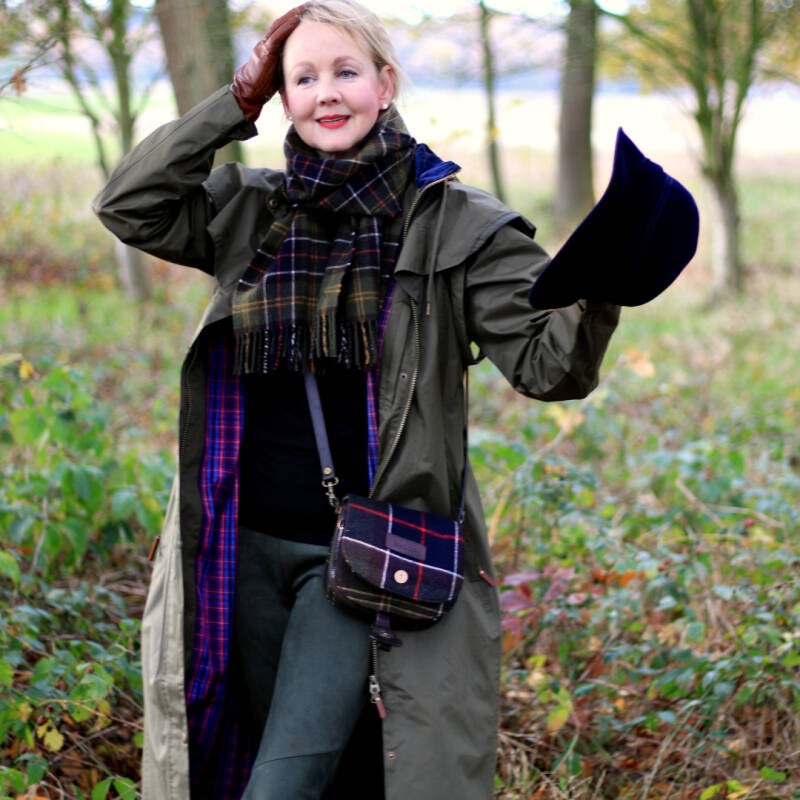
Think deep green, moss, brown, beige, navy or black. Add a tartan lining, a practical collar and plenty of pockets, and you immediately get that classic English country look.
It is practical, but it can also be remarkably elegant.
That combination is probably one of the reasons waxed coats never really disappear from fashion.
They are not particularly interested in fashion trends. They simply work.
Short or long?
Waxed coats come in many different shapes, but two basic styles are particularly common: the shorter jacket and the longer coat.
A short waxed jacket gives you plenty of freedom of movement and is very practical for everyday use.
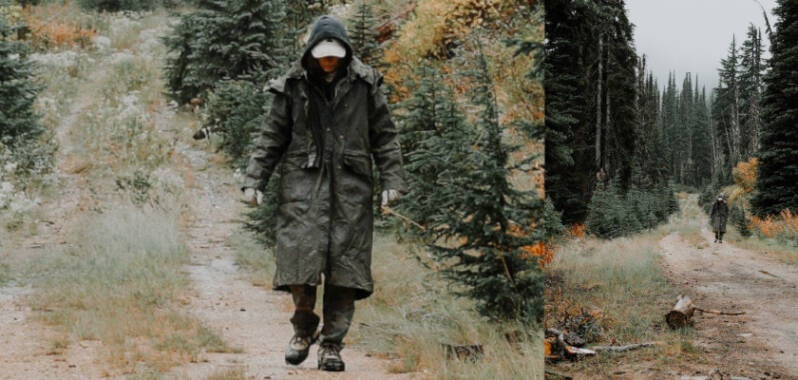
A longer coat gives considerably more protection, especially when you are riding a horse or spending a lot of time outdoors.
And when you make one yourself, you are not limited to the standard lengths found in shops.
You can make it exactly as long as you want.
That is one of the great advantages of sewing your own coat.
Can you really sew a waxed coat yourself?
Absolutely.
The interesting thing is that there are not many sewing patterns specifically labelled “waxed coat”. But that does not mean you cannot make one.
A sturdy outdoor jacket, field jacket or parka can be an excellent starting point.
The pattern does not have to look exactly like a traditional waxed coat. What matters is the basic construction: a practical shape, enough ease for movement, useful pockets and sleeves that allow you to work and move comfortably.
You can then add the details that make it look and function like a traditional waxed coat.
Sewing patterns to consider
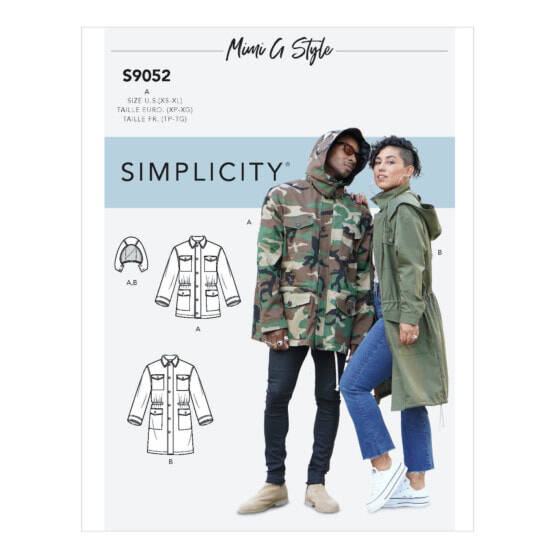
One pattern I particularly like as a starting point is Simplicity 9052. It offers a sturdy jacket design with several practical details, including multiple front pockets, different lengths and a detachable hood. With some adjustments, it can make a very good basis for a waxed outdoor coat.
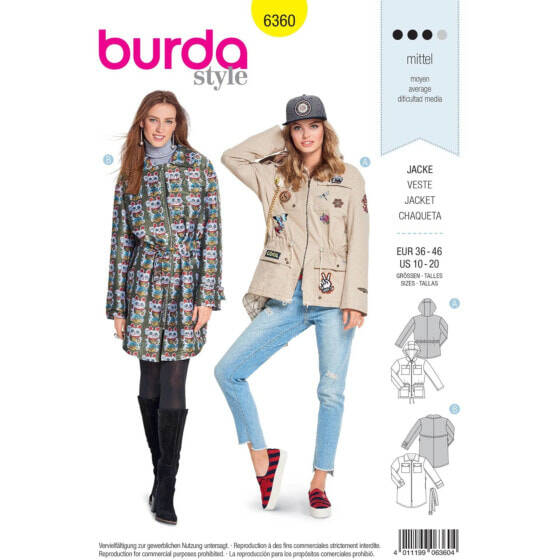
Burda 6360 is another interesting option. Model A has a more parka-like shape and useful pockets. I would remove or change the waist drawstring for a more traditional waxed-coat appearance.
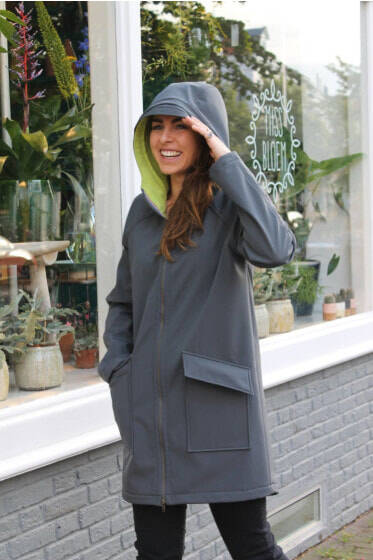
It's a fit 1011: A third possibility is to start with a simple raincoat or outdoor jacket pattern and change the details. Shorten or lengthen the coat, add patch pockets, change the closure and use a sturdy two-way zipper.
The important thing is not to look for a pattern that already has every single detail.
Look for a good basic shape and make the rest yourself.
That is often much more rewarding.
An old coat can become your pattern
There is another method I particularly like.
If you already own an old waxed coat that has seen better days, don't throw it away too quickly.
An old, worn-out coat can be an excellent source of information.
But there is another option.
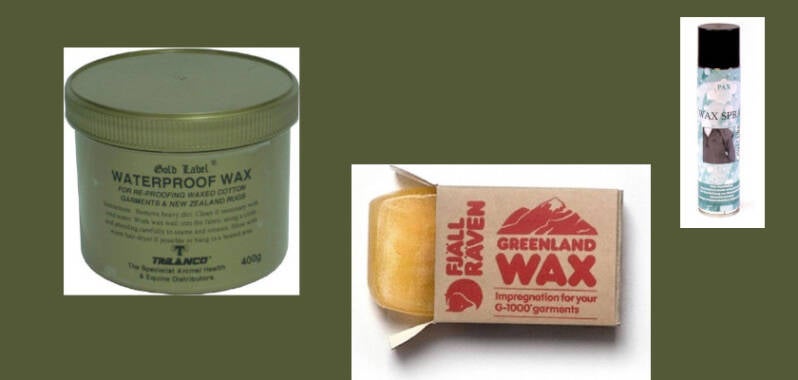
You can start with a strong cotton canvas and apply the wax treatment yourself afterwards.
This can be done by applying wax by hand or by using a suitable wax spray. If you use a spray, always work outdoors or in a properly ventilated area and follow the manufacturer's instructions.
I would rather apply two light layers than one very heavy layer.
The fabric should remain flexible. You don't want to turn your beautiful new coat into a piece of cardboard!
What about waterproof fabric?
You could, of course, make an outdoor coat from modern waterproof nylon or polyester.
That can be perfectly practical.
But personally, I would not choose it if the whole point is to make a traditional waxed coat.
There is something special about waxed cotton. It has a different feel, appearance and character from a modern technical raincoat.
And, perhaps most importantly, it has that wonderfully traditional outdoor look.
Choosing the lining
The lining is one of my favourite parts of making a coat.
For a waxed coat for spring or autumn, a good cotton lining works beautifully.
And if you want that traditional country-house feeling, choose tartan.
A checked lining can make even a very simple coat look immediately more special.
For a winter coat, a wool lining can add considerably more warmth.
One little tip: if you are buying a beautiful checked or wool fabric for the lining, buy a little extra.
You could turn the leftover fabric into a matching scarf.
Very simple, classic and rather lovely.
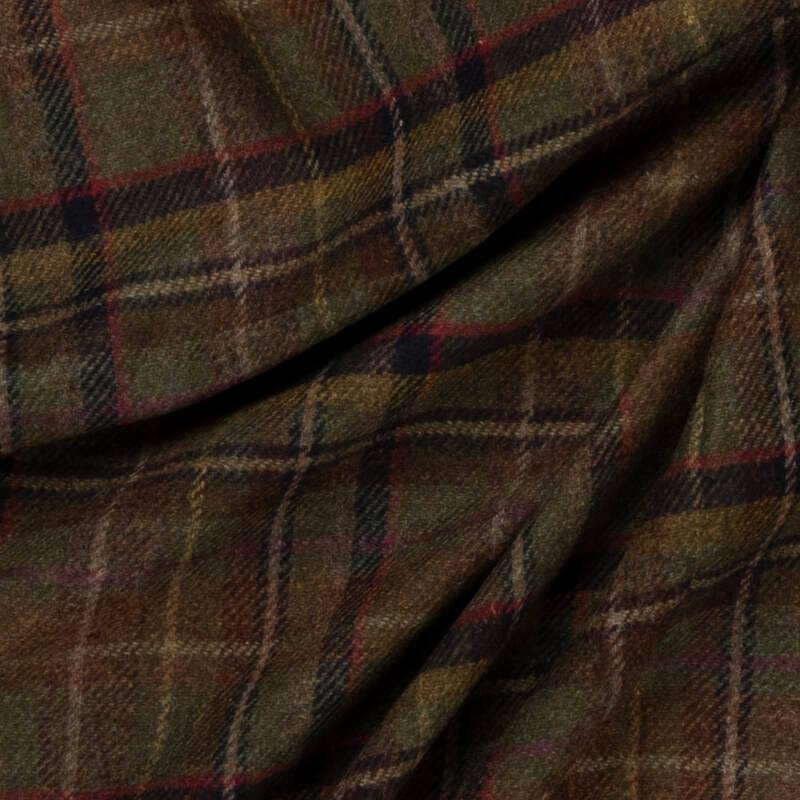
Which colours work best?
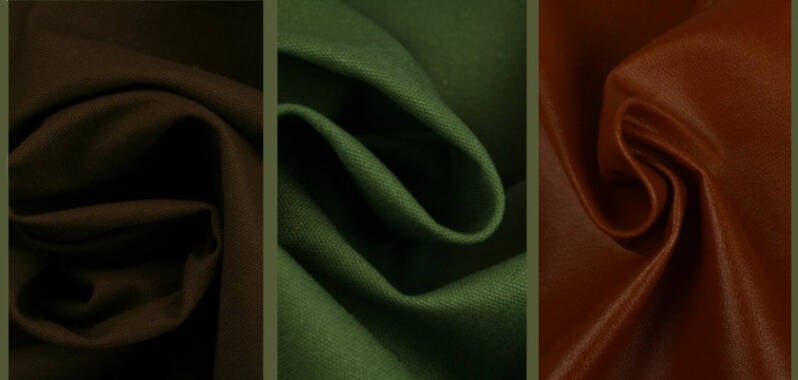
Traditional waxed coats tend to use colours inspired by nature:
- Forest green
- Moss green
- Dark brown
- Tan
- Beige
- Navy
- Black
But there is absolutely no rule saying your coat has to be green or brown.
A red waxed coat can look wonderful.
So can a deep blue one.
And if you are making the coat yourself, you can make it as traditional — or as personal — as you like.
The details make the coat
A waxed coat may look quite simple from the outside, but a really good one contains many clever little details.
And this is where making your own becomes particularly interesting.
Plenty of pockets
Put pockets on the outside and inside.
A good outdoor coat should be able to carry quite a lot without requiring a handbag or backpack.
Large patch pockets, flap pockets and hidden inside pockets are all useful.
Think about what you actually carry with you and design the pockets accordingly.
Strong fastenings
Use sturdy press studs rather than delicate buttons where appropriate.
These coats are made to be used, so the fastenings should be able to cope with real life.
For the main closure, a good-quality metal two-way zipper is worth the investment.
The two-way opening is particularly useful in a longer coat because it gives you much more freedom of movement.
Side openings
If you are making a long coat, consider adding side or back vents.
These are particularly useful when riding or climbing into a saddle.
They can be secured with press studs when you want the coat closed.
A detachable hood
A detachable hood is another lovely feature.
You may not need it every day, but when the rain arrives, you will be very glad you included it.
It is a slightly more complicated construction, but it is certainly possible to make.
Warm cuffs
A cuff inside the sleeve can stop cold air from travelling up your arm.
It is a small detail, but these are exactly the details that make an outdoor coat comfortable.
A shoulder cape
Long traditional waxed coats sometimes have a shoulder cape.
Apart from looking wonderfully traditional, it gives an extra layer of protection against rain.
A detachable cape is especially practical.
The collar
Corduroy collars are a classic choice.
But if you prefer a more modern appearance, imitation leather can also look very attractive.
This is another small detail where you can give your handmade coat its own personality.
A few traditional wax-coat details worth knowing
There are some wonderful details hidden in older outdoor coats.
Long riding coats often have generous openings at the back, sometimes with straps that can be secured around the legs. This allows the coat to sit properly over a horse's saddle.
Older hunting coats can have surprisingly large rear compartments. These were designed to give the wearer somewhere to carry things while keeping both hands free.
And then there is one of my favourite observations:
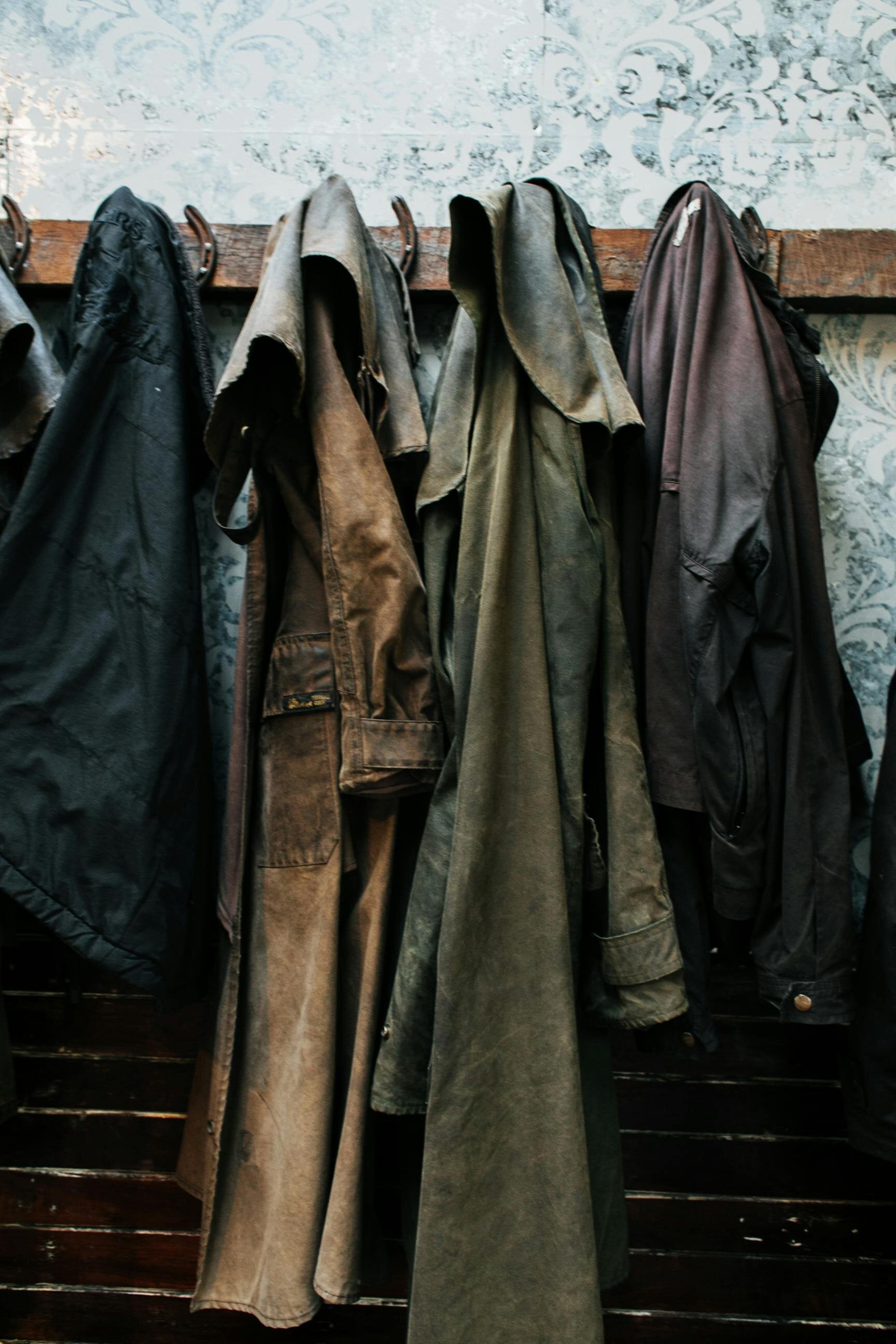
The older the waxed coat, the more character it seems to have.
A little wear, faded fabric and softened wax can give a coat a wonderful history.
Why make a waxed coat yourself?
There are several very good reasons.
First, a high-quality waxed coat from a well-known outdoor brand can be expensive. When you make your own, you can choose where to spend your money: on the fabric, the lining, the zipper and the details that really matter to you.
Second, there is the question of fit.
Outdoor coats are supposed to have room for movement, but how much room do you actually need?
Are you going to wear a thin shirt underneath?
A thick wool sweater?
A chunky turtleneck?
The answer makes quite a difference.
When you buy a coat online, you have to guess.
When you sew it yourself, you can fit, adjust, try again and fit again.
That is one of the greatest advantages of making your own clothes.
And third, you can make something genuinely personal.
Perhaps you want a beautiful tartan lining.
Perhaps you want a bright red coat.
Perhaps you need extra pockets because you are always carrying sewing supplies, dog treats, gloves and half a dozen other things.
You can simply make the coat suit your life.
And why not make one?
There is also a very simple reason to sew a waxed coat yourself:
because it is a wonderful sewing challenge.
If you already sew tailored jackets, historical costumes, riding clothes or complicated cosplay costumes, an outdoor coat is a fascinating project.
It combines practical construction with thoughtful design.
And unlike many sewing projects, the finished garment is not something that has to sit carefully in a wardrobe.
You can wear it.
You can take it outside.
You can get it dirty.
You can walk through the woods in it.
You can wear it for years.
And eventually, it may become one of those garments that looks even better because it has been used.
That, to me, is the real beauty of a good waxed coat.
Make it well. Wear it often. And let it acquire a little history of its own.
Happy sewing!
Add comment
Comments