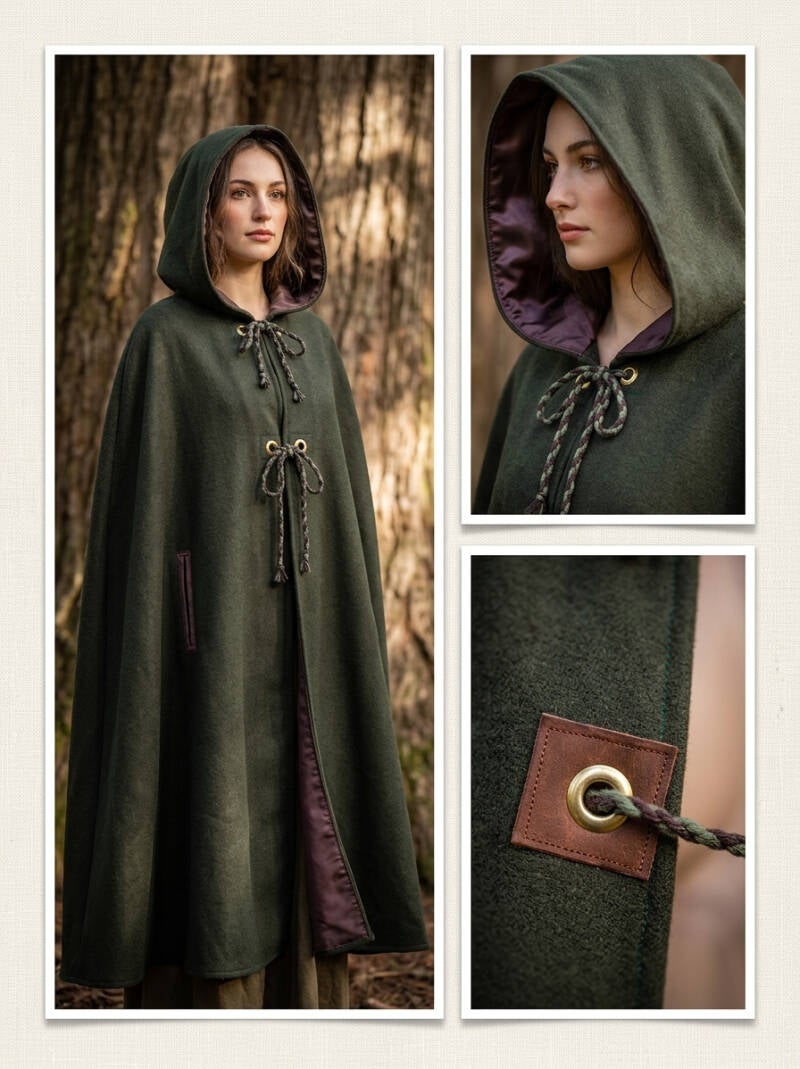
Cloaks: The Unsung Heroes of Medieval Costumes, LARP and Cosplay!
A beautiful cloak is never just an extra piece of clothing. It can make or break an entire costume!
Let’s talk about cloaks. Or mantles, if you prefer that word. The perfect finishing touch for a medieval outfit, a LARP character, a reenactment costume or a cosplay.
I make cloaks quite often, and I have a little confession to make: I think they are terribly underrated!
People sometimes spend a lot of time choosing the perfect tunic, dress, armour or other costume pieces. And then, almost as an afterthought, they say: “Oh, and perhaps a cloak to go with it?”
Perhaps? Just a cloak?
Oh, dear. We need to have a little chat! 😊
-
 Medieval Inspired Cloak Embroidery €255.00 FREE shipping
 -
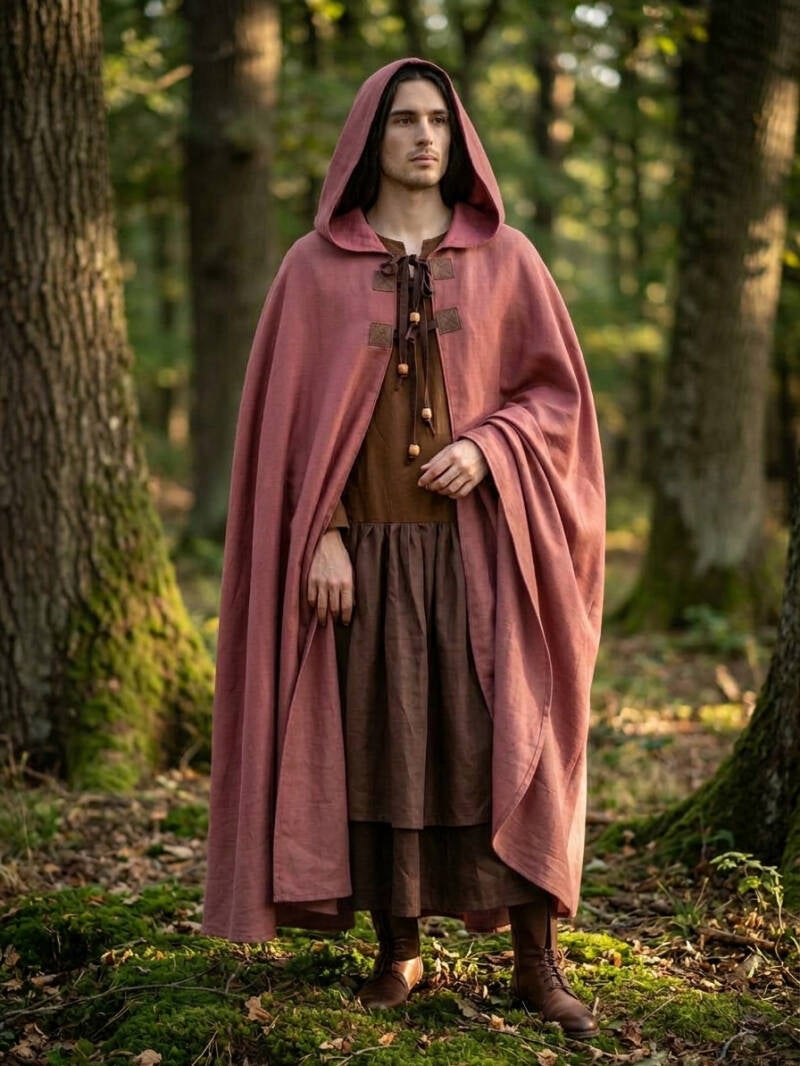
 Medieval Long Linen Silk Hooded Cloak €295.00 FREE shipping
 -
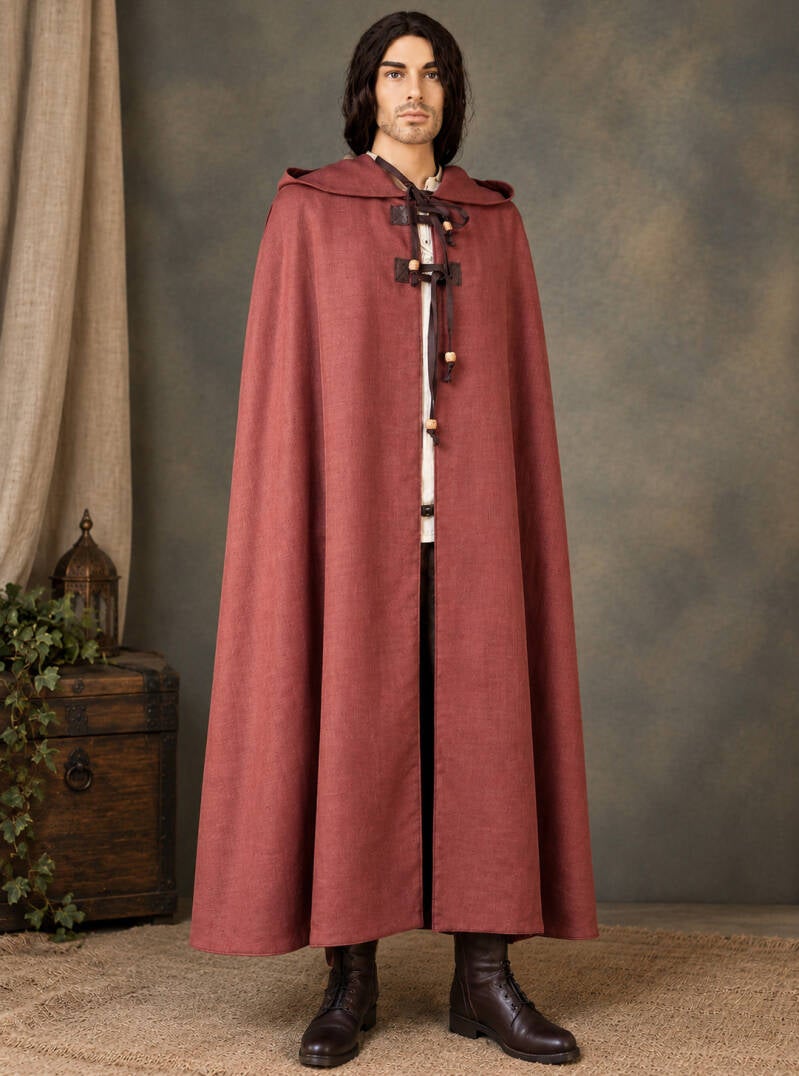
 Medieval Long Minimalistic Linen Cloak Brique €265.00 FREE shipping

The Art of Making a Beautiful Cloak
First, let me tell you something about making a cloak.
A cloak may look like a simple piece of fabric hanging from your shoulders. But believe me, there is quite a lot of work behind a beautiful one.
Have you ever tried cutting several metres of fabric on a large table? Or even on the floor, because your table is simply not big enough?
Welcome to my world!
Working with large pieces of fabric requires space, patience and a good eye. You need to keep track of the pattern, make sure everything is properly aligned and create a beautiful shape. The fabric must fall well, and the finished cloak should move naturally when you walk.
And then there is the lining.
A lining should not hang loose, pull at the outer fabric or spoil the shape of the cloak. It needs to sit properly and move beautifully with the rest of the garment.
And sewing all those enormous pieces together? That requires concentration, too. There is a lot of fabric to handle, and keeping everything neat and even is not always easy.
A cloak may look simple when it is finished, but getting it right takes time, experience and a good understanding of textiles.
And that brings me to another important subject: the fabric!
The Fabric: Oh, My Poor Wallet!
I love beautiful natural fabrics. Wool, linen and silk can make a cloak look and feel truly special.
But there is one little problem.
The price!
Have you ever bought several metres of good-quality wool fabric? If you have, you will understand why I sometimes take a deep breath before paying for the fabric for a new cloak.
And then I take another look at the receipt.
And perhaps another deep breath. 😂
A wide cloak can require a surprising amount of fabric. Depending on the design, the length and the fullness, you may need many metres. And you cannot always cut the pattern in the most economical way. Sometimes the fabric needs to be arranged in a particular direction to achieve the right shape and drape.
Good fabric costs money, and a handmade cloak also requires many hours of work.
So, yes, a beautifully made cloak can have a considerable price. There is a very good reason for that.
Of course, there are cheaper alternatives. Not every costume needs expensive wool or silk. But when you choose a handmade cloak made from quality materials, you are paying for much more than a piece of fabric.
You are paying for the materials, the knowledge, the construction and the time spent making something that will hopefully serve you for many years.
And that is worth remembering when you compare prices.
No, a Cloak Is NOT Just an Extra!
This is the part where I would like to make my point rather strongly.
A cloak is often treated as an extra. The main costume is important, but the cloak is something you can add later if there is enough money left.
I disagree!
Think about the first impression your character makes.
Imagine a medieval traveller entering a crowded market. A mysterious LARP character walking through the forest. A noblewoman arriving at a historical festival. Or a fantasy hero standing in the wind.
What do you notice first?
Very often, it is the cloak.
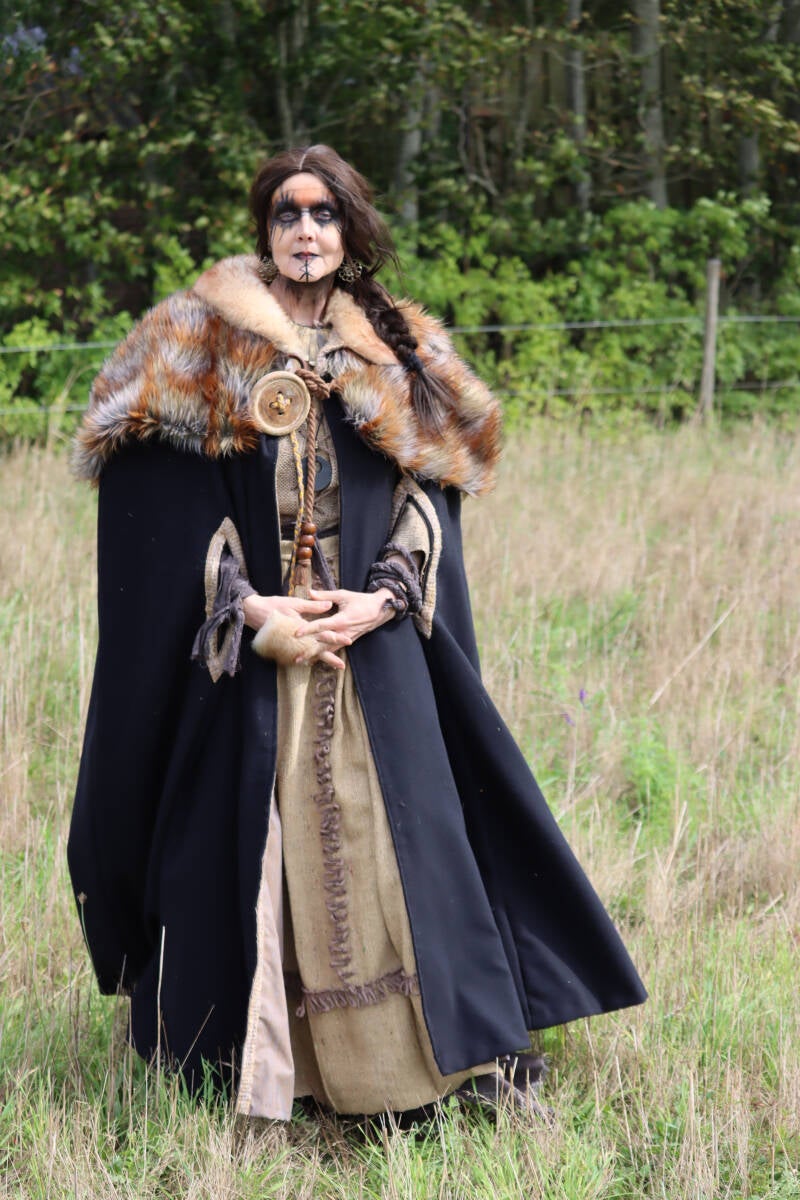
Its colour, its length, the way it moves and the way it frames the person wearing it can completely change the appearance of an outfit.
A beautiful cloak can make a simple costume look impressive. It can add mystery, elegance, drama or authority. It can help tell the story of your character before you have even spoken a single word.
And when the wind catches the fabric and makes it move? Oh, that is a wonderful sight!
A cloak is not simply something you wear over your costume.
A cloak is part of the costume. Sometimes, it is the part that brings everything together.
A Cloak Is Practical, Too!
There is another reason why I love cloaks, especially for medieval festivals, LARP events, reenactments and outdoor fairs.
They are incredibly useful!
The weather does not always cooperate with our plans. You may spend an entire day at an event, walking around, talking to people and enjoying the atmosphere.
And then the temperature drops.
A good wool cloak can be wonderfully warm. It may allow you to leave your ordinary winter coat at home and remain comfortably dressed in character.
A cloak can also provide protection from the sun, depending on the fabric and how tightly it is woven. And when the weather turns unpleasant, a suitable cloak can offer some protection against wind and light rain.
Of course, not every cloak is suitable for every weather condition. A lightweight silk cloak will not keep you as warm as a thick wool one, and even wool has its limits in heavy rain.
But choosing the right cloak can make a real difference to your comfort at an outdoor event.
And there is something rather lovely about being able to stay in character all day, instead of putting on a modern jacket whenever it gets cold.
Practical and beautiful? That is a combination I appreciate!

Which Fabric Should You Choose?
This is where things become interesting.
There is no single fabric that is perfect for every cloak. The best choice depends on what you want to use it for.
Wool is an excellent choice for many medieval-inspired cloaks. It has a lovely drape, feels substantial and can provide warmth. It is particularly suitable for autumn and winter events.
Linen is a beautiful natural fabric for lighter garments and certain historical styles. It can work well for warmer weather, although it does not provide the same warmth as wool.
Silk can be wonderful for elegant, lightweight cloaks and dramatic costume designs. It has a beautiful movement and can create a luxurious appearance.
Cotton comes in many different weights and can be useful for certain costume styles. The quality and weave make a considerable difference to the final result.
And what about polyester satin?
There is nothing wrong with using it when it suits the project. It can be inexpensive, colourful and useful for costumes that need a particular appearance.
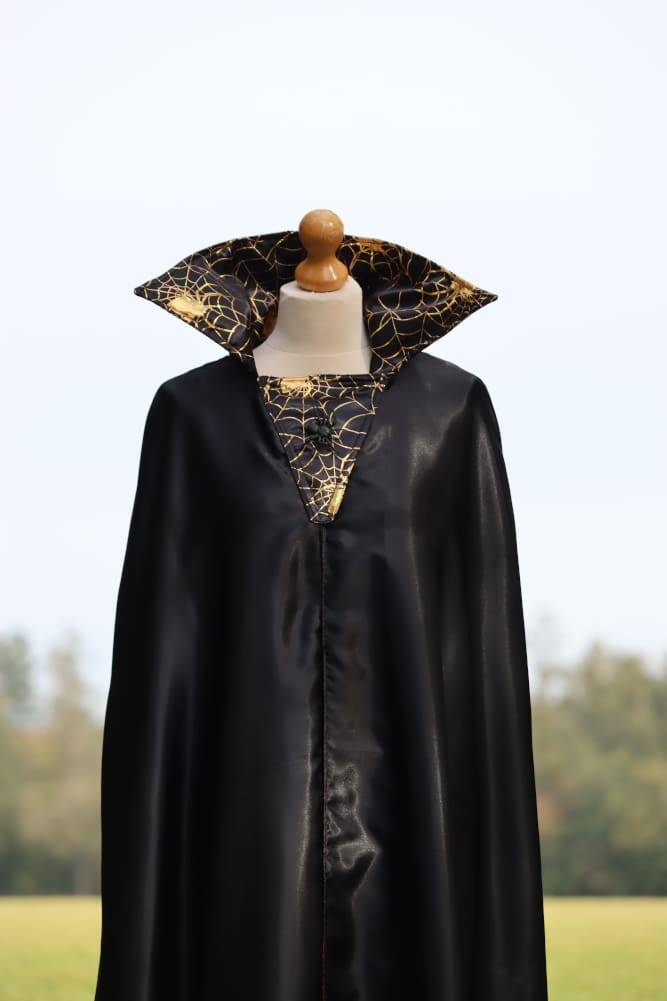
However, cheap, shiny satin is not always the best choice for a historical-looking cloak. Sometimes it reflects light in a way that makes the garment look more like a theatrical costume than a piece of clothing inspired by history.
That may be exactly what you want for a particular character!
But if you are aiming for a more authentic medieval appearance, I would usually look at the texture, weight and drape of the fabric before choosing it.
A fabric can look wonderful on a photograph and behave quite differently when you start wearing it.
I always think it is worth considering how the material will move, how it feels and how it will look in natural daylight.
A Little Story About the Wrong Fabric
Some time ago, I saw a lady at a medieval festival wearing a homemade cloak.
The colour was lovely, and the general shape was very nice. I could see the idea behind it, and I appreciated the fact that she had made something herself.
But the fabric was jersey.
Jersey is a knitted, stretchy fabric, often used for T-shirts and comfortable everyday clothing.
And that was the problem.
For the particular cloak she had made, the fabric did not seem like the best choice. The stretch changed the way the garment hung, and it lacked the kind of structure and drape I would have preferred for that design.
Now, please do not misunderstand me. There is nothing wrong with experimenting, making your own costumes or using materials you already have. I am certainly not going to tell anyone that they must spend a fortune on fabric to enjoy a medieval festival!
But this is exactly why fabric knowledge matters.
Two cloaks can have almost the same pattern and still look completely different because of the materials used.
The right fabric can help a cloak hang beautifully, keep its shape and move in a way that suits the design. The wrong fabric can work against all your efforts.
And sometimes, spending a little more time choosing the material makes a greater difference than adding lots of decorations.
As a costume maker, I find that fascinating.

What Should You Think About Before Buying a Cloak?
If you are planning to buy or commission a cloak, I would recommend asking yourself a few questions first.
How long should it be?
Do you want a short cloak that leaves your legs free, a knee-length version or a dramatic, floor-length mantle?
Remember that a very long cloak can look spectacular, but it can also collect mud, get caught under your feet and become rather inconvenient in a crowded event.
What will you use it for?
A cloak for a summer LARP event has different requirements from one designed for winter reenactment.
Do you need warmth? Freedom of movement? A dramatic appearance? Protection from the elements?
Which fabric would be best?
Think about the weight, texture, drape and durability of the material. Consider whether you will wear it frequently and whether you want something that will last for years.
Which colour suits your character?
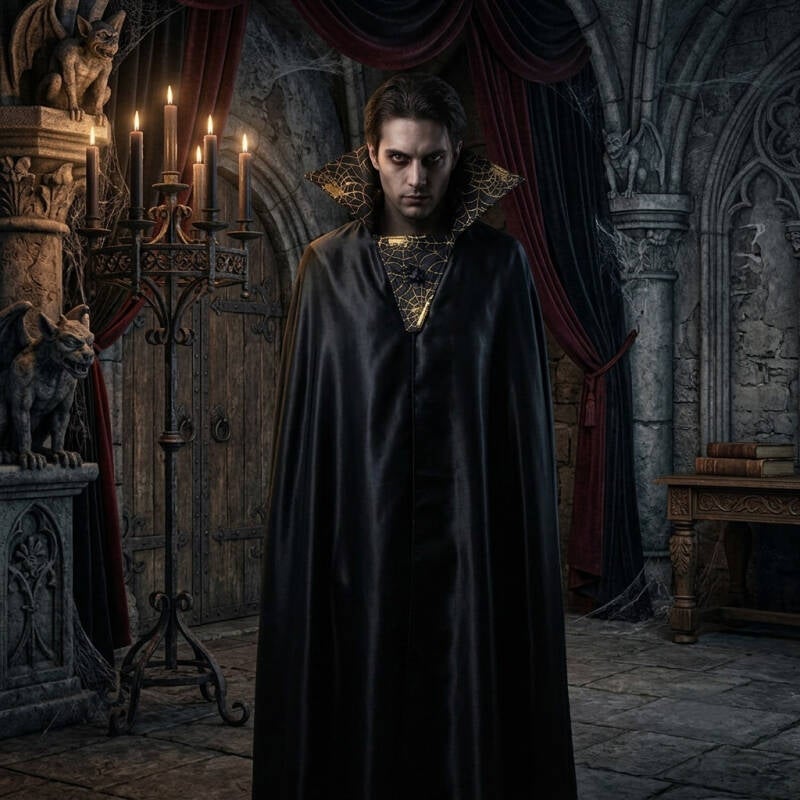
Black can look mysterious and dramatic. Deep green works beautifully for forest characters. Brown and natural wool shades can create a wonderfully historical appearance.
Red, blue and other rich colours can make a cloak stand out in a crowd.
And sometimes, a simple, natural colour is much more effective than something shiny or heavily decorated.
How will you fasten it?
A cloak can be closed with a brooch, clasp, tie or another suitable fastening. The choice affects both the appearance and the comfort of the garment.
It is worth thinking about how easily you want to put it on and take it off, especially during a long festival day.
These details may seem small, but together they determine whether your cloak becomes a favourite garment or something that stays in the wardrobe.
-
 Handmade Medieval Jester Cape €495.00 FREE shipping
 -
 Black Bouclé Cape with Silk Lining Quilted €495.00 FREE shipping

Handmade Cloaks and Commission Work
I regularly make cloaks and capes, both as part of larger costumes and as individual pieces.
I enjoy working on them because they offer so many possibilities. A cloak can be simple and practical, richly textured, historically inspired or completely fantastical.
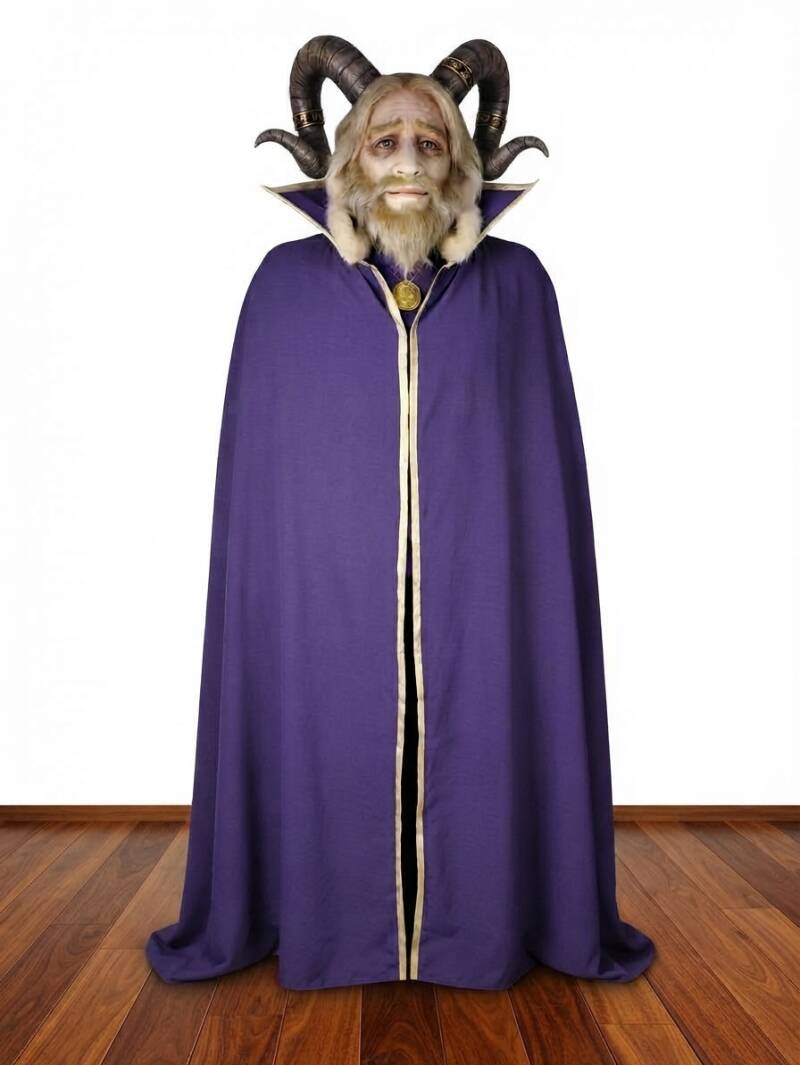
Recently, I made a cape for an Asgore costume from Undertale. The design called for a lightweight crepe fabric with a silk lining. The combination allowed me to create the look I wanted without making the cape unnecessarily heavy.
I also made the red cape for a Superman costume. For that project, I used a lightweight silk-touch satin with a gold edge.
Two very different characters, two very different designs and two different approaches to fabric.
That is one of the things I enjoy about commission work. Every character has its own requirements, and I can choose the materials and construction methods to suit the design.
Of course, you can buy a red satin cape quite cheaply from a carnival shop.
And if that is all you need, there is absolutely nothing wrong with doing so.
But a handmade cape, designed for your character and made with care, is something different. You can choose the length, colour, fabric and finishing details. You can have something made specifically for your costume, rather than trying to find a ready-made item that is almost right.
And perhaps most importantly, you will have something unique.
I like that idea!
I do not want every costume I make to look exactly like every other costume. I enjoy creating pieces with their own character, using my experience with fabrics, sewing and costume construction.
Sometimes, a beautiful design needs very little decoration. The right fabric, a good shape and careful workmanship can be enough.
Give Your Cloak the Attention It Deserves!
Whether you are preparing for a medieval festival, planning a new LARP character, working on a reenactment outfit or creating an elaborate cosplay, please do not leave your cloak until the very last moment.
Think about it as an important part of your costume from the beginning.
Choose the right length. Consider the season. Look carefully at the fabric. Think about how it will move and how you want to feel when you wear it.
And if you are commissioning a handmade cloak, remember that the price reflects the materials and the hours of work involved.
A well-made cloak can accompany you to many events, become part of your character's identity and remain a treasured piece of your costume collection for years.
Personally, I love seeing a beautiful cloak moving in the wind. There is something timeless about it. Perhaps that is why cloaks have remained part of clothing and costume traditions for centuries.
They are practical, elegant and wonderfully dramatic.
So, the next time someone says, “Perhaps we should add a cloak?”, I hope you will give that idea the attention it deserves.
Because sometimes, the cloak is not the finishing touch.
Sometimes, the cloak is the whole story. ❤️
Add comment
Comments