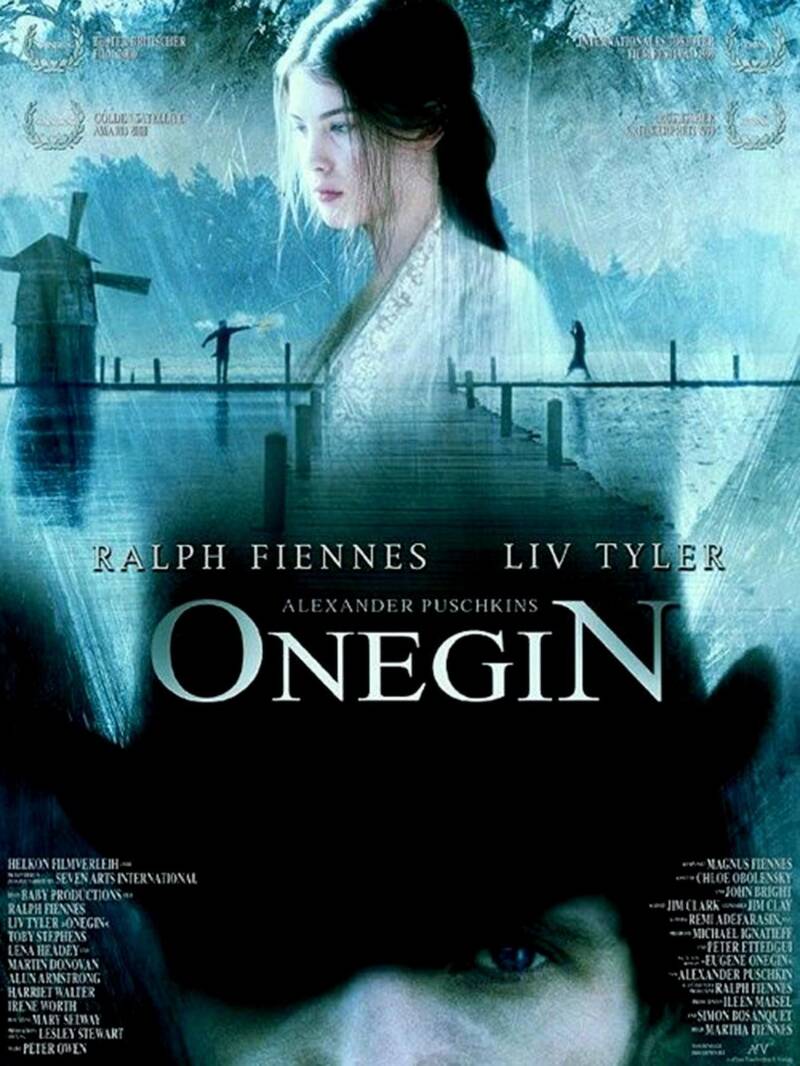
Onegin (1999): A Romantic Film and a Dream for Costume Makers
Some films make you forget the world around you. Onegin is one of them. With beautiful period costumes, elegant manners, romantic longing, and wonderful music, this film is a real treat for anyone who loves historical fashion.
A Film That Makes You Slow Down
Sometimes, you discover an old film that makes you stop what you are doing and simply watch.
That happened to me when I watched Onegin, the 1999 film starring Ralph Fiennes and Liv Tyler. It is based on Eugene Onegin, the famous verse novel by Alexander Pushkin, first published in the nineteenth century.
I watched this film with great admiration. Not only because of the story, but also because of the atmosphere, the music, and, of course, the costumes!
This is not a film that rushes from one dramatic event to another. It takes its time. There are many slow-motion shots, long looks, quiet moments, and scenes that seem to last just a little longer than you might expect.
And I loved that.
The film feels like stepping into another time. A time when people wrote letters, expressed their feelings through poetry, and sometimes waited a very long time for the person they loved to return their feelings.
There is no constant shouting, crude language, or endless action. The story is built around love, longing, pride, and the pain of not getting what you want.
Of course, there is a bloody duel, so it is not entirely without violence. But compared with many modern films, Onegin is wonderfully restrained.
It is a film for people who enjoy a slower pace, romantic stories, beautiful images, and the feeling of being transported to another world.
And for someone who loves historical costumes? It is a little treasure.
A Story About Love and Longing
At the heart of Onegin is a story about two people who meet at the wrong time.
Eugene Onegin, played by Ralph Fiennes, is a wealthy and rather distant man. He is tired of fashionable society and seems unable to find real happiness in his comfortable life.
When he moves to the countryside, he meets Tatyana, played by Liv Tyler.
Tatyana is young, thoughtful, and full of romantic dreams. She falls deeply in love with him and writes him a heartfelt letter to express her feelings.
But Onegin rejects her.
He does not understand what he has been offered, or perhaps he is simply unable to respond to her love.
Years later, their positions have changed. Onegin finally understands his feelings, but Tatyana is no longer the same young woman who once wrote him that letter.
And now he is the one who longs for something he cannot have.
That is what makes the story so moving. It is not simply about falling in love. It is about timing, missed opportunities, and the difficult truth that some things cannot be changed.
There is something very romantic about a story in which a letter can change everything, a look can say more than a long conversation, and a feeling can remain alive for years.
It is a different kind of romance from what we often see today. Quiet, elegant, and sometimes painful.
I found it wonderfully beautiful.
Watching the Film Through the Eyes of a Costume Maker
Of course, I could not watch this film without paying close attention to the costumes!
As a costume maker, I have a habit of looking at clothing in films with a very particular interest. I do not only see a beautiful dress. I want to know how it was made.
How is the shape created? Where are the seams? How does the fabric fall? What gives the sleeves their volume? And how does the costume help to tell the story?
In Onegin, there is so much to admire.
The dresses worn by Tatyana, her mother, and her sister are beautiful. The costumes worn at the parties and formal gatherings are equally impressive. The grand ball, in particular, offers plenty to admire if you love historical fashion.
But do you know what interested me most?
The everyday clothes.
They may seem less spectacular than the grand evening gowns, but I often find them much more interesting from a costume-making point of view. They have to look beautiful while also making sense for the character, the setting, and the activities taking place.
A grand ball gown is allowed to be extravagant. An everyday dress has a different job to do.
And in this film, even the simpler outfits have wonderful shapes and details.
Tatyana's Dresses: Small Waists and Beautiful Sleeves
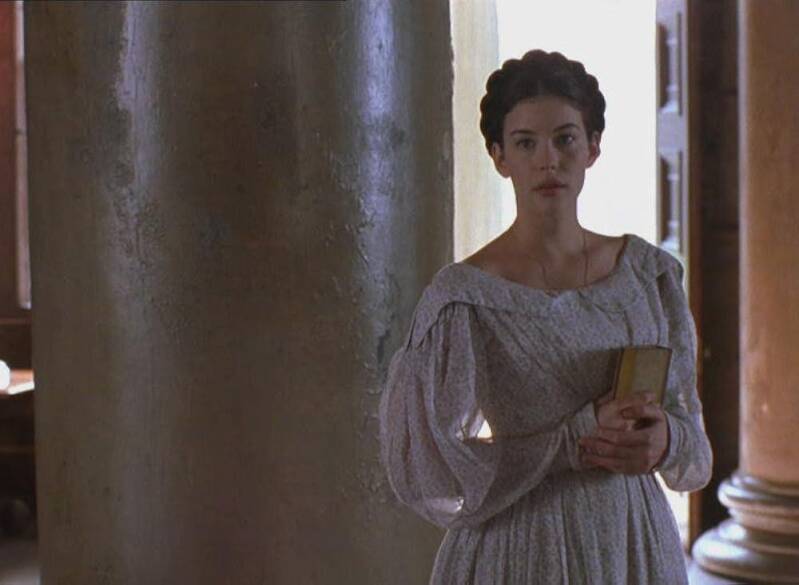
The women's costumes have those lovely, clearly defined waists that create such an elegant silhouette.
And then there are the sleeves!
Some have wonderfully large, almost exaggerated puffed shapes. They create a striking contrast with the narrow waist and give the dresses a very distinctive appearance.
As a costume maker, I find these shapes fascinating.
How do you create a sleeve that looks so full without making the entire dress feel heavy? How do you arrange the fabric so that it keeps its shape? And how do you achieve that beautiful silhouette without relying on modern stretch fabrics?
The answer lies in traditional dressmaking techniques.
Pleats, careful shaping, the cut of the fabric, and the way the different pieces are constructed all play an important role.
There is something deeply satisfying about this kind of sewing. You do not simply stretch a piece of fabric into shape. You have to understand the material and persuade it to do what you want.
The fabric itself becomes part of the construction.
This is one of the reasons why I enjoy studying historical costumes. They remind us that a beautiful silhouette is often the result of clever cutting, careful fitting, and skilled hands.
The costumes in Onegin look convincing to me, although I cannot claim that every detail is historically accurate. I have not researched every garment in the film, and a beautiful costume on screen is not automatically a perfect historical reconstruction.
Still, I find the overall look very convincing and full of inspiration.
And those sleeves! They make my fingers itch to start sewing.
The Black Coat and the Ice-Skating Scene
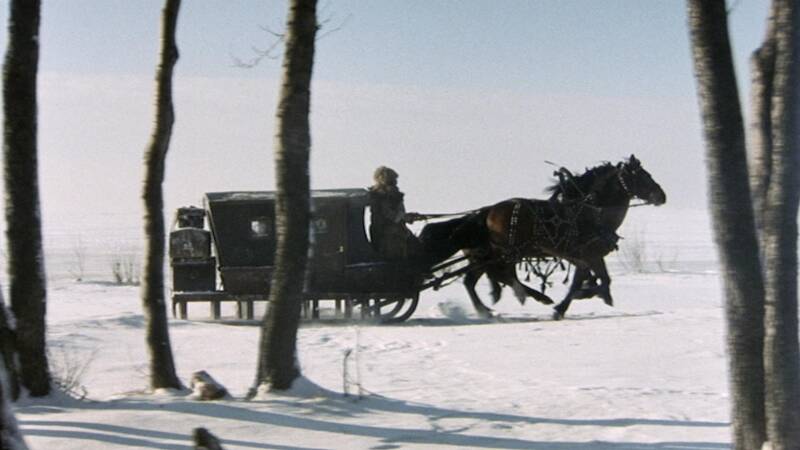
One scene that particularly caught my attention is the ice-skating scene.
Tatyana is dressed in black, wearing a long wool coat and a hat. Her posture is wonderfully straight, and the entire outfit looks elegant without being overly decorative.
It is a relatively simple outfit, but that is exactly what makes it so beautiful.
The long coat creates a graceful line, while the dark fabric gives the look a quiet and serious character. The hat completes the silhouette.
There is no need for glitter, embroidery, or a large number of accessories. The cut of the coat and the way Tatyana wears it are enough.
I watched that scene with the eyes of a costume maker, and I immediately started thinking about how such a coat might be constructed.
What pattern would I use? How would I shape the waist? What kind of wool would give the coat the right weight and movement? How would I create that elegant line without making it look stiff?
These are the questions that make historical costume design so enjoyable for me.
I can easily imagine returning to this film in the future when I decide to make a long coat inspired by this style.
Not necessarily an exact copy, but a coat that captures something of that elegant silhouette and timeless charm.
Sometimes, all it takes is one scene in a film to start a new sewing project in your mind.
And then the ideas begin to grow!
And What About the Men's Costumes?
The men's clothing deserves just as much attention.
The coats, the carefully shaped shoulders, the high collars, and the formal appearance of the men all contribute to the atmosphere of the film.
Their clothes are elegant and structured. The silhouettes are carefully shaped, and the upright collars create a very distinctive line around the neck.
One detail particularly surprised me: in one scene, we see that Onegin is wearing a corset or a corset-like supportive garment beneath his clothes.
This made me wonder about the experience of wearing such clothing.
Was it pure discomfort? Or could it also help a person maintain an upright posture?
We often think of historical garments as uncomfortable, especially when we compare them with the soft, stretchy clothes many of us wear today.
And, of course, some historical garments could be restrictive, depending on their construction and how tightly they were fitted.
But I also wonder whether their structured shape could offer a different kind of support.
The carefully fitted waistcoats, coats, and other layers encouraged a particular way of standing and moving. They helped create the straight, elegant posture that we associate with formal historical dress.
This is only my personal thought, rather than a medical or historical conclusion. Still, it is interesting to consider how clothing influences the way we stand, move, and present ourselves.
When I look at the men in Onegin, I see more than beautiful tailoring. I see clothing that was designed to create a very specific appearance.
And that is an art in itself.
Were the Costumes Historically Accurate?
This is always an interesting question when watching a period film.
The story takes place in the early nineteenth century, and the costumes reflect the elegant clothing of that period. The women's dresses, shaped waists, full sleeves, men's formal coats, and high collars all contribute to the historical atmosphere.
I find the overall costume design convincing and beautifully suited to the story.
However, historical accuracy is a subject that deserves careful research. A film costume must also work for the actors, the camera, the lighting, and the needs of the production.
Sometimes a costume is adjusted to make a character look more romantic or to create a stronger visual effect.
That does not necessarily make it a bad costume. It simply means that film costume design has its own demands.
For me, the most interesting thing is how well the clothing supports the story.
Tatyana's outfits help show her character and her changing circumstances. The formal clothes of the wealthy characters create a sense of status and social rules. The men's structured clothing adds to their formal appearance.
The costumes are not just beautiful things to look at. They help create the world in which the characters live.
And that is exactly what good costume design should do.
Romance, Letters, and a Different Kind of Drama
One of the things I enjoyed most about Onegin is its sense of restraint.
The characters do not need to explain every feeling. Sometimes, a look is enough. Sometimes, a letter says what a person cannot say aloud.
There is a certain beauty in that.
Today, we are used to stories that move quickly. Characters often express their feelings immediately, and dramatic scenes can become loud and intense.
Onegin takes a different approach.
The story allows feelings to develop slowly. It gives silence a place. It shows how much can happen inside a person who appears perfectly calm on the outside.
That is why the slow-motion scenes work so well for me. They may not appeal to everyone, but they help create a dreamlike atmosphere.
The film feels almost like a memory of something that happened long ago.
And the romance is not only about happiness. It is also about longing, regret, and the sadness of understanding something too late.
Sometimes, the thing we want most is the very thing we cannot have.
That idea gives the film its emotional power.
And Then There Is the Music
The music is another important part of the experience.
It supports the romantic atmosphere without taking away the quiet moments. It adds emotion to the scenes and helps create a sense of time and place.
Together, the music, the costumes, the landscapes, and the careful pace make the film feel almost like a moving painting.
It is a film to watch when you have time to settle down and give it your full attention.
No need to check your phone every few minutes. No need to rush to the next activity.
Just watch, listen, and enjoy.
Sometimes, that is exactly what we need.
A Film That Makes Me Want to Sew
After watching Onegin, I found myself thinking about all those beautiful coats and dresses.
Especially the long black coat worn by Tatyana in the ice-skating scene.
I would love to create something inspired by that style in the future.
There is a particular charm in a well-cut wool coat. It does not need to be complicated or covered in decoration. The beauty comes from the shape, the fabric, the fit, and the way it moves.
Making such a coat would be an interesting project. I would want to pay attention to the silhouette, the shaping, and the details that give the garment its historical character.
Perhaps I will return to Onegin when the time comes to design the pattern.
I would certainly watch it again, and probably pause the film more often to study the costumes!
That is one of the joys of being a costume maker. A film can be entertainment, but it can also be a source of ideas, research, and inspiration.
You never know when a particular sleeve, collar, or coat will spark your next project.
My Verdict: A Little Treasure for Lovers of Historical Costume
Would I recommend Onegin?
Absolutely, especially if you enjoy romantic period dramas, beautiful costumes, and a slower style of storytelling.
It is not a film for everyone. If you prefer fast action, constant dialogue, and a quick-moving plot, you may find it slow.
But if you enjoy quiet moments, romantic longing, beautiful music, and elegant historical clothing, I think you may love it.
For costume makers, the film offers plenty to admire. The women's dresses have wonderful shapes, the men's tailoring is elegant, and the everyday outfits are just as interesting as the grand ball gowns.
For me, Onegin was a wonderful discovery.
It allowed me to step away from the present for a while and enter a world of letters, poetry, longing, and beautiful clothes.
And it left me with one very practical thought:
I really should make a long wool coat in this style one day!
Perhaps that will be a project for another season. For now, I will keep the film in mind as a source of inspiration.
Because sometimes, a beautiful film does more than tell a story.
Sometimes, it makes you want to create something beautiful yourself.
Add comment
Comments