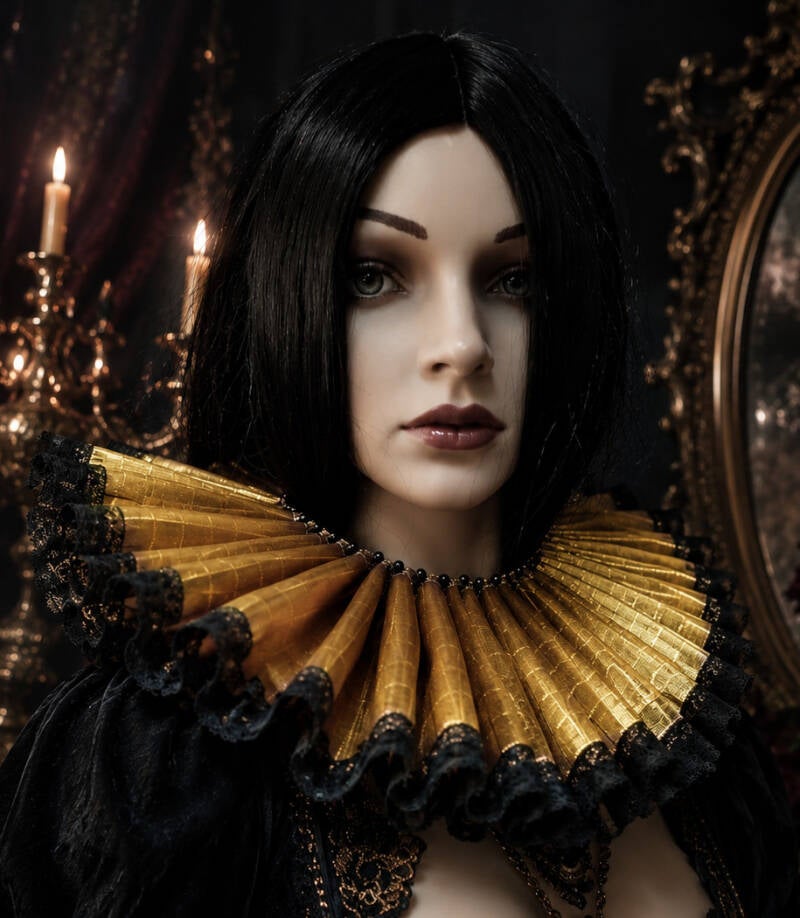

Dark Academia: Where History, Elegance and Craftsmanship Meet
Few aesthetics have captured the imagination of recent years quite like Dark Academia. What began as a niche movement among lovers of literature, art and classical education has grown into an international phenomenon. Today, its influence can be found in fashion, interior design, photography, cosplay, fantasy events and historical costuming alike.
Yet Dark Academia is often misunderstood. Many people associate anything dark with Gothic horror, Halloween or exaggerated scenes of blood and vampires. While those themes can occasionally overlap, they are far from defining the style. Dark Academia is not about horror. It is about atmosphere.
Its roots lie in a fascination with knowledge, history, architecture, philosophy and timeless beauty. Imagine centuries-old libraries, candlelit reading rooms, worn leather-bound books, antique globes, handwritten manuscripts and the quiet elegance of Europe's oldest universities. It is a world inspired by Oxford and Cambridge, by classical education, by museums and grand estates, where learning itself becomes something beautiful.
Perhaps that explains why so many young people feel drawn to it. In a world dominated by speed, social media and disposable trends, Dark Academia offers the opposite. It encourages reading classic literature, appreciating fine art, writing with fountain pens, collecting beautiful books and surrounding oneself with objects that have character and history. More than a fashion trend, it has become a lifestyle built upon curiosity, craftsmanship and an appreciation of the past.
Dark Academica versus Gothic
Although Dark Academia and Gothic fashion share a preference for darker colours and dramatic silhouettes, they are fundamentally different aesthetics. Gothic culture emerged from the alternative music scene of the 1980s and often embraces themes of mortality, melancholy and the supernatural. Dark Academia, on the other hand, is rooted in classical European culture. It draws inspiration from the Renaissance, the Baroque period, the Victorian and Edwardian eras, classical literature and academic tradition.
For that reason, Dark Academia does not need horror to create its atmosphere. The style is equally at home in an opulent seventeenth-century drawing room, beneath the vaulted ceiling of a medieval library or inside a richly decorated Baroque palace. Shadows, candlelight, carved wood, velvet drapes and ornate architecture create a sense of mystery without relying on fear. It is not darkness for the sake of darkness, but elegance illuminated by subtle light.
Within the worlds of cosplay and fantasy, Dark Academia has found an equally devoted audience. Scholars, alchemists, librarians, professors, noblewomen, magicians and mysterious aristocrats all fit naturally within its visual language. It allows costume enthusiasts to combine historical influences with imagination, creating characters that feel both authentic and timeless. Rather than recreating one specific historical period, Dark Academia blends centuries into a harmonious and believable aesthetic.
Rich fashion
Fashion plays a central role in expressing this world. Rich velvets, brocades, jacquards, fine linens and luxurious wool fabrics are combined with lace, embroidery and carefully chosen accessories. High collars, corsets, long skirts, tailored jackets and dramatic sleeves evoke centuries of European fashion history while remaining remarkably contemporary.
At Historique Couture, this philosophy is reflected in every design. I love it!
My Dark Academia collection includes handcrafted corsets, elegant ruff collars and a distinctive corset dress, all created with a deep respect for historical craftsmanship. Every piece begins with carefully selected fabrics and is finished with trims, lace and embellishments chosen not simply for decoration, but to create harmony and authenticity.
One of the defining characteristics of Dark Academia is that its beauty often reveals itself gradually. At first glance, one notices the deep colours and dramatic silhouette. Only upon closer inspection do the finer details emerge: the texture of the fabric, the quality of the stitching, the carefully layered trims, the construction of the garment and the balance between ornament and form. These are the elements that transform clothing into wearable art.
Dark Academia is therefore much more than a passing fashion trend. It celebrates history, literature, architecture, craftsmanship and timeless elegance. It reminds us that beauty does not always demand attention. Sometimes it quietly waits to be discovered.
After all, the devil is in the detail.
-
 Dark Gothic Statement Collar € 125,00
 -
 Custome Made Dark Academia or Fantasy Collars € 350,00 GRATIS verzending
 -
 Gothic Baroque Corset Dress € 395,00 GRATIS verzending
 -
 Gothic Ruff Collar Dark Romantic € 255,00 GRATIS verzending
 -
 Gothic Lace Chest Collar € 95,00
 -
 Victorian Gothic Baroque Neckpiece with Pearls € 275,00 GRATIS verzending


Reactie plaatsen
Reacties