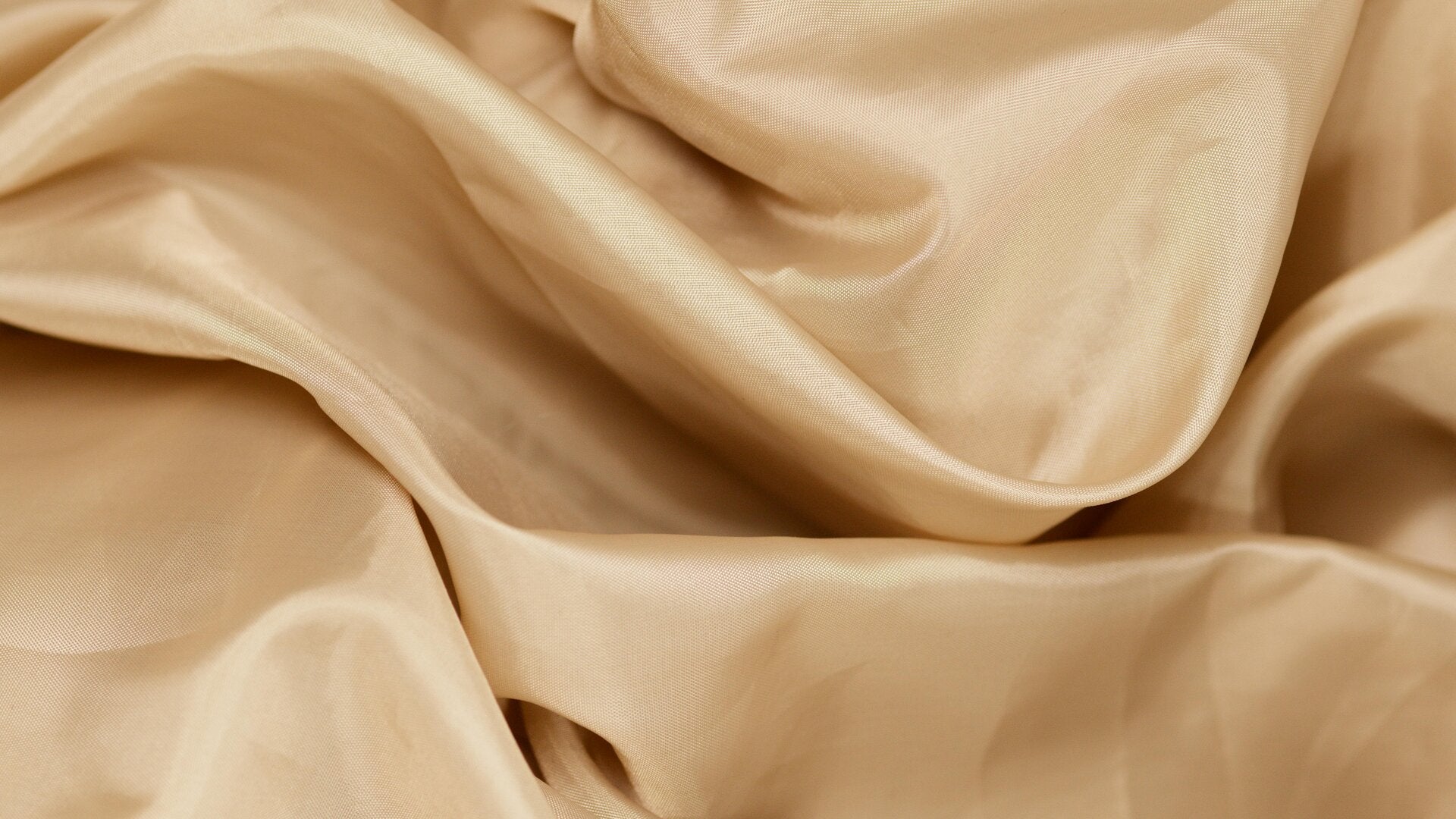
Silk has been my favourite fabric for as long as I can remember. There is simply nothing quite like it. The way it catches the light, the soft drape, the luxurious feel... once you've worked with genuine silk, everything else feels like a compromise.
At Historique Couture, I carefully select every piece of silk I use. Whether I'm creating an 18th-century gown, a Victorian dress or an elegant historical accessory, the fabric is just as important as the design. Beautiful garments deserve beautiful textiles.
Over the years I've handled hundreds of metres of silk, and although today's synthetic fabrics have become remarkably convincing, there are still a few reliable ways to recognise the real thing.
1. Feel the Fabric
This is always my first test.
Rub the fabric gently between your fingers or palms. Genuine silk quickly feels pleasantly warm because it adapts to your body temperature. Polyester satin and other synthetic fabrics usually remain cool.
Real silk also has a unique texture. It feels smooth, but never slippery like plastic.
2. Listen Carefully
Yes, silk has a sound.
When you gently rub two layers of silk together, you'll hear a soft crisping sound—rather like walking through fresh snow or crinkling fine tissue paper. This natural "silk rustle" is difficult to imitate.
It's one of those little details that experienced silk lovers recognise instantly.
3. Look at the Shine
One of silk's greatest charms is its natural lustre.
Unlike synthetic fabrics, which often reflect light with a rather flat or white shine, genuine silk changes colour subtly as the light moves across the surface. It almost seems alive.
This beautiful play of light is one of the reasons I love using silk in historical costumes. Candlelight, daylight or photography—silk always finds a way to shine.
4. Examine the Weave
Natural silk isn't always perfectly uniform—and that's actually a good sign.
Handwoven silks, especially Dupioni silk, often contain tiny irregularities in the threads. These are not flaws; they're part of the character of the fabric.
Perfectly identical fibres can sometimes indicate machine-made synthetic fabrics. Nature likes a little individuality.
5. Consider the Price
Quality silk is never cheap.
Producing silk is a labour-intensive process, and that is reflected in the price. If a fabric is advertised as "100% silk" but costs only a fraction of what you'd expect, it's worth being cautious.
A bargain is wonderful... unless it turns out to be polyester pretending to be silk.
6. The Burn Test (Only if You Can!)
If you already own a small fabric sample, the burn test remains one of the most reliable methods.
Real silk burns slowly, smells like burnt hair (because silk is a natural protein fibre), and leaves a fragile black ash that crumbles easily.
Synthetic fibres melt, smell like burning plastic and leave behind a hard bead instead of ash.
Please don't try this in the fabric shop—I'm quite sure the shop owner wouldn't appreciate it.
7. Forget the Ring Test
Years ago, people often recommended pulling silk through a wedding ring.
While genuine silk is wonderfully supple, many modern synthetic fabrics are just as fine and smooth. Today, this test is no longer considered a reliable way to identify silk.
Technology has become very good at imitation.
Why I Choose Real Silk
For me, working with genuine silk is about much more than luxury.
Natural silk breathes beautifully, drapes elegantly and ages gracefully. The more carefully it is worn and stored, the more beautiful it becomes. It is a fabric with history, character and soul—qualities that perfectly match the historical garments I create.
Every silk I choose for Historique Couture is selected for its quality, authenticity and beauty. I believe that exceptional fabrics deserve exceptional craftsmanship.
Because when you've spent hours creating a beautiful historical garment, only the finest silk will truly do.
Have you ever wondered whether a fabric was really silk? Feel free to ask—I always enjoy talking about textiles almost as much as I enjoy sewing them.
Reactie plaatsen
Reacties