How Did Women Stay Cool in the Baroque Era? Summer Fashion in the 18th Century
It has been incredibly hot in the Netherlands for weeks now. And not only here, but in many parts of Europe.
It is difficult for people, difficult for nature, and certainly not easy for the economy either. Although I suspect the ice cream manufacturers are doing quite well!
As someone who makes historical costumes, hot weather always makes me wonder about one thing:
How on earth did women manage this in the past?
When I look at a beautiful 18th-century dress, I see layers, petticoats, stays, sleeves, and metres and metres of fabric. It looks absolutely beautiful, but it does not exactly look like the perfect outfit for a hot summer day.
So what did women actually do when summer became very warm?
A beautiful dress is only the outside
When we look at paintings of women from the Baroque and Rococo periods, we usually see the finished outfit. What we do not see are all the layers underneath.
A fashionable woman could wear a linen shift next to her skin, stays over it, one or more petticoats and then her gown. Depending on the occasion and her social position, there could be even more layers.
So yes, there was quite a lot of clothing.
But fabric choice made a big difference.
Linen was an important fabric for underwear and lighter garments. It is breathable and was very useful in warm weather. Lightweight cotton and muslin also became increasingly fashionable in the later 18th century.
And then there was silk.
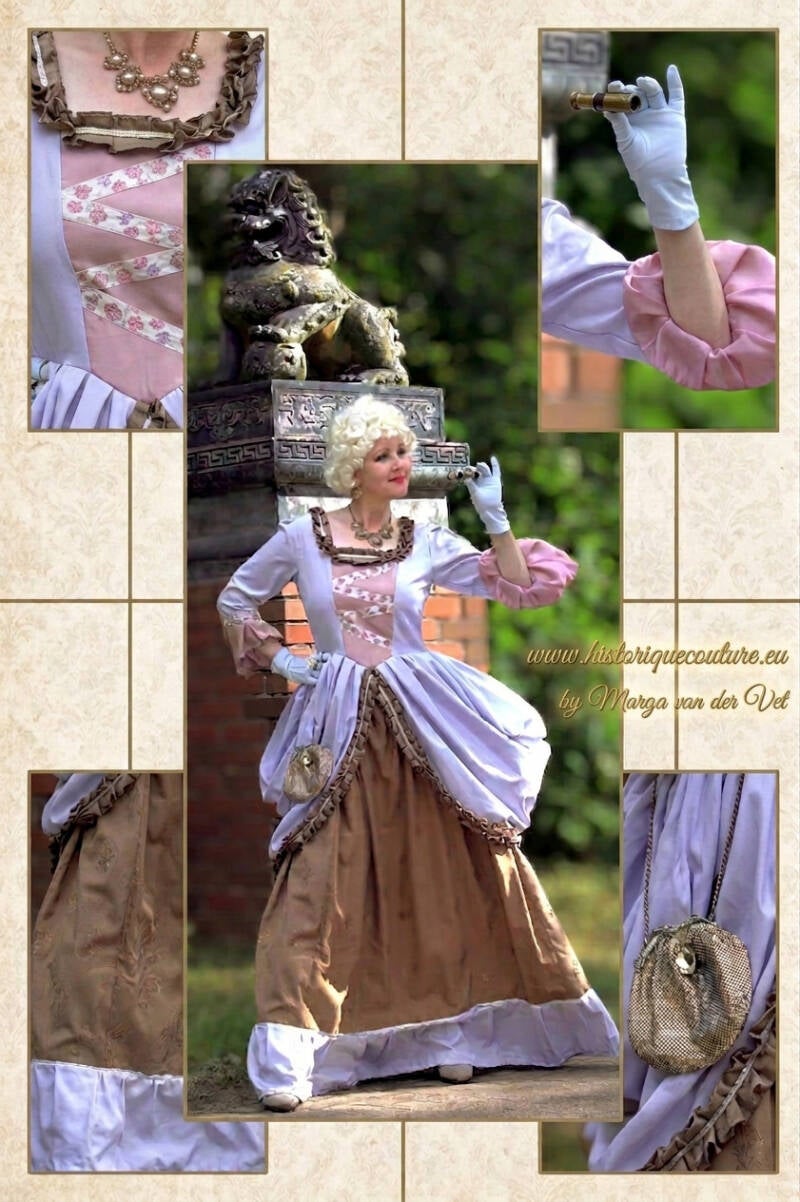
The dress in the photographs for this blog is made from silk and lightweight fabrics. That already makes a big difference compared with a heavy winter gown. Silk can be surprisingly comfortable when it is chosen and constructed well.
Still, I have to admit that when I look at all those historical layers during a heatwave, I do think:
Ladies, how did you do it?
Marie Antoinette had a very clever summer dress
One of the most famous examples is, of course, Marie Antoinette.
In 1783, the artist Élisabeth Louise Vigée Le Brun painted Marie Antoinette wearing a simple white muslin dress. The dress became known as the chemise à la reine, or “the Queen's chemise”.
It was very different from the elaborate court dresses we normally associate with Marie Antoinette.
The gown was loose, soft and made from lightweight fabric. Muslin was a favourite, but similar dresses could also be made from linen, silk gauze and other light fabrics.
The style was particularly suitable for informal summer wear. Marie Antoinette and women around her were also pictured wearing these simple dresses with straw hats when visiting the Queen's Hamlet at Versailles.
Of course, this did not mean that Marie Antoinette suddenly stopped wearing all the other layers of 18th-century clothing.
And the chemise à la reine was not actually invented by Marie Antoinette. The style had earlier influences, including lightweight clothing from warm climates, and it became strongly associated with the Queen after her famous portrait.
Still, I think she had a very good idea.
When it is hot, wear something light.
Even in the 18th century, somebody understood this!

But what about all those layers?
This is where historical clothing becomes particularly interesting.
The layers were not simply there to make life difficult.
A linen shift protected the outer clothing from the body. It could be washed more easily than an expensive silk or wool gown. Stays provided the fashionable shape of the period, while petticoats helped create the desired silhouette.
And because the outer gown did not have to sit directly against the skin, the different layers also had practical purposes.
Of course, wearing several layers in extreme heat was still hot.
There was no magical 18th-century solution.
If the temperature reached uncomfortable levels, the wealthy had another advantage that most people today would probably appreciate very much:
shade.
Staying cool was also about where you were
People did not have air conditioning, obviously.
Large houses and palaces were designed with thick walls, high ceilings and rooms that could sometimes remain cooler than the outside air. Curtains, shutters and shaded rooms could help keep the strongest sunlight out.
And wealthy women had something else that was very useful:
servants.
Someone else could carry the water, prepare a cool drink, move furniture, adjust curtains and generally make life a little more comfortable.
That probably helped considerably!
Fans were also an important accessory. A folding fan was not only fashionable but could provide some relief from the heat. And, just like today, it was useful to have a shady garden, a cool room or a pleasant breeze.
And then there were the petticoats...
As a costume maker, I cannot ignore the petticoats.
When we recreate an 18th-century costume today, it is tempting to think that every layer must be heavy and uncomfortable. But historical clothing was not necessarily made from the same fabrics we might use for a modern costume reproduction.
A summer version could be much lighter.
Fine linen, lightweight cotton, muslin and silk could all make a difference. The chemise à la reine, for example, was deliberately loose and made from lightweight fabrics.
And there is another interesting point.
The very fact that these lighter dresses became fashionable tells us something about how people wanted to dress in warm weather. Fashion was not completely separated from comfort.
Even in the 18th century, people liked to breathe!
-
 Marie Antoinette Dress Silk & Brocade €775.00 FREE shipping


So, did they actually stay cool?
Probably not as cool as we do today with air conditioning, refrigerators and modern summer clothing.
But they had their own solutions.
They chose lighter fabrics when possible. They used linen against the skin. They adapted their clothing for informal occasions. They sought shade and cooler rooms, used fans and avoided the hottest parts of the day when they could.
And wealthy women could certainly change their clothes more often than most ordinary people.
So perhaps the real answer is not that women in the Baroque and Rococo periods had discovered some secret way of staying perfectly cool.
They simply worked with what they had.
And as a costume maker, I find that fascinating.
What would I wear?
If I had to spend a very hot summer day in the 18th century, I think I would choose a lightweight linen shift, comfortable stays, as few petticoats as the occasion allowed, and a beautiful lightweight silk or muslin gown.
And definitely a fan.
A large one.
Because although I love historical fashion, I am not completely mad.
And perhaps that is the biggest lesson from historical clothing: beautiful fashion does not have to mean ignoring comfort. People in the past knew their fabrics, they knew their climate, and they adapted their clothing when they could.
So the next time I am sewing an elaborate historical gown in the middle of a Dutch heatwave, I will think of Marie Antoinette in her light muslin dress and remind myself:
Add comment
Comments