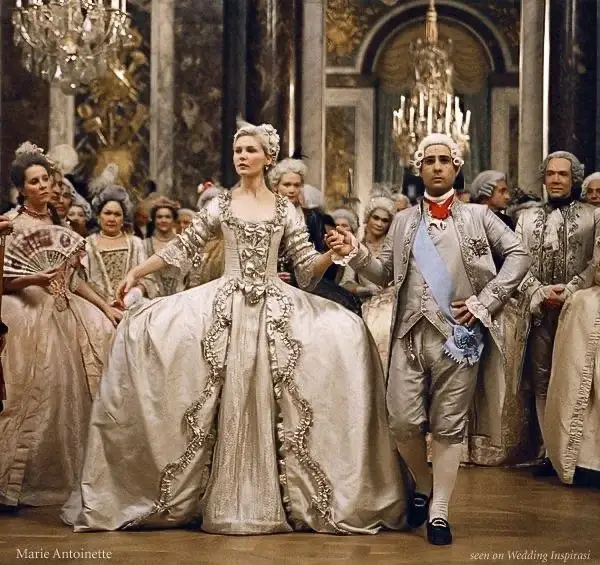
How I Turn Character Reference Images Into a Sewing Pattern
When someone asks me to make a custom cosplay costume, I do not immediately take out my pattern paper.
First, I need to understand the character.
A reference image is only the beginning.
Before I can turn a character's clothing into a real sewing pattern, I want to know as much as possible about the person, the story and the world in which the character exists.
This is one of the most interesting parts of making a custom costume.
First, I research the character
If the character comes from a film, television series or video game, I try to learn about it.
What is the story?
Where does the character live?
What is happening around them?
What is their personality?
What kind of world do they belong to?
And, very importantly, why are they wearing those clothes?
Costume is part of storytelling.
A costume can tell us about a person's social position, wealth, occupation, personality, time period and even their emotional development.
So I do not want to look at one pretty picture and simply copy it.
I want to understand what I am looking at.
Sometimes I watch a film twice
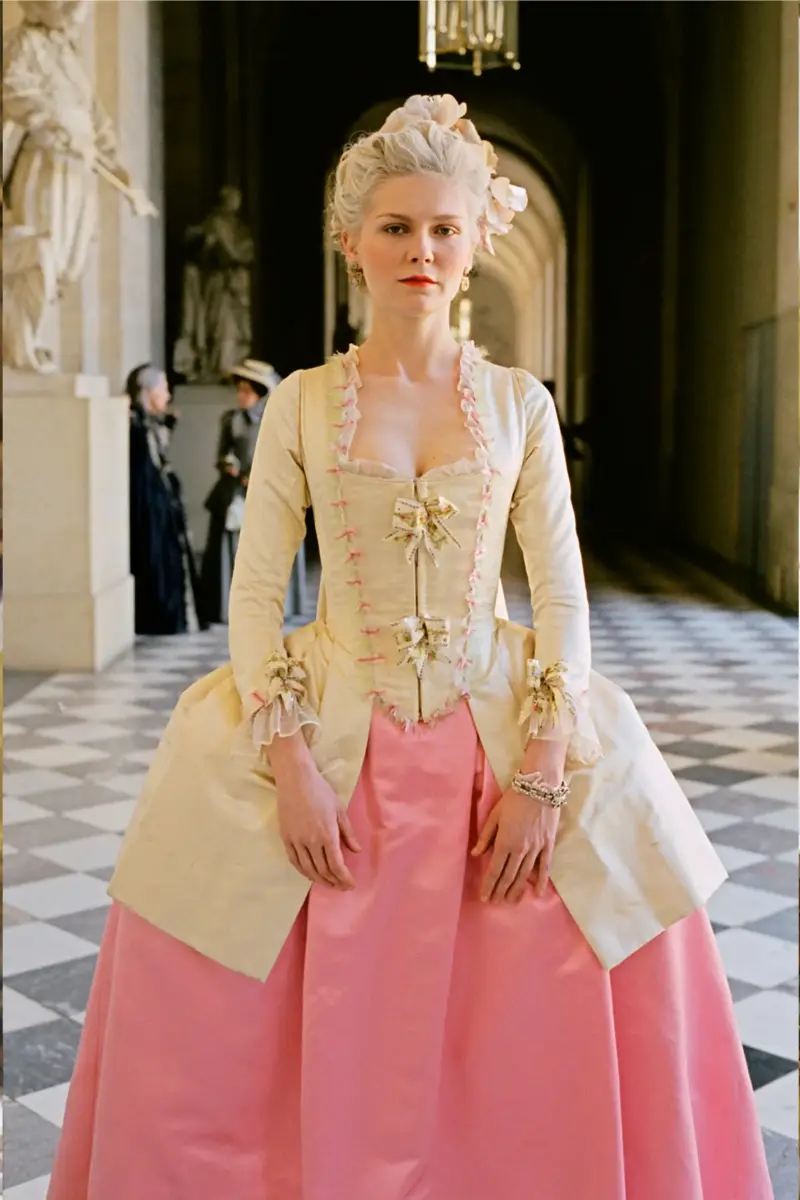
Recently, I watched Sofia Coppola's 2006 film Marie Antoinette.
I watched it twice.
The first time, I watched it as I would read a book for a review.
I wanted to understand the story, the atmosphere and the way the film presented Marie Antoinette.
As a costume maker and someone interested in history, I also noticed that the film is not a documentary about historical accuracy. Some elements are deliberately stylised and romanticised.
The historical background of Marie Antoinette is, of course, much more complicated than the beautiful world of Versailles shown on screen.
The attempted flight of the royal family is one example. The escape almost succeeded, but ultimately failed, and the consequences were disastrous.
The contrast between the splendour of Versailles and the poverty and political unrest in Paris is also important when we want to understand the period.
Those things matter to me when I look at a character.
Not because every cosplay costume must become a history lesson, but because context helps me understand the costume.
Then I watched the film a second time.
This time, I watched the costumes.
The second viewing was very different
Now I was looking at the dresses.
The colours.
The fabrics.
The shapes.
The sleeves.
The necklines.
The decoration.
The silhouette.
I took screenshots and made notes.
And I noticed things that I had hardly noticed during the first viewing.
Some of the costumes looked, to my eye, almost like very elaborate carnival costumes. Some colours were extremely bright, and some fabric choices did not feel convincing for the historical period.
But other costumes were absolutely beautiful.
Some looked much more historically convincing, and the shapes and construction were fascinating to study.
And then there was Kirsten Dunst herself.
She wears the costumes with great elegance. Her figure gives the garments a very particular silhouette, and some dresses almost appear to have been moulded around her.
That matters too.
A costume does not exist separately from the person wearing it.
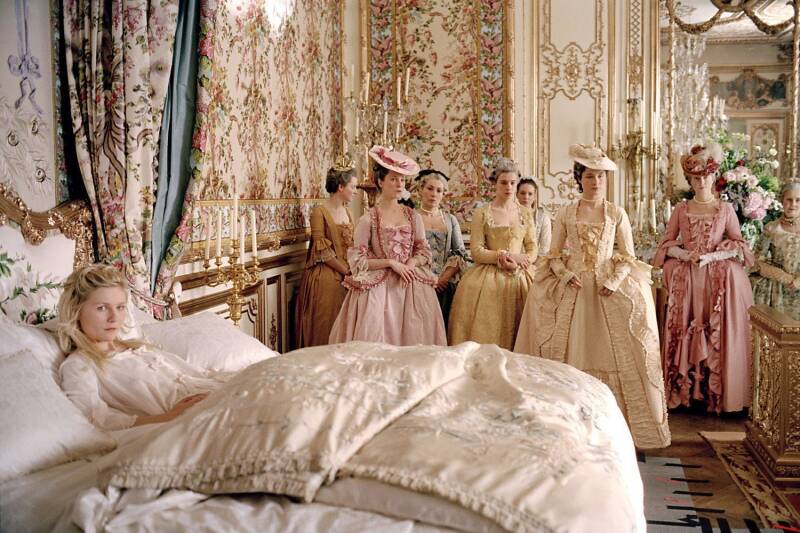
A screenshot is not a pattern
This is where the real work begins.
A screenshot shows me what the costume looks like.
It does not tell me how it was made.
I have to work that out.
Where are the seams?
How is the garment fastened?
Is the bodice made from several panels?
Does the sleeve have a separate sleeve head?
Is there boning or another form of structure?
How does the fabric create that particular shape?
Where does the skirt begin?
What is underneath it?
How does the garment move when the actor walks?
These are all questions I have to answer before I can create a sewing pattern.
A character exists on a screen in two dimensions.
A costume has to work in three dimensions.
That is the difference.
I look for more than one reference image
Whenever possible, I collect several images.
Front view is useful.
Side view is useful.
Back view is even better!
Sometimes there are only a few images available. Sometimes there are promotional photographs, behind-the-scenes photographs, video clips or other material that gives me a better idea of the construction.
For a video game character, I may have concept art, game screenshots and artwork from different stages of the character design.
For a film character, I may look at different scenes because the costume can move, open, fold or reveal details that are invisible in a still photograph.
Every extra piece of information helps.
Then I start analysing the shape
Before drawing the pattern, I look at the silhouette.
This is one of the most important things in costume making.
If the silhouette is wrong, the costume can have all the correct buttons, trims and decorations and still look wrong.
I ask myself:
Is the garment fitted or loose?
Where is the waist?
How wide are the shoulders?
How long is the jacket?
How full is the skirt?
How large is the collar?
Where does the sleeve begin?
How much volume is there?
What is creating that volume?
Sometimes the answer is the fabric.
Sometimes it is a petticoat, lining, interfacing, padding or another structural element.
Sometimes it is simply the way the pattern has been cut.
Then I think about the fabric
A reference image may show a blue dress.
But what kind of blue fabric is it?
Silk?
Velvet?
Wool?
Cotton?
Something synthetic?
Does it have a shine?
Is it heavy or light?
Does it hold its shape or fall softly?
Photography and lighting can make this surprisingly difficult to judge.
This is why fabric choice is not something I leave until the end.
The fabric and the pattern have to work together.
A pattern that works beautifully in one fabric may look completely wrong in another.
From the screen to pattern paper
Only after all this research and observation can I begin turning the character's costume into a sewing pattern.
Sometimes I can adapt an existing pattern.
Sometimes I combine elements from different patterns.
And sometimes I have to draft the pattern myself.
With a custom cosplay commission, the pattern also has to work for a real person's body.
That is another important difference.
The actor or game character may have a particular body shape.
My client has their own body shape.
The costume therefore needs to reproduce the character's visual language while also fitting and functioning on the person who will actually wear it.
That is where custom pattern making becomes so important.
Costume making is part research, part detective work
I sometimes think that making a cosplay costume is a little like being a detective.
You collect clues.
A screenshot gives you one clue.
A second image gives you another.
The story gives you context.
The fabric gives you another clue.
The movement of the garment gives you another.
And eventually, all those pieces have to make sense together.
Only then can I decide how I am going to construct the costume.
This is why I never see a character as “just a picture”
When a client sends me a character image, I see much more than a dress, coat, cape or pair of trousers.
I see a design that needs to be translated into a real garment.
I need to understand the character.
I need to understand the clothing.
I need to understand the shape.
I need to understand the materials.
And then I need to work out how to make all of that function on a real person.
That is what happens before I even begin cutting the final fabric.
The sewing starts with research.
And the pattern starts with understanding the character.
From character to costume
This is one of my favourite parts of making custom cosplay commissions.
A character begins as an image on a screen.
Then come the questions.
Then the research.
Then the screenshots and notes.
Then the fabric choices.
Then the pattern.
Then the mock-up.
And finally, slowly, the character becomes a real costume.
That is the magic of custom costume making.
From reference image to sewing pattern.
From sewing pattern to garment.
From character to something you can actually wear.
And every time, the process is a little different.
Add comment
Comments