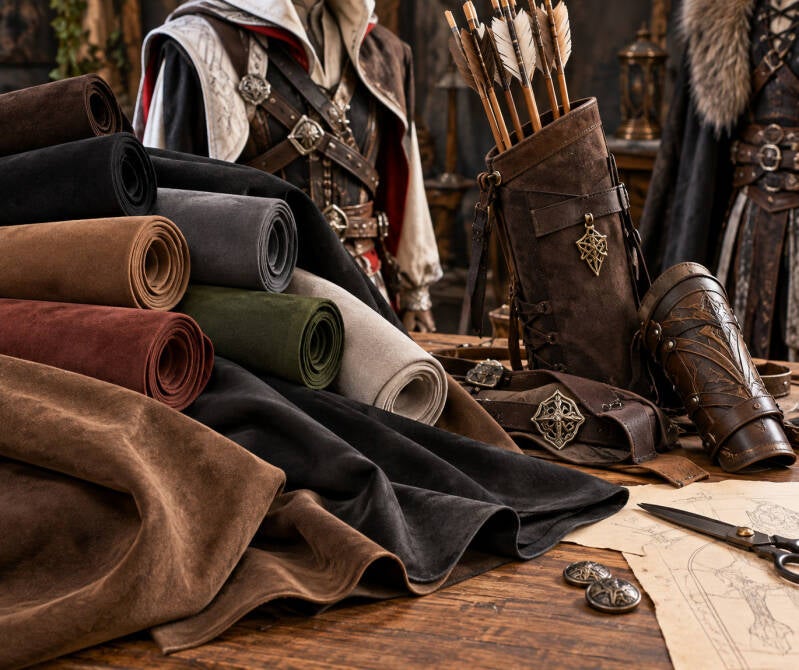
When you make costumes, you learn quite quickly that there is no single fabric that is perfect for everything.
I love natural fabrics. Wool, linen, cotton and silk have a very special place in my atelier. But when I am making cosplay, LARP or fantasy costumes, I sometimes reach for something completely different.
Scuba fabric.
Yes, scuba.
It may sound like something you should wear underwater, but scuba fabric has become a very useful material in my costume making.
And there are some very good reasons for that.
What is scuba fabric?
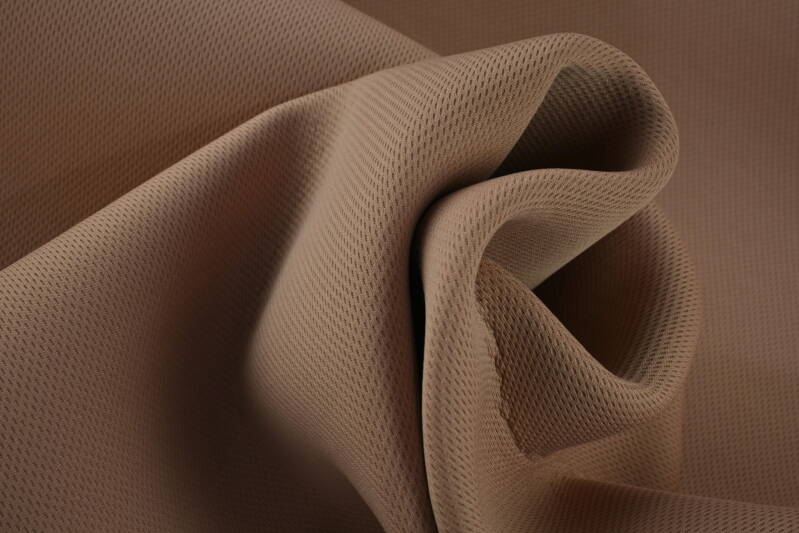
Scuba is a modern knitted fabric made from synthetic fibres, usually polyester, sometimes with elastane.
It is a double-knit fabric, which means that it is thicker and more stable than many ordinary jersey fabrics. It has a smooth surface and a little stretch.
The fabric is often quite dense, soft and slightly springy. Some scuba fabrics have a very smooth surface, while others have a more suede-like or leather-like appearance.
And that is where it becomes interesting for costume making.
Scuba can give you the appearance of leather or suede without the weight, cost and sewing difficulties of real leather.
That can make a surprisingly big difference when you are making a complete costume.
Why do I use scuba for cosplay?
Cosplay costumes can become very heavy.
A costume may have several layers, armour-like pieces, belts, sleeves, panels and accessories. If you make all of these from real leather or very heavy fabric, the finished costume can become uncomfortable to wear after only a few hours.
And cosplay is often not a five-minute photo opportunity.
You may be walking around a convention all day. You may be sitting, standing, travelling, posing for photographs and carrying your costume accessories with you.
Comfort matters.
This is one of the reasons I sometimes choose scuba fabric.
It can give a costume a strong, structured appearance while keeping the weight relatively low.
Scuba can look like leather or suede
One of my favourite things about some scuba fabrics is their appearance.
The right fabric can look surprisingly similar to suede or soft leather.
This makes it useful for:
-
costume armour
-
belts and straps
-
chaps
-
bracers and arm guards
-
quivers
-
fantasy costumes
-
medieval and LARP clothing
-
cosplay accessories
-
fitted costume pieces
-
structured panels
-
boots and shoe covers
Of course, scuba is not leather.
It will not behave exactly like leather, and it does not have the same durability or ageing properties.
But that does not mean it is a bad substitute.
It means that it is a different material with different advantages.
And sometimes those advantages are exactly what you need.
Sewing scuba fabric
This is another reason I like working with it.
Scuba is generally not difficult to sew.
In fact, I find it much easier to work with than some of the fabrics people might expect me to use for costumes.
Because it is a stable knit, it does not behave like a thin, slippery jersey. It has some body and usually stays where you put it.
And that can be a great help when you are working with several layers.
1. Use a sharp needle
Start with a fresh, sharp sewing machine needle.
A stretch or jersey needle can be a good choice, depending on the particular scuba fabric.
As always with an unfamiliar fabric, make a small test first.
Different scuba fabrics can behave quite differently.
2. Test your stitch
Because scuba has stretch, you need to make sure your stitching can cope with that movement.
For seams that need to stretch, use a suitable stretch stitch or a narrow zigzag.
On some machines, a stretch stitch works very well.
But do not simply assume that one stitch will work for every scuba fabric.
Test it.
Pull the fabric after sewing.
If the stitches break, change the stitch or tension before you start your costume.
A ten-minute sewing test can save you hours of frustration later.
3. Do not pull the fabric
This is a simple rule that applies to many stretch fabrics.
Let the machine feed the fabric.
Do not pull it through the machine while sewing.
If you stretch the scuba while sewing a seam that should not be stretched, you may end up with a wavy seam.
That is not what you want.
4. Be careful with pressing
Scuba is synthetic.
That means heat needs to be treated with respect.
Always test your iron temperature on a fabric sample first.
Too much heat can damage the surface or even melt the fibres.
I often prefer to use a lower temperature and a pressing cloth rather than putting a very hot iron directly onto the fabric.
What about several layers?
This is where scuba can be particularly useful for costume makers.
Some costume designs require several layers of fabric to create the right shape.
With certain scuba fabrics, these layers can be surprisingly manageable under the sewing machine.
For example, you might have a costume piece with a lining, outer layer and several decorative panels.
The fabric has enough body to hold its shape, but it is still relatively easy to sew.
Of course, there are limits.
A very thick scuba combined with many layers can still become bulky.
Your sewing machine will have its limits too.
But compared with some leather-look materials, scuba can be a very friendly material to work with.
Beautiful colours
And then there is the colour.
Scuba fabrics are available in an enormous range of colours.
Black, of course.
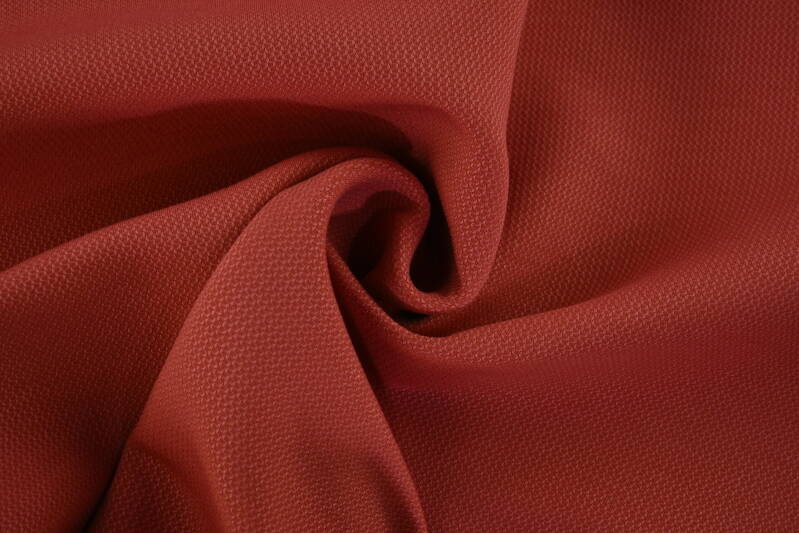
But also deep burgundy, dark green, navy, brown, grey, cream, red and many bright fantasy colours.
For cosplay, this is wonderful.
You can often find a colour that works with your character without having to dye the fabric yourself.
And because scuba can have such a smooth and rich surface, strong colours can look particularly striking.
A deep burgundy can look like leather.
A dark green can work beautifully for fantasy costumes.
Black scuba can create a very convincing armour or leather effect.
And sometimes a slightly unusual colour is exactly what a fantasy costume needs.
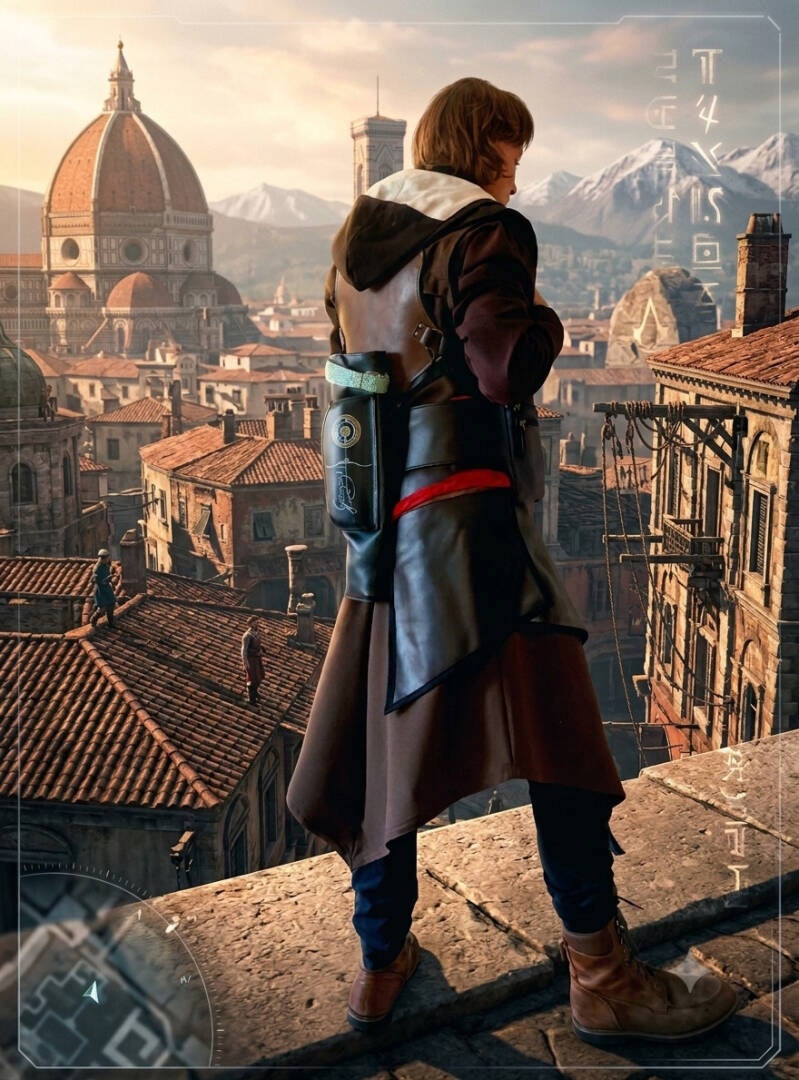
Scuba for Assassin's Creed costumes
I have used scuba for costume projects where I needed the appearance of leather without making the costume unnecessarily heavy.
Assassin's Creed-inspired costumes are a good example.
These costumes often contain many fitted sections, panels and pieces that look like leather or suede.
Using real leather everywhere would make the finished costume heavy very quickly.
Scuba gives me another option.
It can create the visual impression I want while keeping the costume wearable.
And when a costume has many layers, this matters even more.
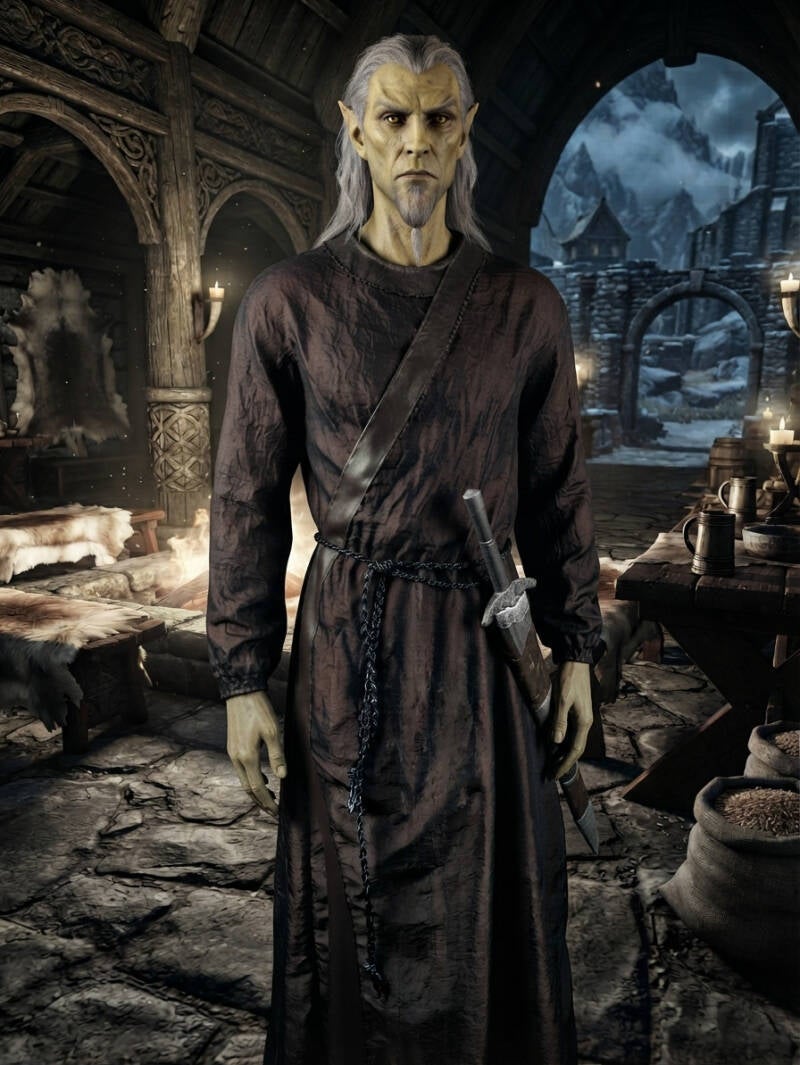
Skyrim and fantasy costumes
Fantasy costumes can also be excellent candidates for scuba.
Think about the type of clothing seen in games such as Skyrim.
There are often leather-like pieces, fitted armour, belts, bracers and other elements that need some structure.
Scuba can work very well for these kinds of designs.
It is especially useful when the costume needs to look substantial but should not actually weigh as much as it looks.
That is one of the little tricks of costume making.
Sometimes the best material is not the material that the costume appears to be made from.
Chaps for medieval costumes
I also use materials like this for chaps and similar costume pieces.
Chaps need to look strong and durable, but they also need to allow the wearer to move.
For medieval, fantasy and LARP costumes, a heavy leather chap can become uncomfortable very quickly.
A suitable scuba fabric can give the costume the right visual effect while making the garment considerably easier to wear.
And, from the maker's point of view, it can also be easier to cut, pin and sew than real leather.
That is a win on both sides of the sewing table.
LARP props: quivers and arm bracers
Scuba is not limited to clothing.
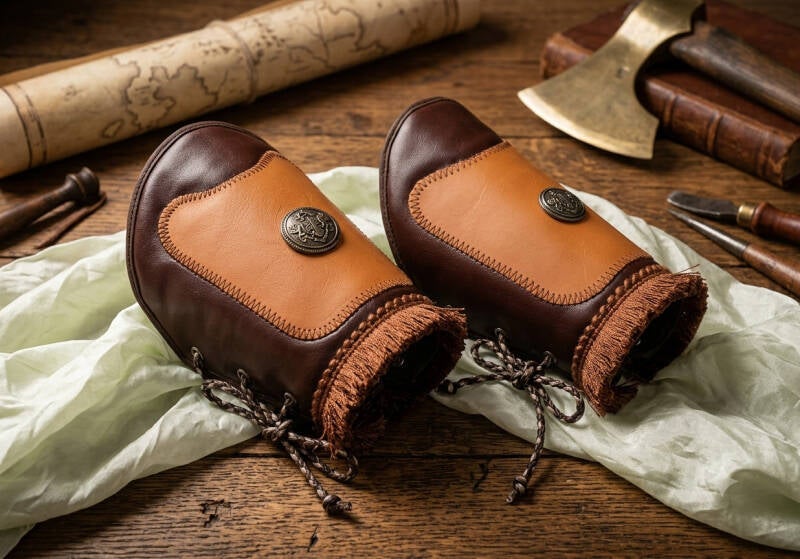
It can also be useful for costume accessories and LARP props.
I have used it for things such as quivers and arm bracers.
These pieces need to look convincing, but they do not necessarily need to be made from heavy leather.
A scuba fabric with the right thickness and surface can create a very nice base.
You can then add details, stitching, trims, buckles or other elements to create the final look.
This is where costume making becomes a little like theatre magic.
The finished object only needs to look right and function correctly for its purpose.
It does not have to be made from the material that you would expect at first glance.
Is scuba fabric suitable for historical costumes?
This is where I would make an important distinction.
If I am making a historically accurate garment, scuba would usually not be my first choice.
Historical clothing should be made from materials that are appropriate for the period and the purpose of the garment.
A medieval wool gown should look and behave like wool.
A Victorian silk garment should have the qualities of silk.
That is part of historical costume making.
But LARP, fantasy and cosplay are different.
There, the visual reference, comfort, durability and practicality can be more important than historical textile accuracy.
And that is exactly where modern fabrics such as scuba can earn their place.
My tips before buying scuba fabric
If you want to try scuba for your own cosplay project, do not buy a large quantity immediately.
Buy a small sample first.
Look at the thickness.
Stretch it.
Sew it.
Wash it according to the manufacturer's instructions.
See how it behaves under your sewing machine.
And most importantly, look at it from a distance.
A fabric can look completely different when you hold it in your hand compared with how it looks as part of a finished costume.
Ask yourself:
Does it look like the material I am trying to imitate?
Does it have enough stretch?
Does it recover after stretching?
Is it too shiny?
Is it thick enough?
Can I sew several layers comfortably?
Will the finished costume still be comfortable to wear?
These questions are much more useful than simply asking whether a fabric is "good" or "bad".
There is no perfect costume fabric
This is something I have learned after many years of sewing.
Every fabric has advantages and disadvantages.
Natural fabrics are wonderful, but they are not always the most practical solution.
Leather looks beautiful, but it is heavy, expensive and requires different sewing techniques.
Faux leather can be useful, but some types can be difficult to sew or may become uncomfortable.
Stretch velvet can be perfect for one project and completely wrong for another.
And scuba?
Well, scuba has its own little place in my fabric cupboard.
I would not use it for everything.
But when I need a lightweight, slightly stretchy fabric with structure and a leather- or suede-like appearance, I am very happy to have it available.
For cosplay, fantasy and LARP costumes, that can be a very useful combination.
And sometimes the best costume-making decision is simply choosing the material that makes the finished costume look right, feel right and remain comfortable enough to wear all day.
That, after all, is what a good costume should do.
Costumes in which I used Scuba fabrics:


Add comment
Comments