What Makes Bouclé Fabric So Special?
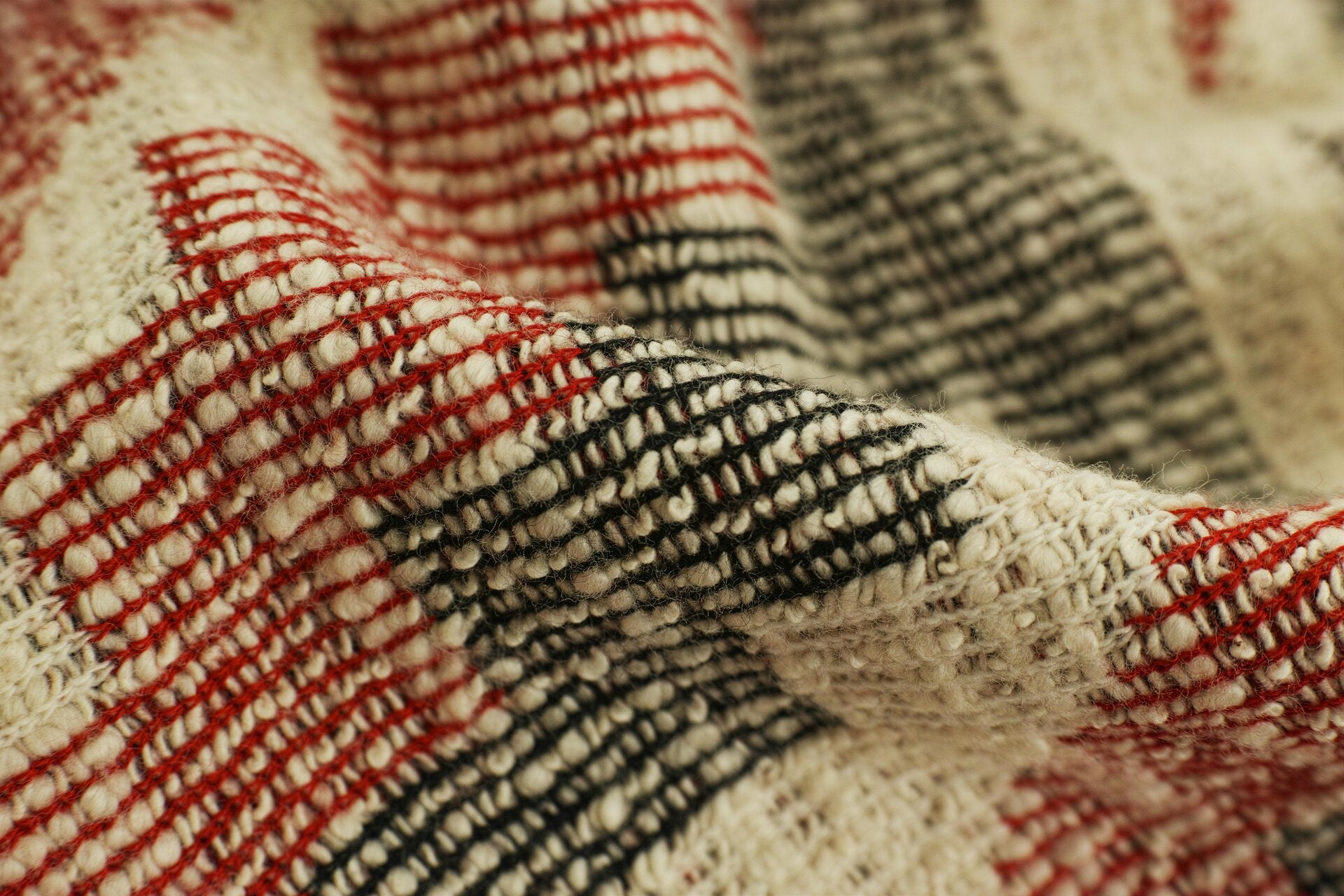
Bouclé is a beautiful fabric with a distinctive texture. Its name comes from the French word bouclé, meaning curled or looped. The fabric is made with yarns that often have small loops, curls and irregularities.
Bouclé comes in many different weights and textures. Some fabrics are firm and tightly woven, while others are soft, lightweight and loosely woven.
This variety makes bouclé an interesting material for clothing, but it can also make sewing a challenge.
If you have ever tried to sew a loose bouclé fabric, you probably know the problem. The fabric moves, stretches, frays and sometimes seems to have a mind of its own!
However, with the right preparation and sewing techniques, you can create beautiful garments that look professional and feel comfortable to wear.
Why Is Bouclé Important in Couture?
Bouclé is closely associated with the famous Chanel jacket.
Coco Chanel understood that beautiful clothing should not only look luxurious but also feel comfortable. Her designs helped make textured fabrics, soft construction and freedom of movement important elements of modern couture.
The Chanel jacket is an excellent example of how fabric, construction and finishing techniques work together.
A beautiful jacket is not simply a piece of fabric sewn into a shape. Its success depends on what happens inside the garment, too.
Interfacing, lining, careful hand sewing and thoughtful construction all help to create a garment that keeps its shape while remaining comfortable.
Books by Claire B. Shaeffer, who has written extensively about Chanel-style jackets and couture sewing, provide valuable insights into these techniques.
For anyone interested in historical costume making, these principles are equally useful. A well-made costume also depends on understanding the fabric, supporting it where necessary and choosing construction methods that suit the finished garment.
Good sewing begins with understanding your fabric.
Why Is Bouclé Important in Couture?
Bouclé is closely associated with the famous Chanel jacket.
Coco Chanel understood that beautiful clothing should not only look luxurious but also feel comfortable. Her designs helped make textured fabrics, soft construction and freedom of movement important elements of modern couture.
The Chanel jacket is an excellent example of how fabric, construction and finishing techniques work together.
A beautiful jacket is not simply a piece of fabric sewn into a shape. Its success depends on what happens inside the garment, too.
Interfacing, lining, careful hand sewing and thoughtful construction all help to create a garment that keeps its shape while remaining comfortable.
Books by Claire B. Shaeffer, who has written extensively about Chanel-style jackets and couture sewing, provide valuable insights into these techniques.
For anyone interested in historical costume making, these principles are equally useful. A well-made costume also depends on understanding the fabric, supporting it where necessary and choosing construction methods that suit the finished garment.
Good sewing begins with understanding your fabric.
1. Choose the Right Bouclé Fabric
Before you start sewing, examine your fabric carefully.
A loosely woven bouclé is often more difficult to handle than a firm, compact version. The yarns can move easily, and the fabric may stretch or distort during sewing.
Ask yourself a few questions:
- Is the fabric soft and flexible, or firm and structured?
- Does it stretch when you handle it?
- Does it fray easily?
- Can you see gaps between the yarns?
- Does it recover its shape after gentle handling?
These simple observations help you decide how to prepare the fabric.
A soft, loosely woven bouclé can be wonderful for a comfortable jacket. A very stiff or bulky version may be better suited to upholstery, cushions or decorative projects.
Of course, the final choice depends on the design. A firm bouclé can also work for clothing if the pattern and construction are suitable.
2. Prepare the Fabric Before Sewing
Preparation is particularly important when working with bouclé.
First, check the manufacturer's care instructions. If the fabric is washable, test a small piece before treating the entire length. If it is wool, silk or a delicate blend, professional cleaning or careful steaming may be more appropriate.
Next, cut a small sample and use it to test your sewing machine settings.
This is also the moment to test your interfacing.
Do not assume that a fusible interfacing will work well with every bouclé fabric. The heat and pressure required for fusing can flatten the texture, damage delicate fibres or change the way the fabric drapes.
For some fabrics, a lightweight sew-in interfacing is the better choice.
My advice is simple: test first, then begin your actual project.
3. Use the Right Sewing Machine Settings
Bouclé can be tricky to feed through a sewing machine because its surface is uneven and its weave may be loose.
Fortunately, a few adjustments can make a real difference.
Choose a suitable presser foot.
A walking foot can help feed the fabric evenly, particularly if you are sewing several layers together. A roller foot may also be useful, depending on the fabric's surface.
Choose the right needle.
A fine universal or sharp needle may work well for some bouclé fabrics. For heavier or more open weaves, you may need a different needle.
Try a size 70/10 or 80/12 first, then adjust according to the thickness and structure of your fabric. Always test on a scrap piece.
Adjust the stitch length.
A stitch length of approximately 2–2.5 mm is a useful starting point for many garments. Very loose or delicate fabrics may require different settings.
Avoid choosing a stitch simply because it works well on ordinary woven cotton. Bouclé needs individual attention.
A zigzag stitch is not automatically the best solution. For most garment seams, a carefully tested straight stitch is a good starting point.
4. Hand Basting Is Your Best Friend
If there is one technique I would recommend when sewing loosely woven bouclé, it is hand basting.
Pins alone may not keep the layers in the correct position. The fabric can shift while you sew, leaving you with uneven seams or distorted edges.
Hand basting holds everything in place before you use the sewing machine.
It takes extra time, but it can save you a great deal of frustration.
For a couture jacket, I would consider hand basting particularly important around:
- Shoulder seams.
- Armholes and sleeve seams.
- Front edges and facings.
- Pockets and decorative details.
- Areas where the fabric needs additional support.
You can also use temporary staystitching where necessary to prevent stretching, especially around curved or bias-cut edges.
Remember that the aim is not to sew as quickly as possible. The aim is to achieve a beautiful result.
5. Interfacing: The Secret Behind a Beautiful Garment
Interfacing is one of the most important parts of sewing a successful bouclé jacket.
However, more interfacing does not always mean a better result.
The right choice depends on the fabric, the design and the amount of support required.
A soft bouclé may need additional support around the shoulders, neckline, front opening and buttonholes. Other areas may need little or no reinforcement.
You can choose between fusible and sew-in interfacing.
Sew-in interfacing is particularly useful when you want to preserve the natural texture and flexibility of a delicate fabric.
Lightweight cotton can also be useful as a supporting layer, provided it is suitable for the project and has been prepared to prevent unwanted shrinkage.
For a Chanel-style jacket, the internal construction is an important part of the finished garment. The lining, supporting layers and carefully placed stitching all contribute to its shape and comfort.
Take time to plan these details before assembling the garment.
Once the lining is attached, correcting certain construction problems becomes much more difficult.
6. Be Careful When Pressing Bouclé
Bouclé is not a fabric that appreciates rough treatment.
High temperatures and excessive pressure can flatten its texture or damage the yarns.
Always test your iron on a scrap piece first.
Use a suitable temperature for the fibre content, and consider using a pressing cloth to protect the surface.
Press gently rather than sliding the iron back and forth. A tailor's ham can be helpful when shaping curved areas.
For some fabrics, gentle steaming is useful, but do not assume that every bouclé can tolerate steam.
Allow the fabric to cool before moving it. This helps the seams retain their shape.
Good pressing is about control, not force.
7. Finish the Seams Carefully
Many bouclé fabrics fray easily, so seam finishing deserves special attention.
An overlocker can be useful, but it is not always the best choice for a delicate or loosely woven fabric. The cutting action and the weight of the finished edge may damage or distort some materials.
Depending on the fabric, you might prefer:
- Hand-overcast seam allowances.
- A suitable overlocker finish.
- Carefully applied seam binding.
- Another lightweight finish that prevents fraying without adding unnecessary bulk.
Always test your chosen method first.
You should also consider the seam allowance. A slightly wider allowance can be helpful when working with a fabric that frays badly, provided the design allows for it.
For a couture jacket, the inside should be as carefully considered as the outside.
8. Buttons and Buttonholes
Bouclé is particularly beautiful when combined with decorative buttons.
Large buttons, metal buttons and textured buttons can all work well, depending on the style of the garment.
However, buttonholes can be challenging in a loose weave.
The surrounding fabric may need reinforcement to prevent stretching or fraying.
Bound buttonholes are a traditional couture option and can look especially elegant on a jacket. They require careful preparation and precise stitching, so practise on a sample before working on the finished garment.
For some bouclé fabrics, other buttonhole techniques may be more suitable.
The important thing is to support the fabric properly and choose a finish that complements its texture.
9. Always Buy Extra Fabric
This is advice I would give to anyone working with a difficult or expensive fabric.
Buy a little extra for testing, especially if you are making a fitted jacket or a garment with complicated details.
You will need fabric for testing the needle, stitch length, interfacing, pressing temperature and seam finishes.
You may also need extra material if you want to match a pattern or arrange the fabric's texture in a particular way.
Bouclé is often irregular by nature, and this is part of its charm. Nevertheless, thoughtful cutting can make a significant difference to the finished garment.
Is Bouclé Difficult to Sew?
Bouclé can certainly be challenging, especially if you are accustomed to working with stable cotton or other firm woven fabrics.
But it is not impossible.
The secret is to slow down, prepare the fabric properly and test your techniques before you begin.
Use hand basting when necessary. Choose your interfacing carefully. Press gently and pay attention to the inside of the garment.
With experience, you will learn to recognise what each fabric needs.
And that is one of the most rewarding parts of sewing: discovering how different materials behave and learning how to bring out their best qualities.
Whether you are making a Chanel-inspired jacket, a historical garment or a completely original design, understanding your fabric is an essential part of good craftsmanship.
Beautiful clothing is not only about the design. It is also about the knowledge, patience and skill that go into making it.
Good luck with your next sewing project!
Add comment
Comments