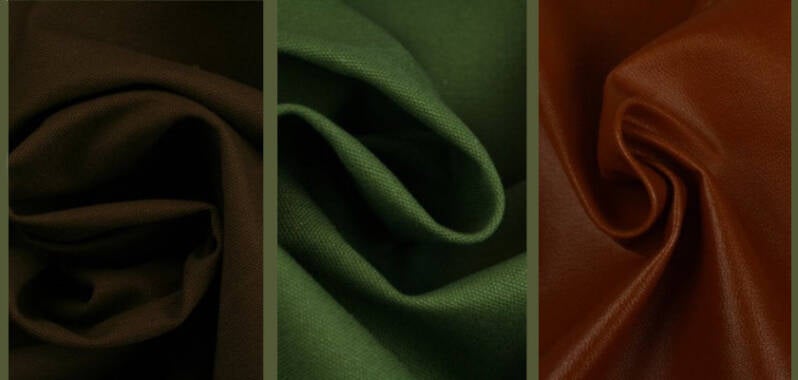
The hidden work behind every costume: finding materials that look right, feel right and work in practice.
People often ask me how long it takes to make a custom cosplay costume. The answer is not always easy, because sewing is only one part of the process. Pattern drafting, construction, fitting and finishing all take time. But there is another important part that is sometimes overlooked: finding the right fabrics and materials.
In fact, choosing materials can take a surprising amount of time. Before I can start cutting fabric, I need to study the character, look closely at reference images and consider how the costume is supposed to look and behave.
A fabric may have the perfect colour, but the wrong weight. Another may have the right texture but not enough flexibility. And sometimes a material looks wonderful in a photograph but simply does not work when you start making the costume.
Finding the right materials is therefore not just a matter of shopping. It is part of the design process.
1. Appearance versus practicality
When I study a character's costume, I look at more than its colours and shapes. I also try to understand how the different parts are supposed to move, hang and behave when worn.
Reference images can be a little misleading. A costume in a game, film or promotional photograph does not always show how a real garment would behave. It may look impressive on screen, but reproducing that appearance with actual materials can present quite a challenge.
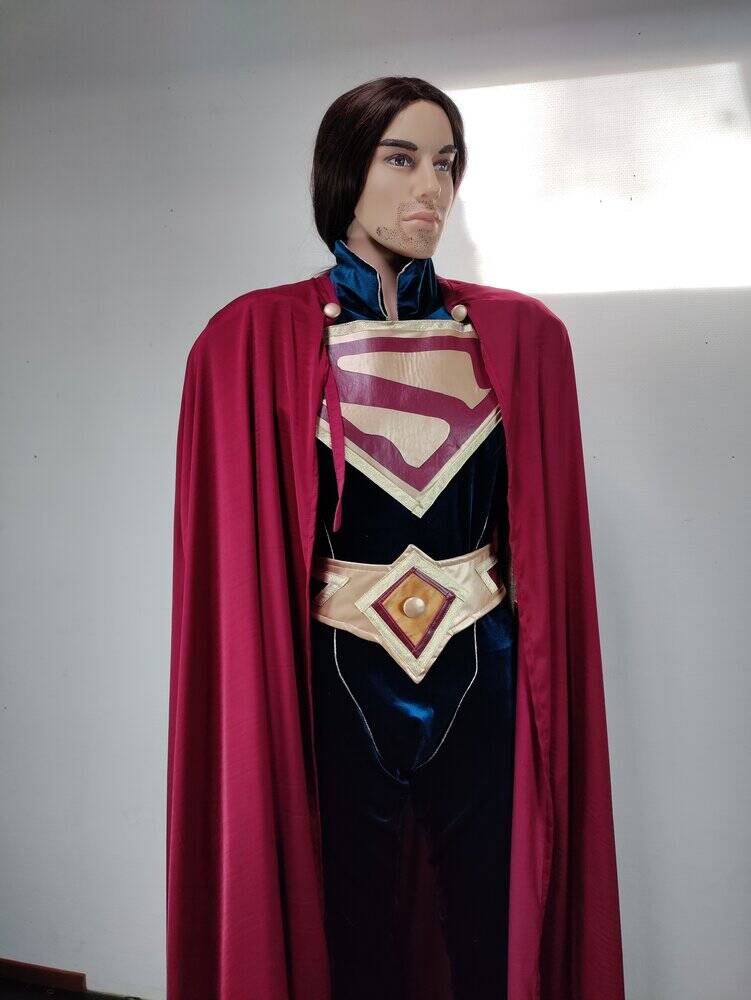
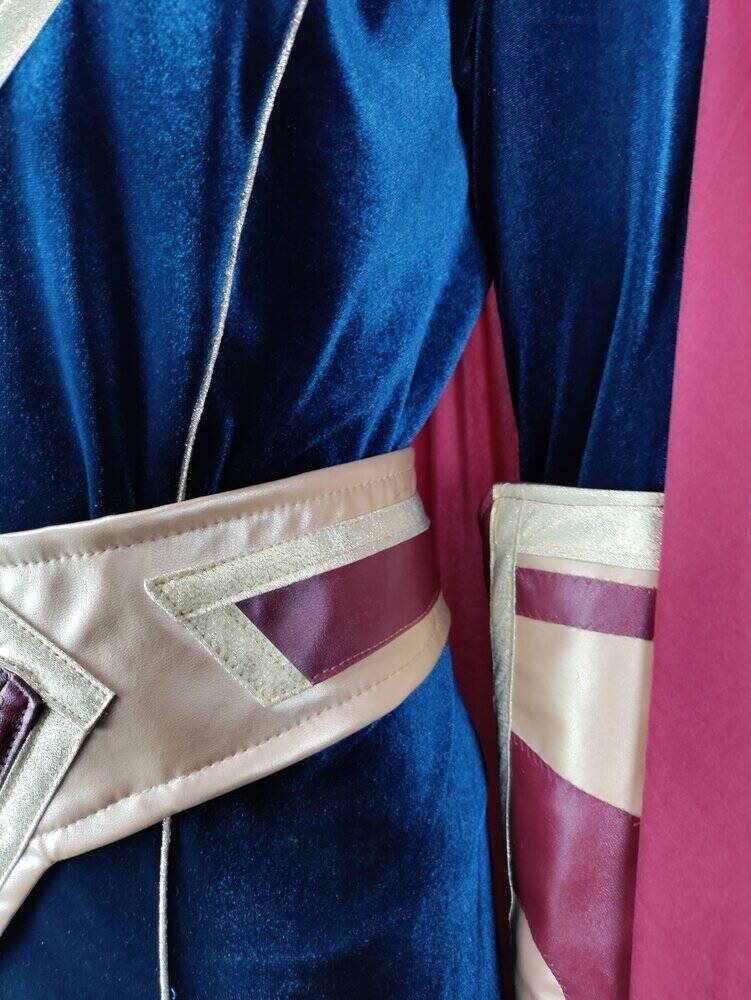
Take a Superman costume, for example. In many reference images, his red cape looks wonderfully heavy and substantial. It gives the character a dramatic appearance. However, a real cape needs to be lightweight enough to move naturally when the wearer walks or turns.
If the fabric is too heavy, the cape will not move as intended. It may simply hang down instead of flowing behind the wearer.
This means that I cannot choose a fabric based on appearance alone. I have to think about the finished costume and how it will be used.
Sometimes the best material is not the one that looks most like the reference image when it is lying on a table. It is the one that creates the right effect once the costume is worn.
2. Natural materials are not always the best choice
I love working with beautiful natural materials. Wool, linen, cotton, silk and leather all have their own qualities, and they can be wonderful to work with.
But natural does not automatically mean better. For cosplay, weight can be a serious consideration.
Leather, canvas and wool can become very heavy, especially when several layers and costume components are combined. A material that looks convincing on its own may make the complete costume uncomfortable or difficult to wear.
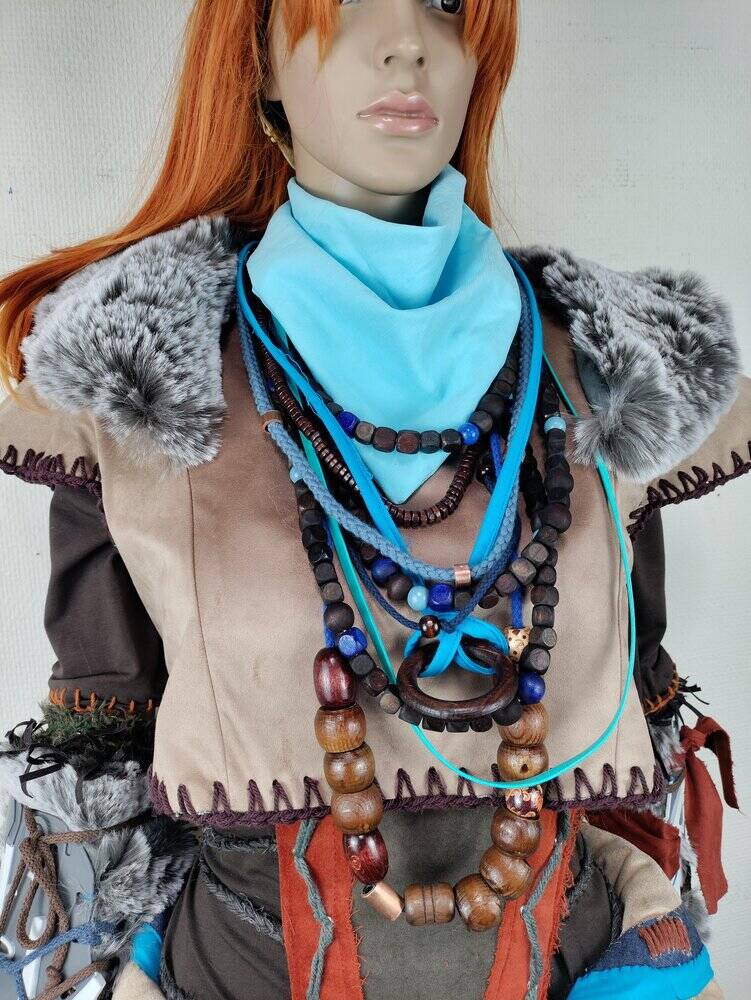
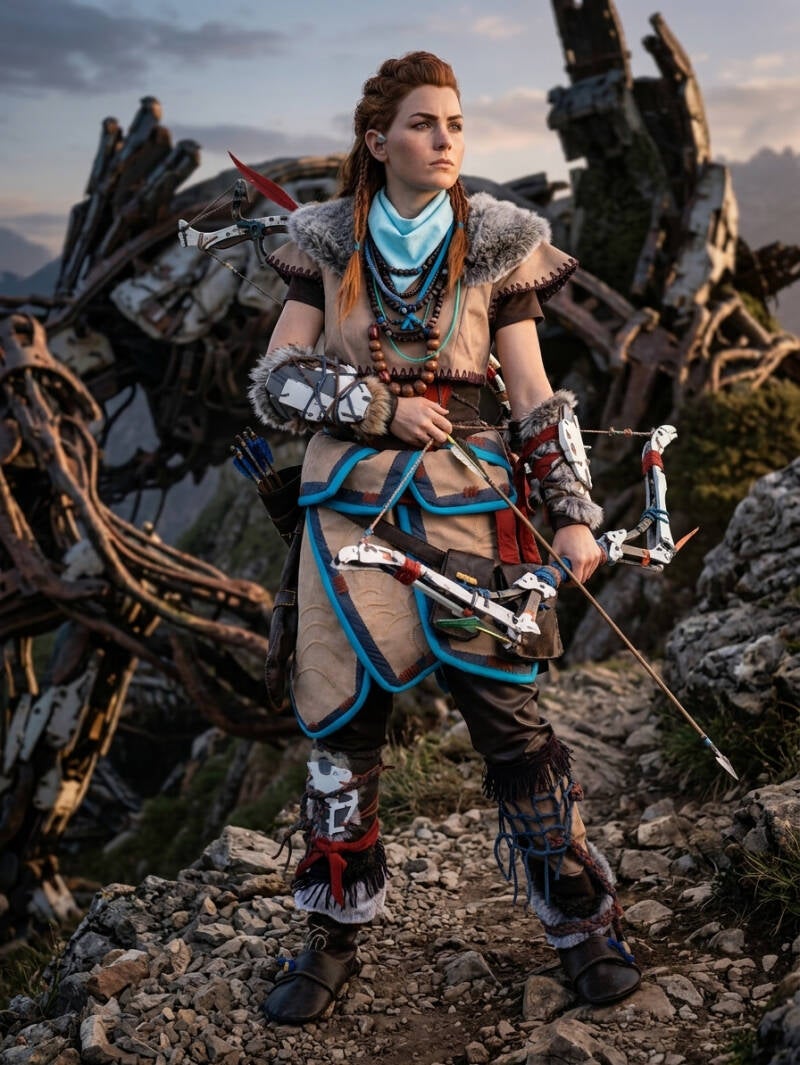
My Nora Huntress costume is a good example.
This costume contains many different elements, including trousers, shirts, overshirts, protective pieces, belts, pouches and various accessories. It has a substantial, layered appearance.
I used vegan leather and faux fur rather than real leather and real fur. Even then, the finished costume was already quite heavy. My dress form had difficulty supporting the weight.
Imagine how much heavier it would have been if I had used genuine leather and fur throughout!
There are other considerations too. If you intend to sell or resell a costume, the choice of materials can affect where and how you can offer it. For example, Etsy does not permit the sale of fur products. Using faux fur can therefore be a more practical choice for a costume intended for that marketplace.
The important thing is to consider the complete project. A material should not only look appropriate; it should also be suitable for the construction, the wearer and the intended use of the costume.
3. Every costume has its own material challenges
There is no universal shopping list for cosplay materials. Every character and every costume brings its own challenges.
For one project, the main concern may be weight. For another, it may be the cost of a particular fabric or the need to find several materials that work well together.
Silk, for example, can be a beautiful choice for a costume inspired by a historical character such as King Baldwin. But genuine silk can make a project considerably more expensive. The decision to use it, or to look for another suitable material, has consequences for the budget as well as the final appearance.
With the Nora Huntress costume, the challenge was quite different. The costume required a large variety of materials and components, all of which had to work together. The total weight was an important consideration from the beginning.
And with Superman's cape, the challenge was finding a fabric light enough to move naturally, while still achieving the familiar appearance of that iconic red cape.
These examples show why I never approach two costumes in exactly the same way. The character, design, construction and intended use all influence the materials I choose.
4. Finding the right combination of materials
A costume is rarely made from just one fabric. It is often a combination of different materials, textures and finishes that gives it its character.
This is also where a great deal of thought is needed.
Not every fabric works well with every other fabric. Chiffon and canvas, for example, have very different characteristics and can be difficult to combine convincingly. The same applies to suede and lace.
Of course, unusual combinations can sometimes create interesting effects. But they need to be deliberate. Otherwise, the different materials may look as though they have simply been collected and put together without a clear idea.
I believe that a subtle combination of materials often makes the difference between a beautiful costume and one that feels disjointed.
The colours, textures, weight and overall appearance should complement one another. Sometimes a small difference in texture is enough to add depth and interest. At other times, a strong contrast is exactly what the design needs.
It is not about using as many different materials as possible. It is about choosing the right ones and making them work together.
5. The search for the right fabric
Once I have an idea of the materials I need, the actual search begins.
I buy fabrics both online and in physical shops. I visit fabric stores, fabric fairs and markets, and I also look for suitable materials through online suppliers. Sometimes I find exactly what I need in a local shop. On other occasions, I have to search much further.
One costume can easily involve five different fabric shops.
One shop may have the right colour but not the right texture. Another may have a beautiful fabric, but it is too heavy. A third may sell exactly the material I am looking for, but not in the right shade.
And then there are the practical details. When ordering online, I need to consider shipping costs, minimum quantities and whether the fabric will actually look and feel as expected.
Ordering from five different shops also means paying five separate shipping fees. That is simply part of working with a wide variety of materials. No single shop stocks everything a costume maker might need.
There is also a difference between looking at fabric on a computer screen and holding it in your hands.
You can see the colour and perhaps get an idea of the texture from a photograph, but you cannot properly judge the weight, drape, feel or flexibility. When I visit a physical shop, I can touch the fabric, hold it up, see how it falls and compare it with other materials.
That experience is difficult to replace with an online catalogue.
Sometimes I spend quite a long time searching before I find the right fabric. And sometimes I have to change my original idea because the material I had in mind is not available, is unsuitable or simply does not work as well as I expected.
That is part of the process too.

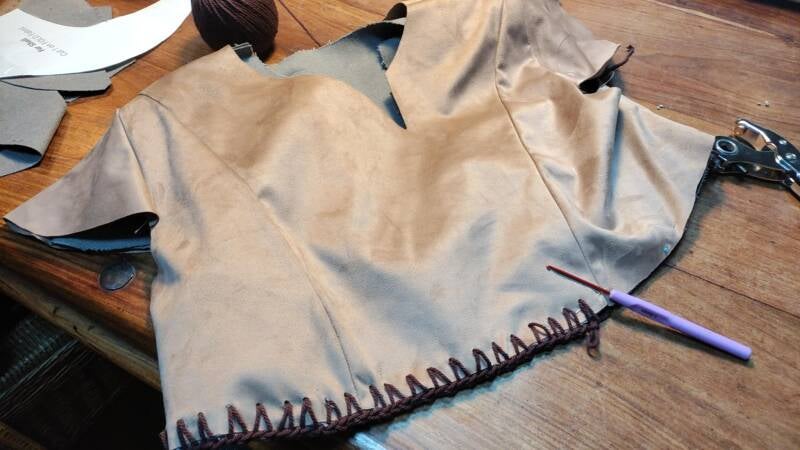
The work before the first stitch
When you see a finished cosplay costume, you usually see the result of many hours of work. The pattern, the sewing, the details and the finishing are all visible.
But much of the work happens long before the first piece of fabric is cut.
It involves studying reference images, considering practical requirements, comparing materials, visiting shops, ordering samples and making decisions about weight, texture, colour and construction.
For me, choosing the right fabric is one of the most important parts of making a costume. The materials influence not only how the finished costume looks, but also how it moves, feels and can be worn.
A successful costume does not begin with a sewing machine.
It begins with research, careful choices and the search for the right materials.
Add comment
Comments