

10 Sewing Notions and Fabrics I Never Work Without
People often ask me what they should keep in their sewing room.
My answer is always the same: don't build a large stash—build a useful one.
After years of making historical costumes, couture garments and museum-inspired reproductions, I've learned that the difference between a good garment and an exceptional one rarely lies in the sewing machine. It lies in the materials you choose before you even make the first stitch.
These are the fabrics and notions I reach for time and time again in my own atelier.
1. Silk – My Greatest Luxury
If I could choose only one fabric, it would always be silk.
Not because it is expensive, but because it behaves unlike any other fibre. Silk moulds beautifully over curved seams, presses crisply without becoming bulky and reflects light with extraordinary depth.
I regularly work with silk taffeta, silk dupioni, silk satin, silk organza and silk velvet. Each has its own personality and purpose.
Silk organza deserves a special mention. I rarely use it as a visible fabric, but as an invisible structural layer. It creates support inside bodices, strengthens collars and stabilises delicate areas without adding unnecessary weight.
Many couture techniques simply become possible because of silk organza.
2. Wool Is Far More Versatile Than Most People Think
Modern sewing blogs often overlook wool, which I think is a shame.
Fine wool broadcloth, tropical wool and lightweight wool crepe have remarkable shaping abilities. Steam becomes your greatest ally. A sleeve head, collar or lapel can literally be sculpted into shape.
For historical tailoring, wool remains one of the finest fibres ever produced.
3. Linen Is the Foundation of Historical Dress
Every historical costumer should keep good-quality linen within easy reach.
Not only for shifts and chemises, but also for interlinings, pocket bags, facings and structural foundations.
Good linen becomes softer with every wash while maintaining its remarkable strength. There is a reason it has been used for centuries.
4. Horsehair Canvas and Natural Interlinings
Forget fusible interfacing whenever possible.
In couture and historical dressmaking, I almost always prefer sew-in interlinings such as horsehair canvas, haircloth, domette and cotton flannel.
These materials shape the garment rather than stiffen it.
A well-tailored garment should move naturally while quietly supporting the outer fabric.
5. Cotton Tape Is My Invisible Assistant
One of the least glamorous notions in my sewing room is also one of the most important.
A simple roll of cotton twill tape stabilises waist seams, shoulder seams, neckline edges and areas under constant strain.
No one ever notices it.
That's exactly the point.
6. Threads Matter More Than People Realise
Not every project deserves the same thread.
I keep cotton thread for historical hand sewing, silk thread for fine finishing and basting, linen thread for stronger historical applications and high-quality polyester for modern construction where durability is important.
Using the right thread often makes the stitches nearly disappear.
Using the wrong one can make even perfect sewing look mediocre.
7. The Right Needles Change Everything
Whenever I encounter skipped stitches or damaged fabric, I first change the needle—not the machine.
Microtex needles produce beautifully clean seams on tightly woven silks.
Sharps are indispensable for precise hand sewing.
Milliner's needles make even gathering stitches.
Leather needles, embroidery needles and fine beading needles all have their own place.
Good sewing begins with the correct needle.
8. Quality Lining Is Never an Afterthought
A beautiful garment deserves an equally beautiful interior.
I often line my garments with silk habotai, silk satin, cotton sateen or fine linen depending on the historical period and intended use.
The lining affects comfort, movement, durability and even how the outer fabric hangs.
In couture, the inside should be just as satisfying as the outside.
9. Pressing Equipment Is Just as Important as Sewing Equipment
If I had to choose between an expensive sewing machine and excellent pressing tools, I would choose the pressing tools.
Tailor's hams.
Sleeve rolls.
Clappers.
Point pressers.
Press cloths.
These are the tools that create crisp lapels, smooth curved seams and beautifully shaped collars.
You don't simply sew a couture garment.
You sculpt it with steam.
10. A Well-Organised Button Collection
Buttons are often chosen at the very end of a project.
I prefer to collect them long before I know what they'll become.
Mother-of-pearl, horn, corozo, leather-covered buttons, Dorset buttons and hand-worked historical buttons all inspire future designs.
Sometimes an entire garment begins with finding the perfect button.
My Final Thought
People often admire a finished historical gown and ask how many hours it took to make.
I think a more interesting question is: what materials made it possible?
Beautiful sewing begins long before the first stitch. It starts with understanding fibres, respecting traditional tailoring techniques and choosing materials that will still look beautiful decades from now.
That is exactly why I continue to invest in exceptional silks, fine wools, natural fibres and traditional couture notions.
The fabric remembers every decision you make.
Choose wisely, and it will reward you for years to come.
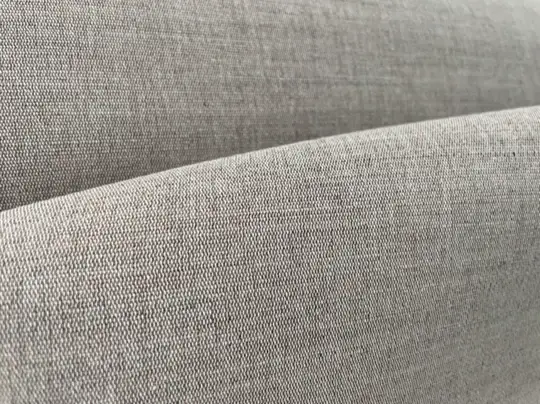
A real horse and horsehair fabric:

Add comment
Comments