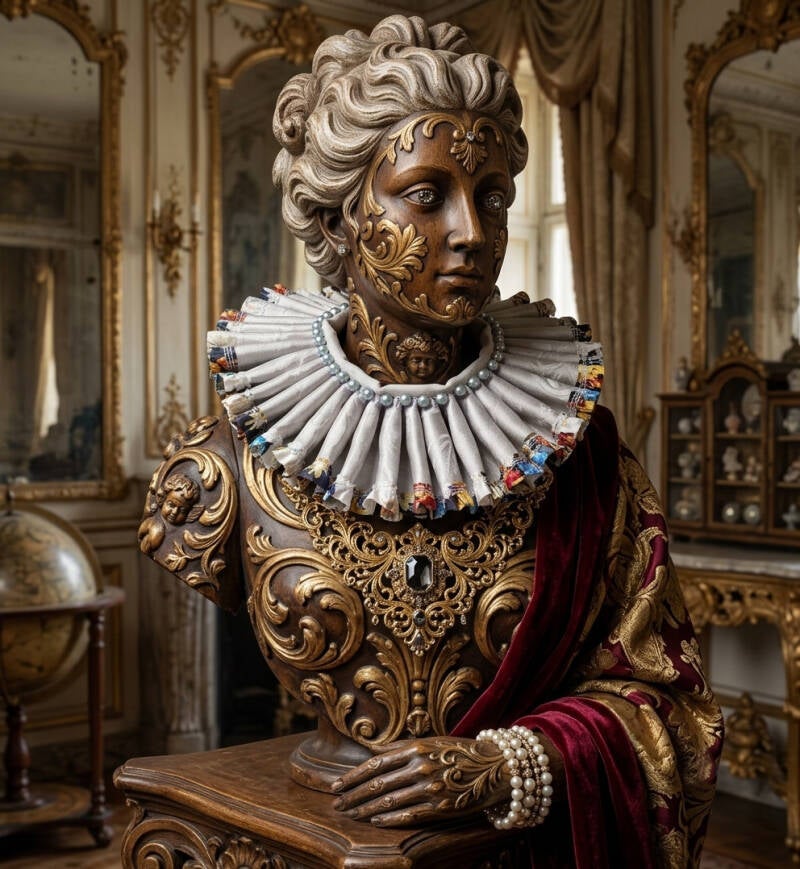
Handmade Ruff Collars (Molensteenkragen)
If there is one historical accessory that never stops fascinating me, it is the ruff collar.
In Dutch we call them molensteenkragen, literally "millstone collars." It is a wonderful name because they really do resemble the large round millstones from old Dutch windmills.
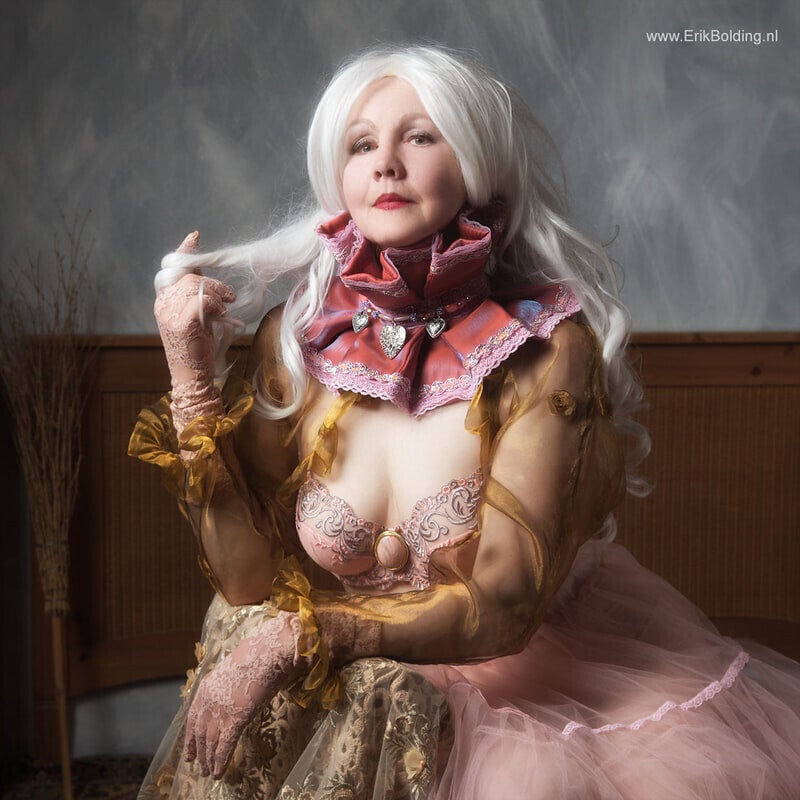
These beautiful collars were worn during the Renaissance and Elizabethan period and are still loved today by historical costumers, portrait photographers, theatre companies, museums and cosplayers. Every handmade ruff collar I create is made entirely by hand, making each one truly unique.
Like many handmade creations, I honestly cannot remember when I made my very first ruff collar.
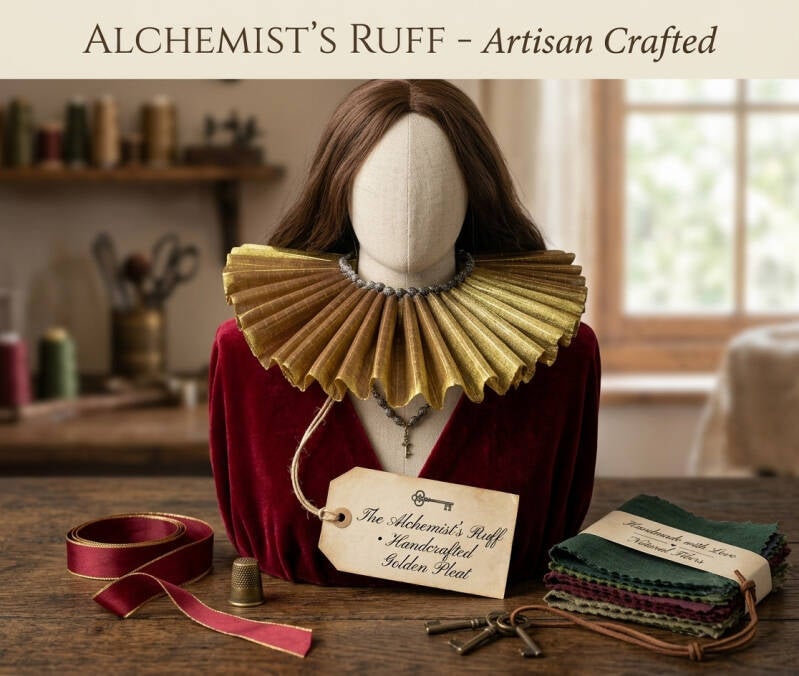
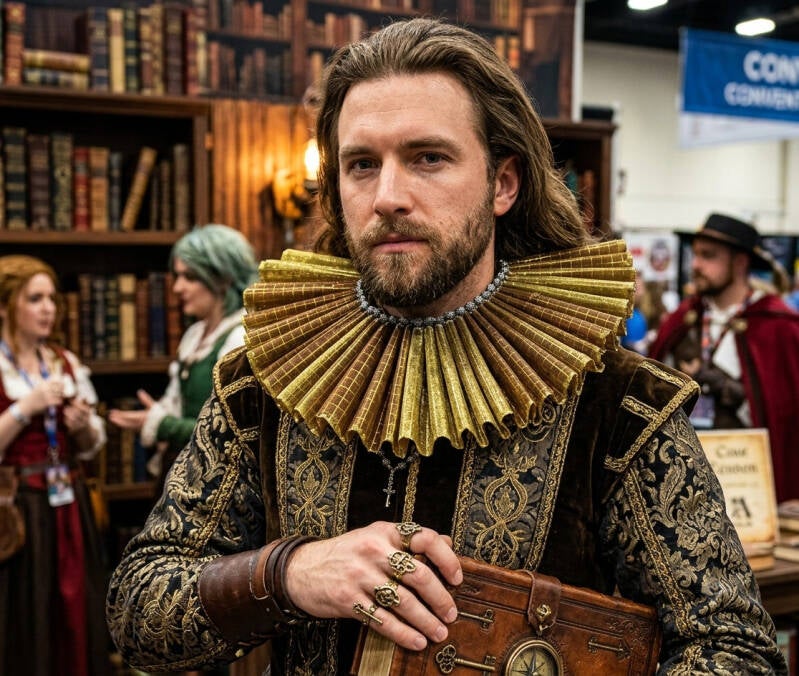
I Fell in Love with Ruff Collars
Long before I ever made one myself, I admired them in old paintings, museums and history books.
Every time I saw one, I wondered exactly the same thing.
"How on earth did they make that?"
There is almost no machine sewing involved. A traditional ruff collar is mainly created by careful handwork, patience and precision.
For years the construction remained a mystery to me.
Then one day, everything suddenly made sense.
I finally understood how the pleats were built.
Only a few days later, my very first ruff collar was finished.
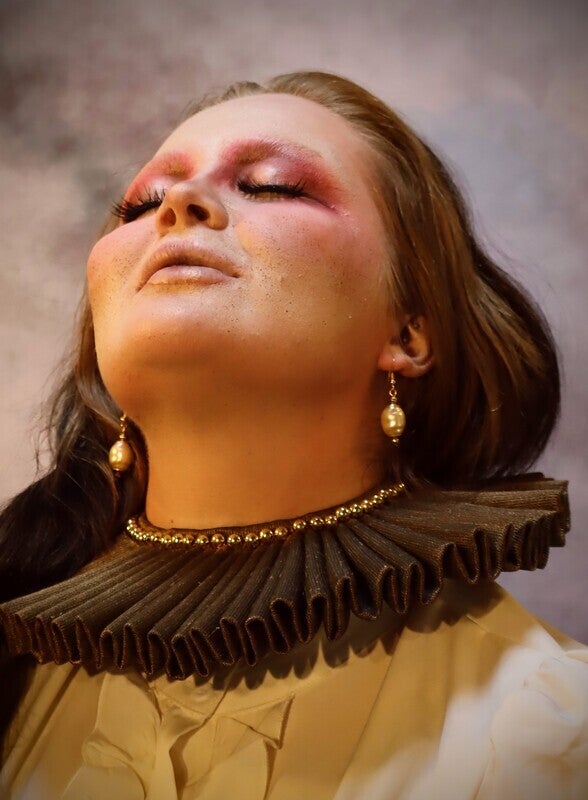
I still remember placing it around my neck for a photoshoot.
Wow...
The effect was incredible.

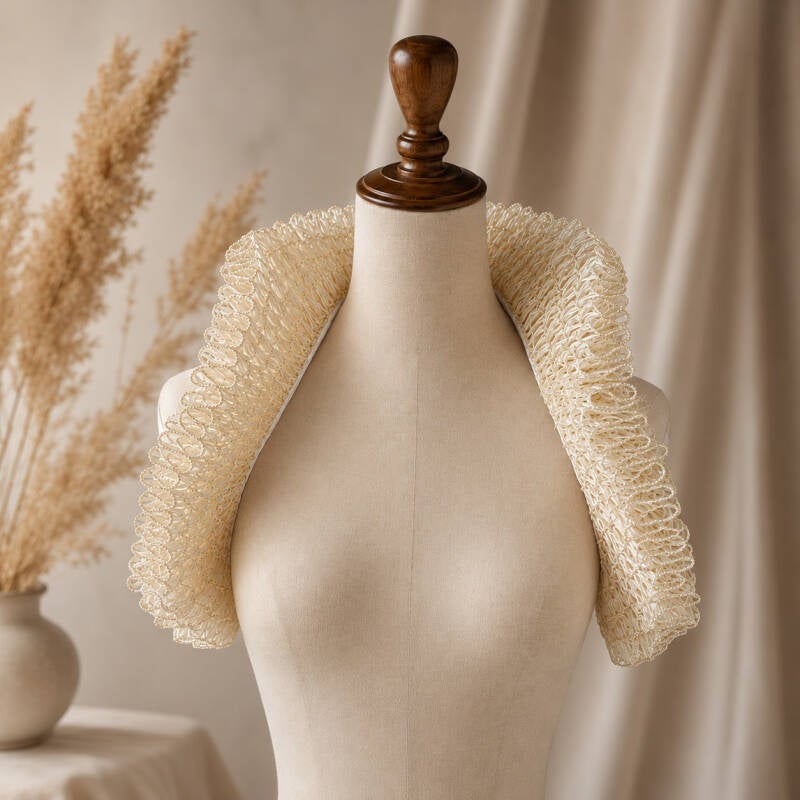
Ruff Collars and Portrait Photography
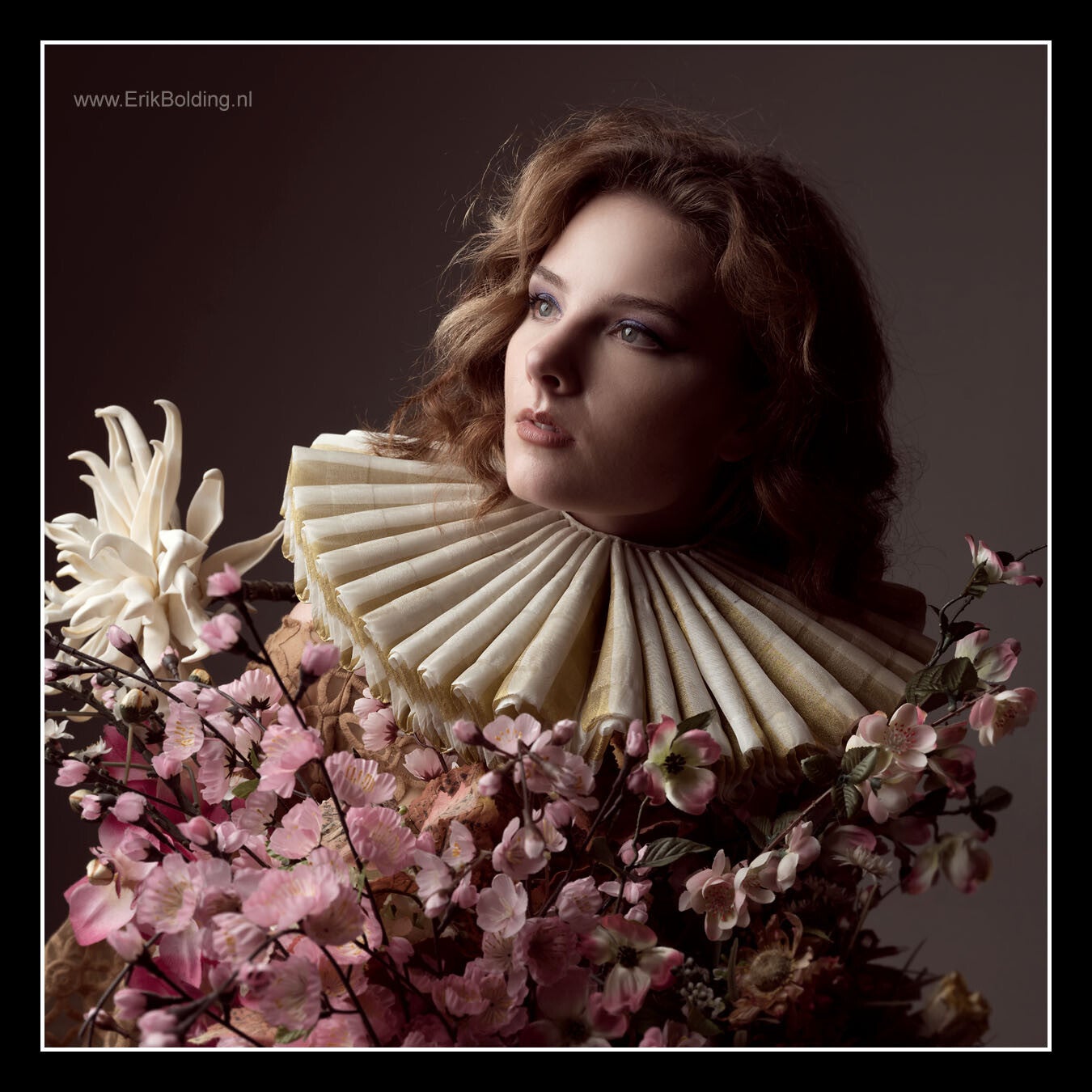
At that time I was still working regularly as a model, and several photographers immediately fell in love with my new collar.
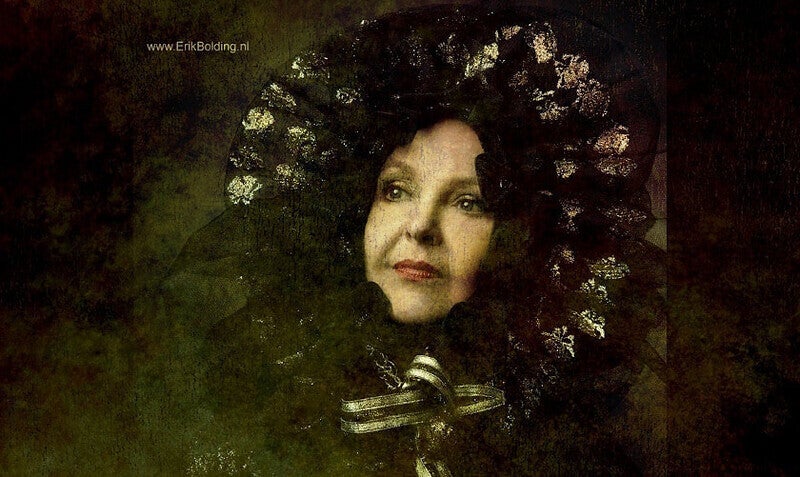
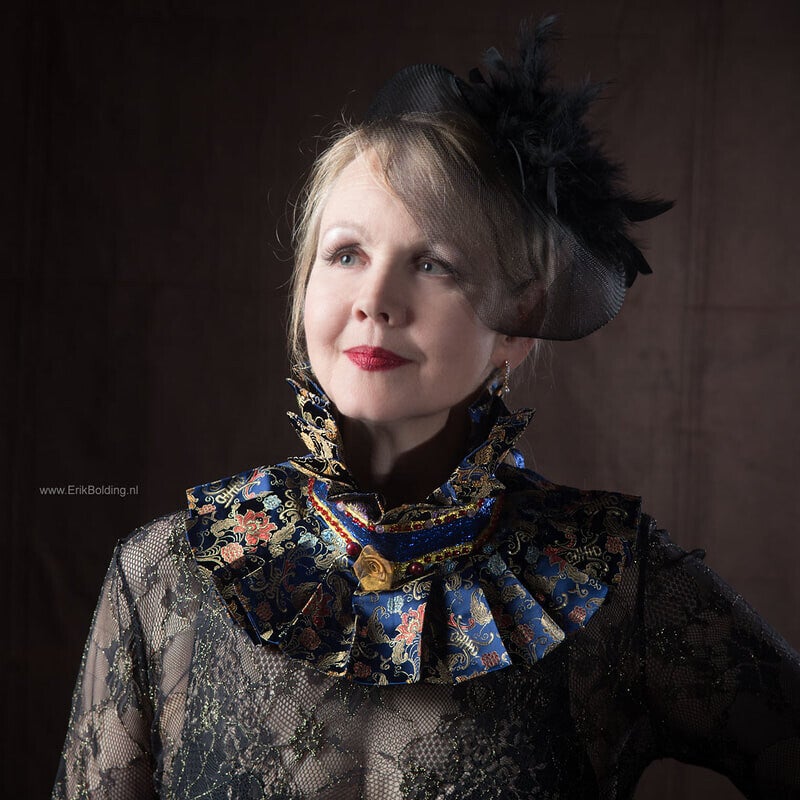
A simple portrait suddenly became elegant, dramatic and timeless.
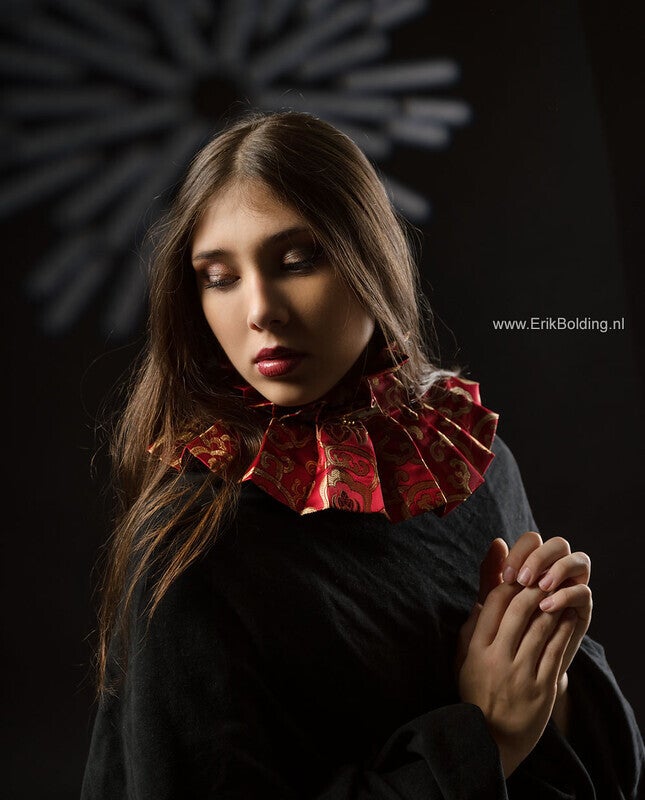
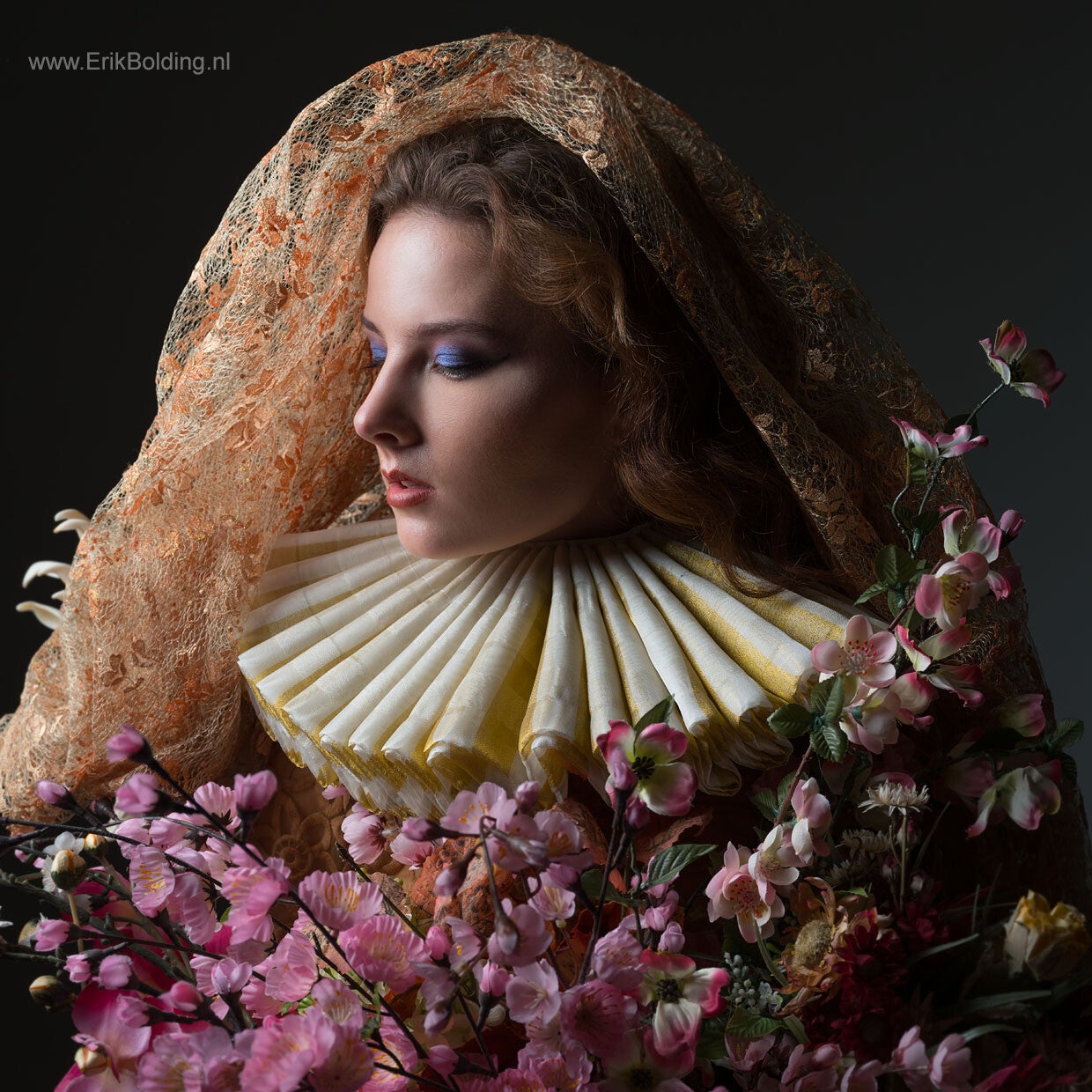
A ruff collar frames the face beautifully. It draws all attention to the eyes and gives every portrait a classic, artistic atmosphere.
Perhaps the painters of the sixteenth and seventeenth centuries discovered exactly the same thing.
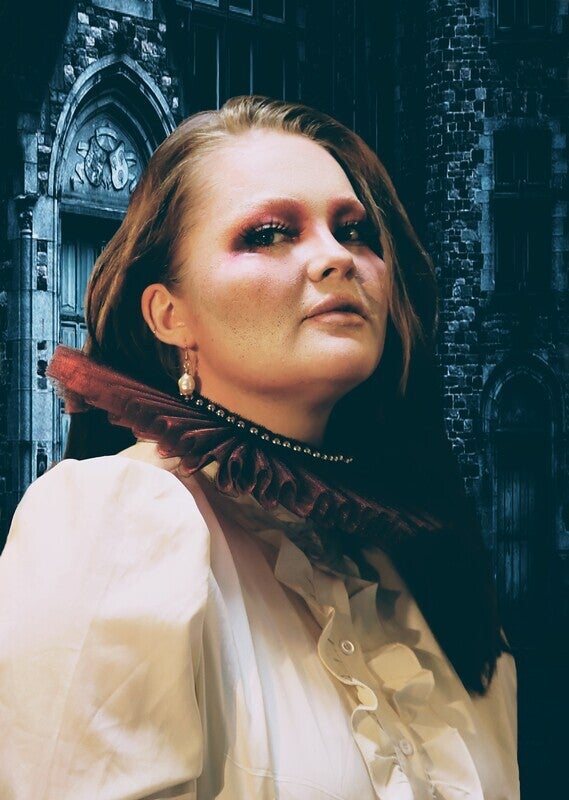
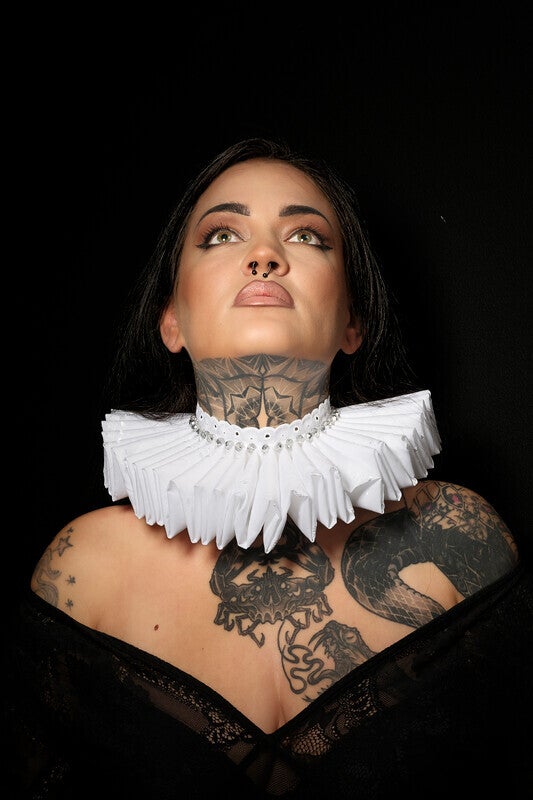
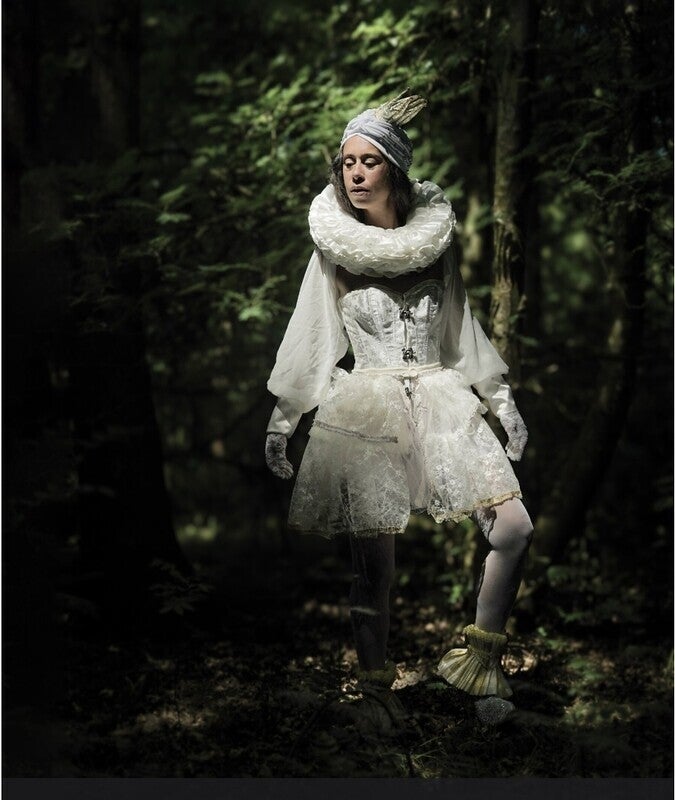
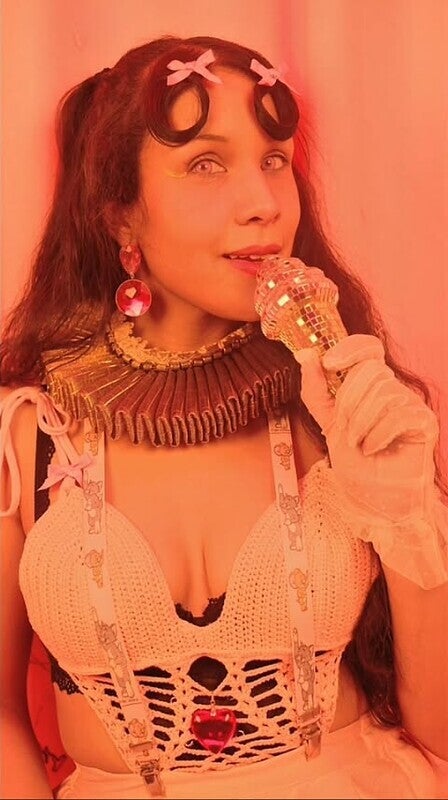

Why Ruff Collars Need So Much Fabric
Of course, my first collars were far from perfect.
I quickly discovered one very practical problem.
You need an enormous amount of material.
Depending on the size of the collar and the depth of the pleats, you may need strips between four and even twelve metres long.
At first I cut these strips from ordinary fabric that was only 150 cm wide.
That experiment ended rather quickly. There was always a seam somewhere in the middle of the pleats...
Than I start buying lóng metres of fabric. But a you cut narrow strips along the length of the fabric, this is leaving behind wide leftover pieces that are difficult to use. It felt like such a waste.
So I started experimenting with other materials.
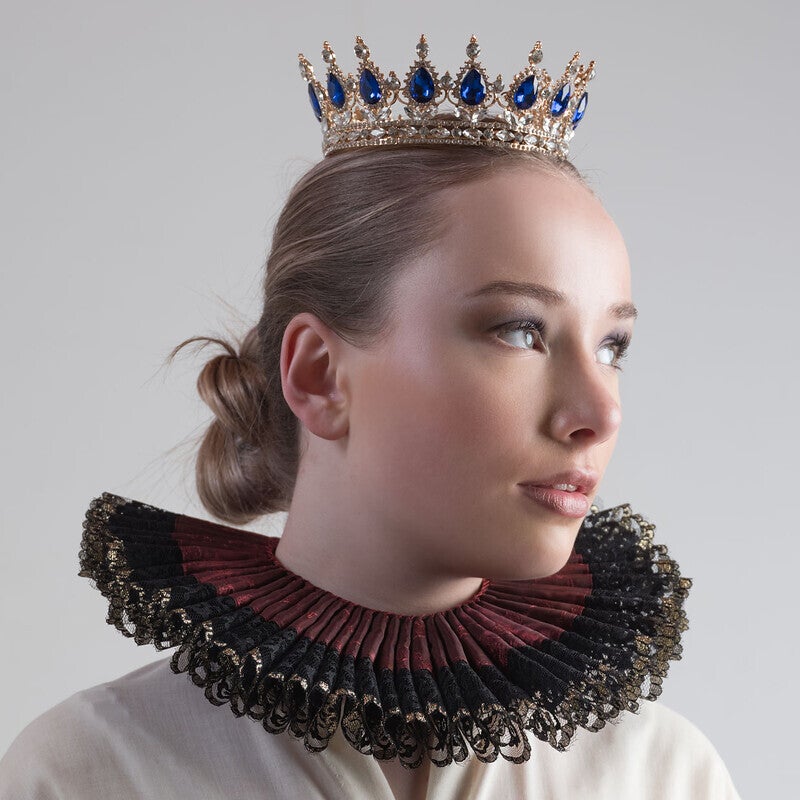
Rolls of lace.
Cotton tape.
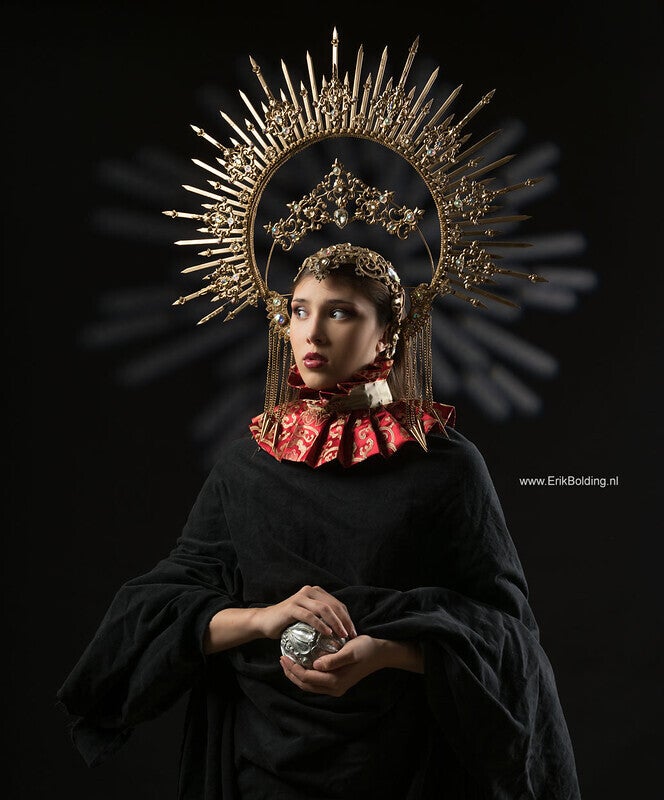
Jacquard ribbon.
Decorative trims.
Anything that already came in long lengths. Every experiment taught me something new.
The Challenge of a Perfect Round Ruff Collar
Then another challenge appeared.
The back.
Photographers often asked me:
"Can you make one that is completely round?"
It sounds simple.
It really isn't.
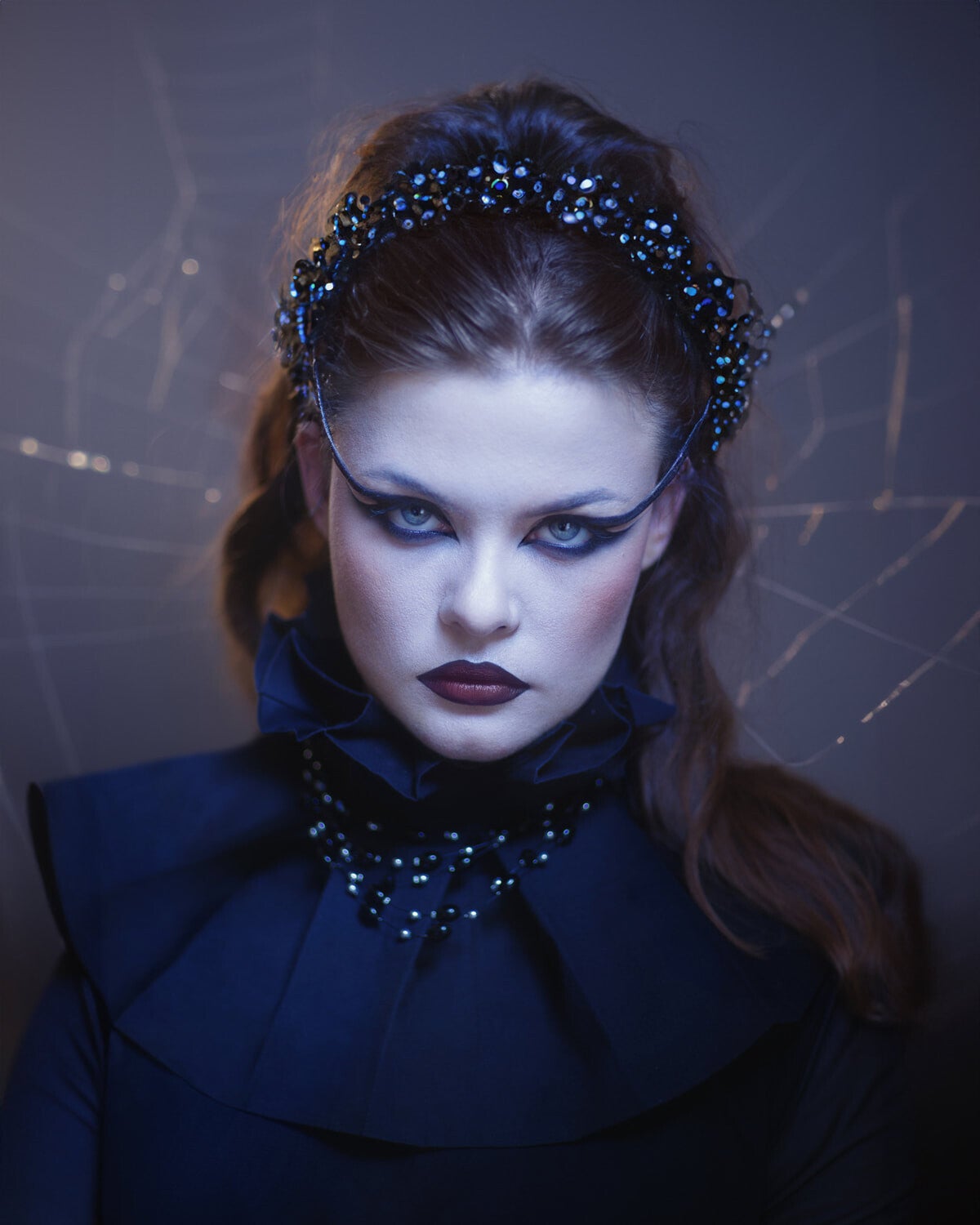
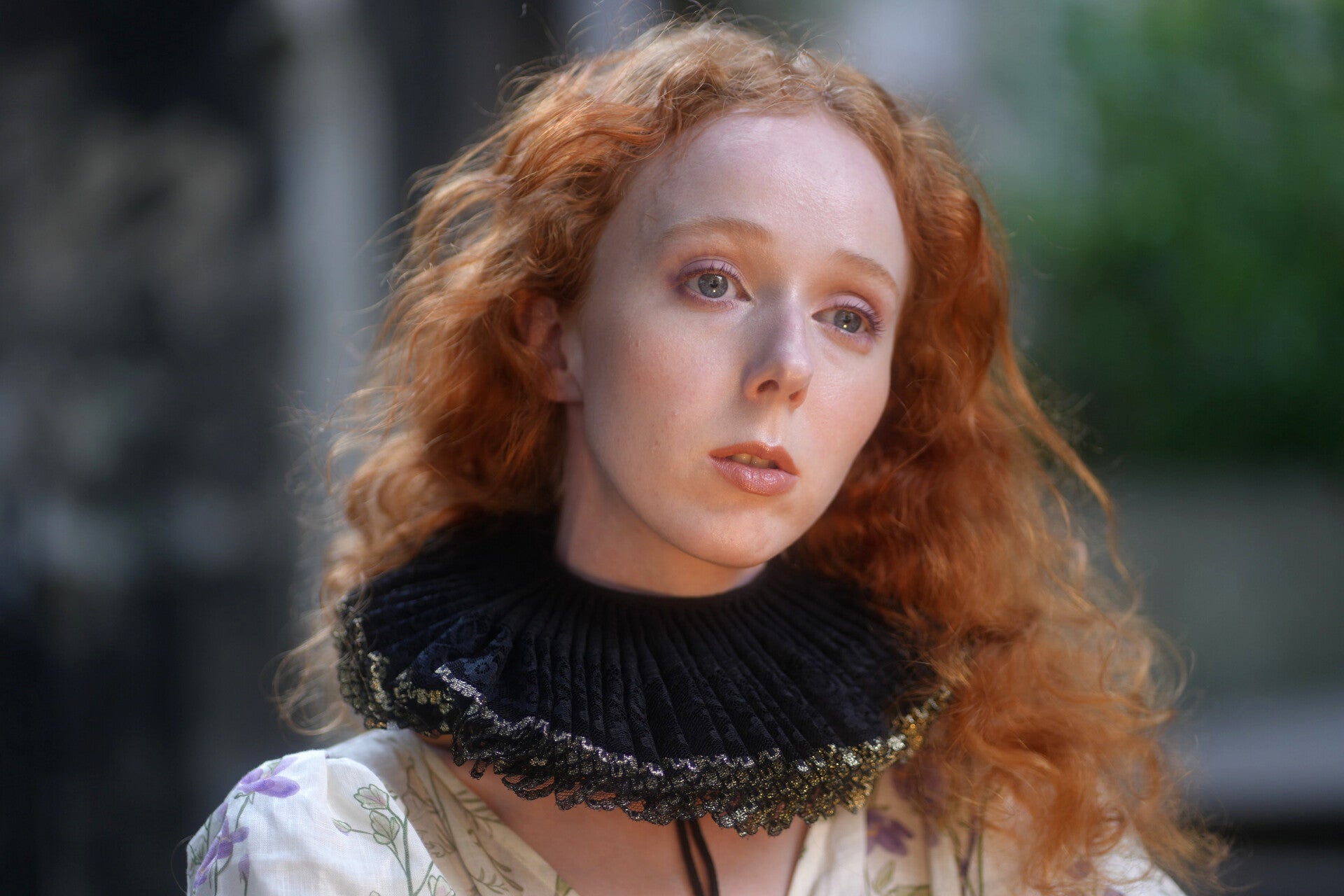
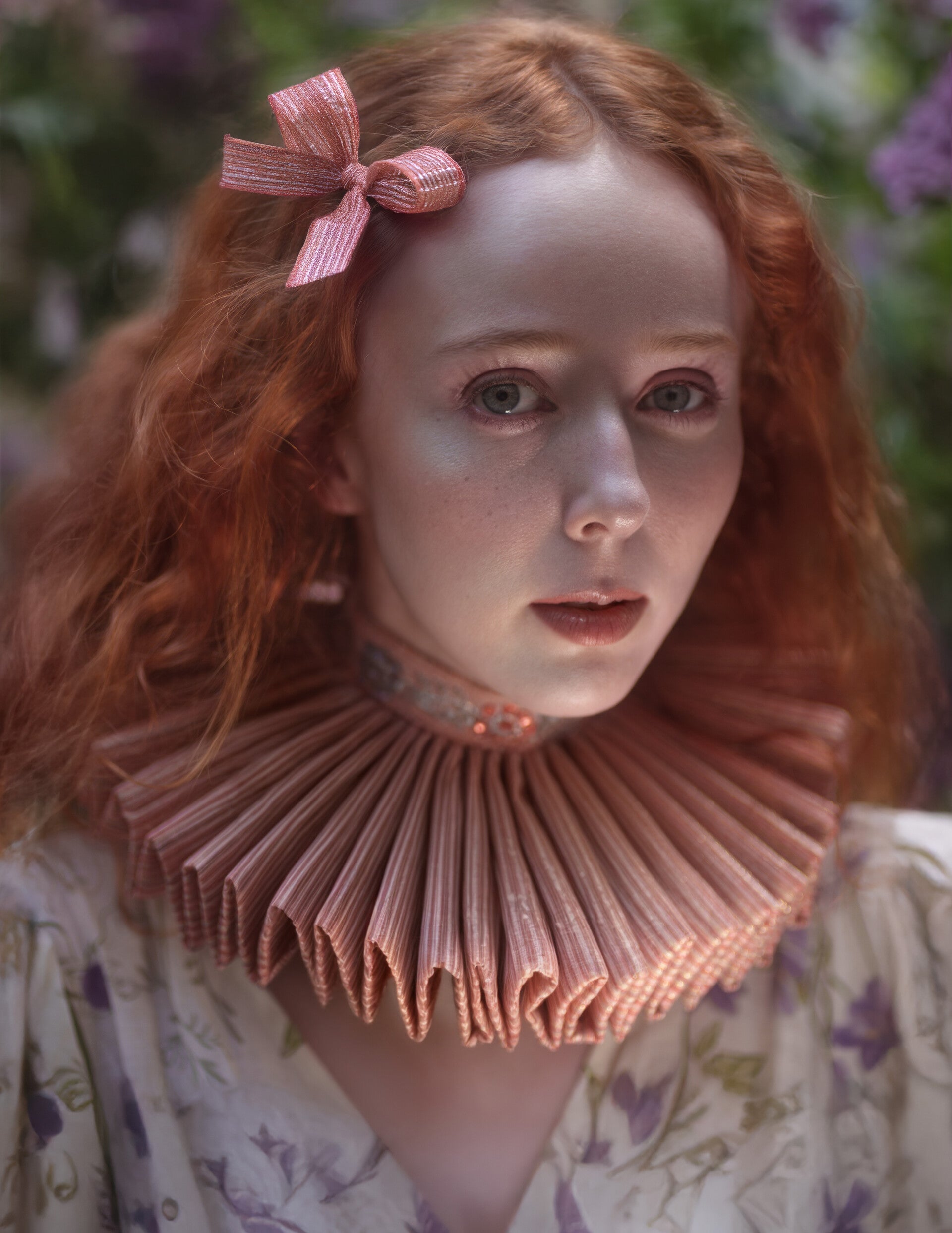
A ruff collar has to open somewhere because it is made from non-stretch materials. You cannot pull it over your head like a T-shirt.
Sometimes I wonder if the old painters quietly improved reality in their portraits.
Who says the real collars did not have a clever little fastening that simply disappeared under the painter's brush?
Over the years I experimented with many different closures.
Velcro.
Beautiful satin ribbons.
Hidden fastenings.
Anything that made both ends meet as naturally as possible.
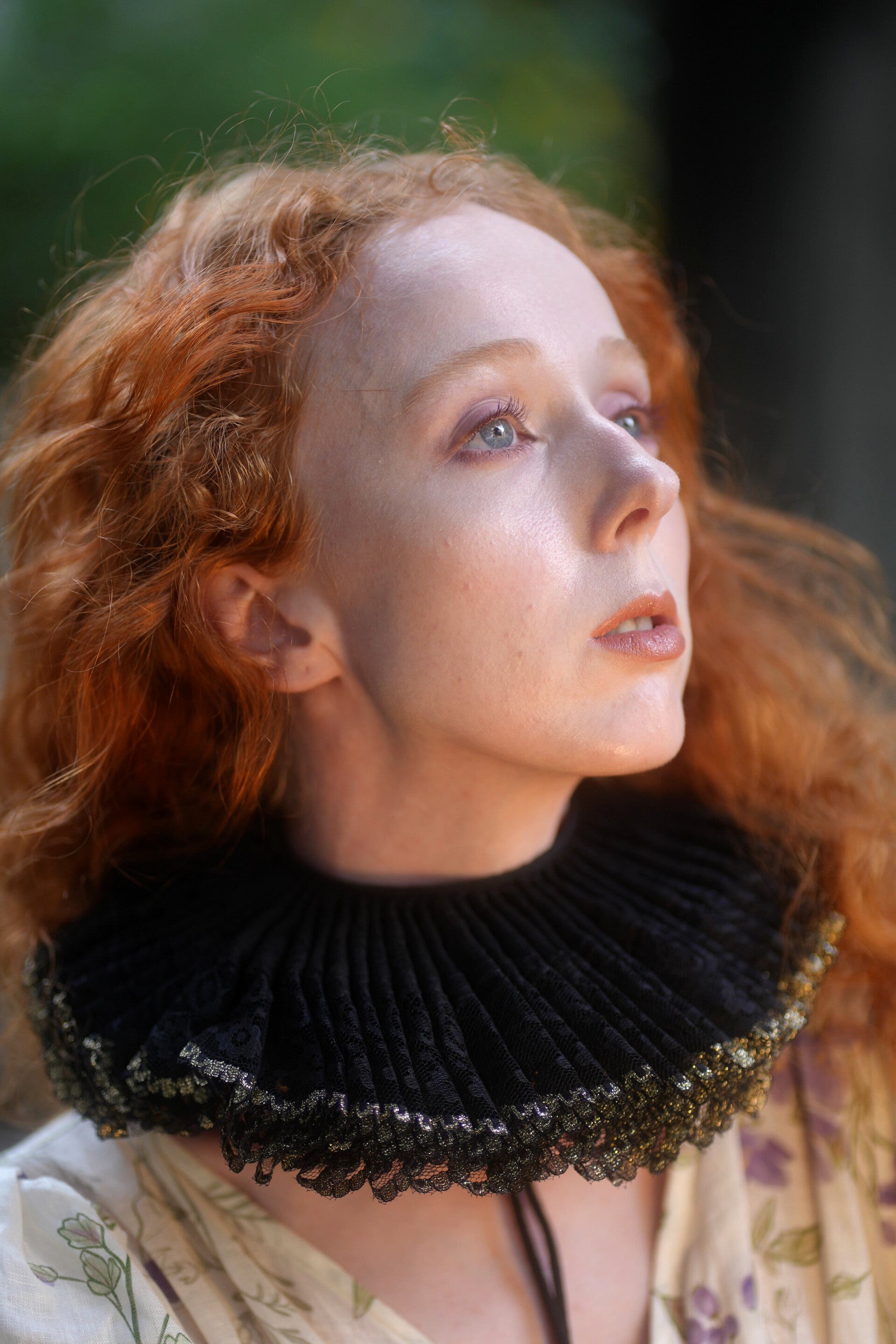
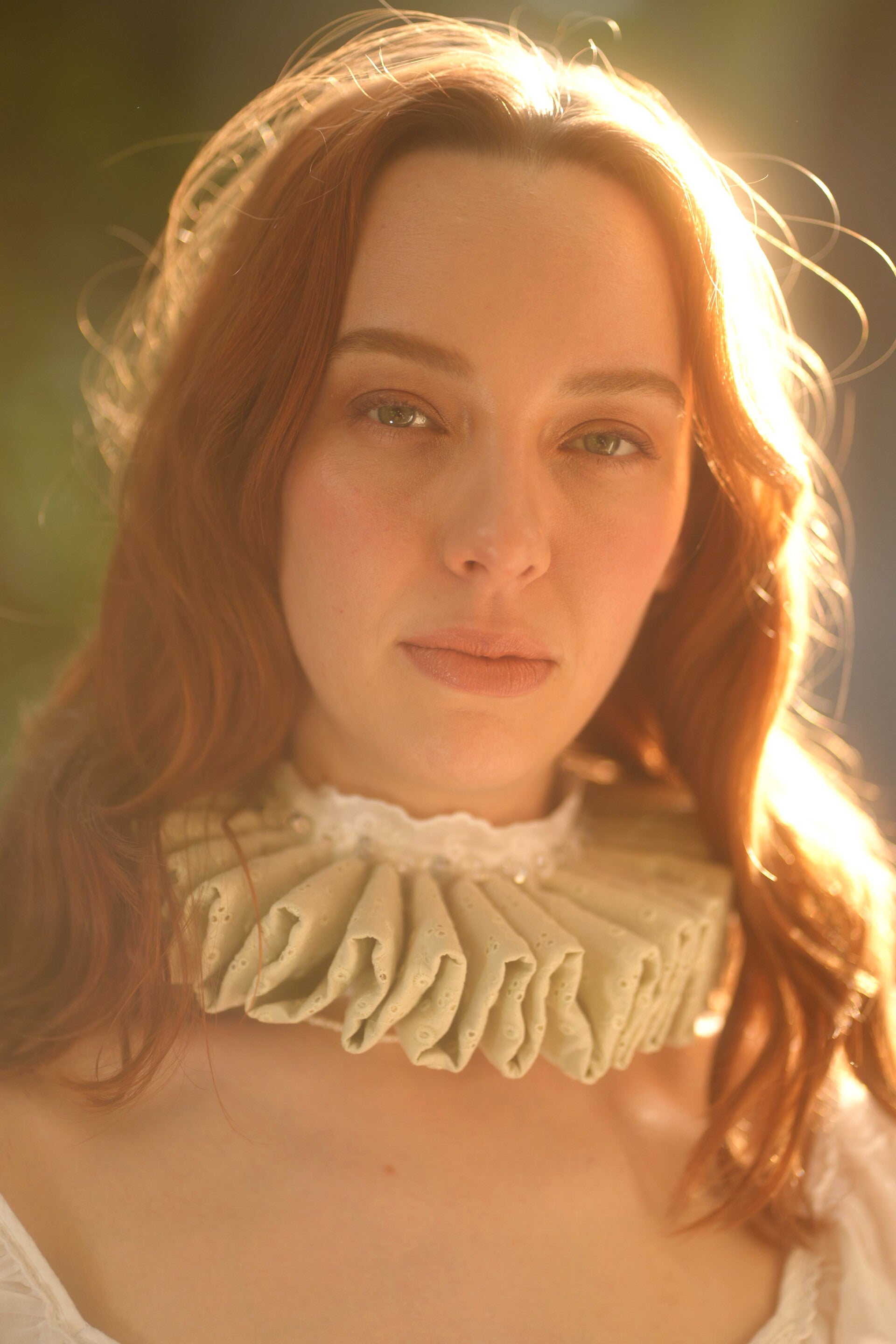
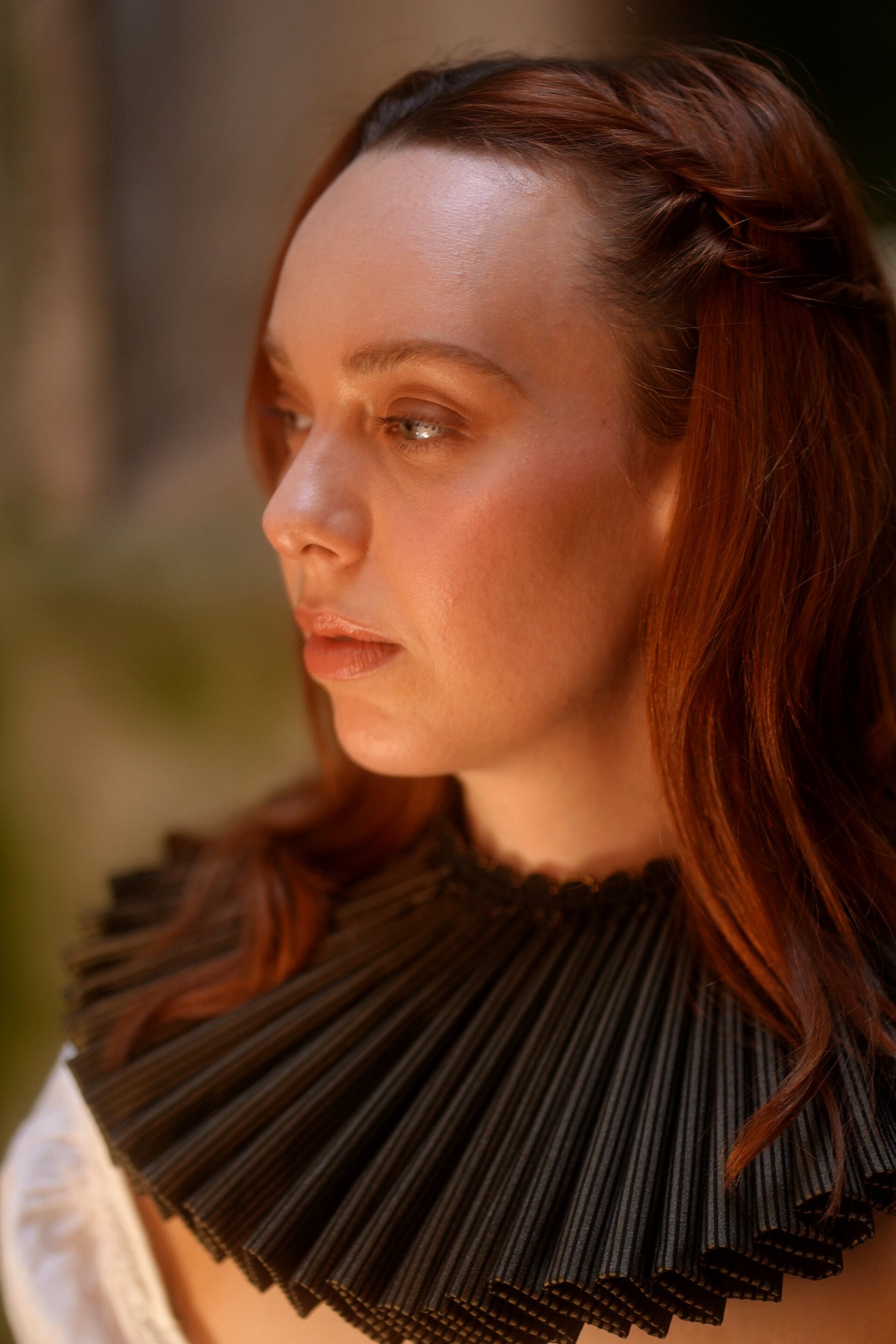
Every Handmade Ruff Collar Is Unique
As my experience grew, I also started adding decorations.
Pearls.
Beads.
Beautiful trims.
One collar even had tiny beads stitched into every single pleat.
It was an enormous amount of work.
One customer once asked if I could simply remove the beads.
I smiled.
The beads were not added afterwards.
They were actually part of the construction itself.
Removing them would mean taking the entire collar apart.
At that point, making a new one would almost be easier.
A Luxury Only the Nobility Could Afford
While studying historical costume, I discovered something fascinating.
Original linen ruff collars were often completely taken apart after wearing them.
The linen was carefully washed.
Then heavily starched.
Pressed.
Pleated again.
Finally, every part was assembled by hand once more.
Imagine doing that every time.
These collars were true luxury pieces.
Only wealthy families and the nobility could afford the time and craftsmanship required to own them.
Sometimes people ask me how long it takes to make one.
The honest answer?
I have never really counted the hours.
I simply keep folding, stitching and shaping until it feels right.
Some things cannot be rushed.
That is exactly what makes handmade craftsmanship so special.
Ruff Collars for Historical Costumes, Theatre and Cosplay
Today I still love making ruff collars.
Alongside them I also create many other historical collars, each with its own construction and character.
Whether they are worn for a Renaissance costume, an Elizabethan gown, historical reenactment, theatre production, museum display, fantasy costume or fine art portrait, they always add something magical.
The moment someone puts one on, the entire costume suddenly feels complete.
Every collar is different.
Every collar is made by hand.
Every collar tells its own story.
Never Again... Until the Next One
Every time I finish a ruff collar, I tell myself exactly the same thing.
"Never again."
Then a few months later...
There I am again.
Sitting happily at my worktable.
Folding.
Stitching.
Shaping.
Creating another one.
Some lessons are simply never learned.
Maybe that is because I secretly enjoy every single minute.
Looking for a Handmade Ruff Collar?
Every handmade ruff collar in my collection is individually created in my atelier in the Netherlands.
My work is inspired by the Renaissance, Tudor, Elizabethan and Baroque periods, but I also enjoy designing unique collars for fantasy costumes, cosplay, theatre, museums and fine art portrait photography.
No two collars are ever exactly the same.
Perhaps one day you will be wearing one of my handmade ruff collars.
Who knows...
Maybe you'll end up looking as if you've stepped straight out of a seventeenth-century painting.
Or...
A beautiful photograph will do just fine.
-
 Baroque Ruff Collar Dramatic Fantasy €275.00 FREE shipping
 -
 Custome Made Dark Academia or Fantasy Collars €350.00 FREE shipping
 -
 Dark Gothic Statement Collar €125.00
 -
 Brown Gothic Baroque Ruff Collar €255.00 FREE shipping
 -
 Gothic Ruff Collar Dark Romantic €255.00 FREE shipping
 -
 Custom Couture Silk Ruff Collars €650.00 FREE shipping


Add comment
Comments